Harbin Itinerary: A Complete Guide for First-Time Visitors
Last Updated: August 31, 2026
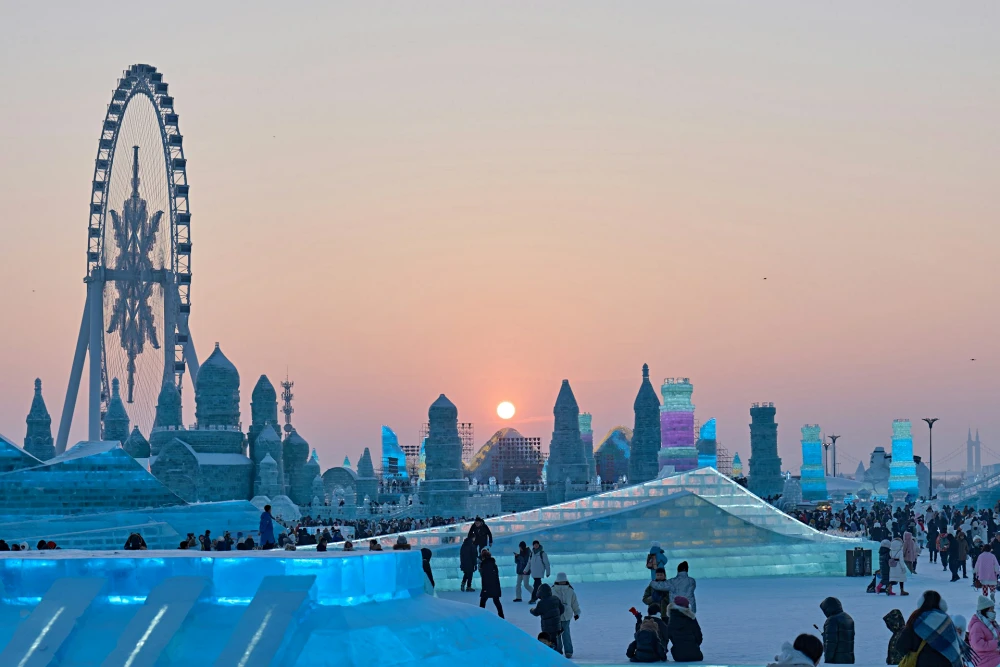
Located in northeastern China, Harbin (population: ~9.9 million) is widely known as China’s “Ice City” for its extremely long, freezing winters and world-famous ice-and-snow festivals.
Winter Weather & Indoor Heating Winter temperatures typically average between −15°C and −20°C (5°F to −4°F), and can drop below −30°C (−22°F) during severe cold snaps. Since most iconic attractions are outdoors, heavy winter clothing is a non-negotiable must. On the flip side, indoor heating in hotels, restaurants, and shops is exceptional, with indoor temperatures usually kept at a cozy 20°C+ (68°F+).
Best Time to Visit & Crowds The peak tourist season runs from late December through February. The ice sculptures at Ice and Snow World are usually fully built by mid-December, and thawing begins in late February. Crowds are massive during peak season, so avoid weekends and official public holidays if possible.
History & Culture Harbin locals are famously warm, welcoming, and hospitable. In the early 20th century, around 150,000 Russian expatriates lived here, leaving behind a rich heritage of Russian-style architecture and culture that you can still see all over the city today.
Economic Context Economically, Harbin is not one of China’s wealthiest modern megacities (ranking around 50th in GDP among Chinese cities). What gives Harbin its character is its rich history, unique culture, and cold-climate charm rather than hyper-modern skyscrapers.
 by lin zhaohai
Getting to Harbin & Geographic Location
Harbin is the capital of Heilongjiang Province in northeastern China.
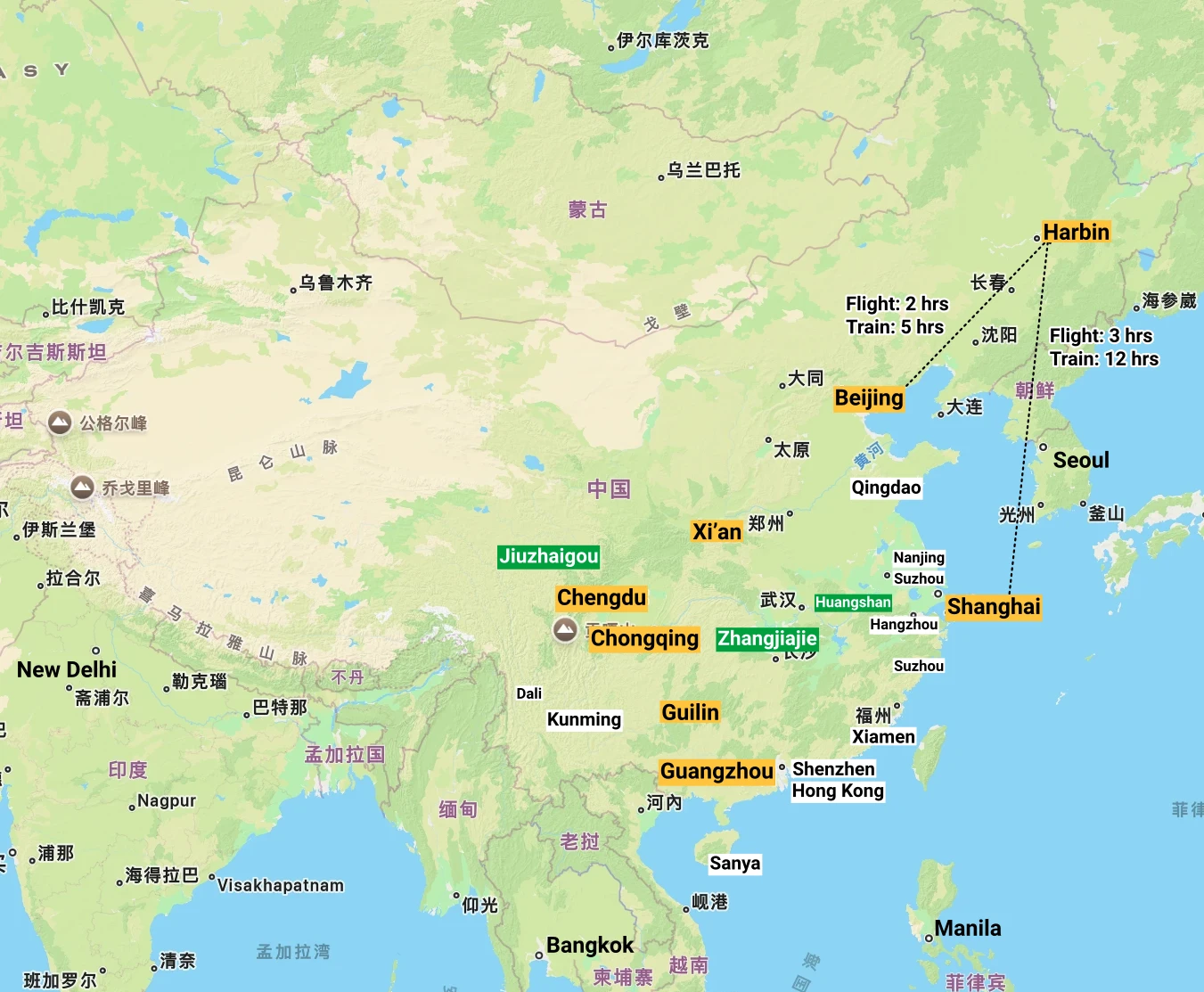
From Beijing: High-speed train is the most convenient and comfortable option (taking around 4.5 to 6 hours).
From Shanghai, Guangzhou, or southern China: Flight is strongly recommended, as train journeys from these cities can take anywhere from 12 to 24+ hours.
Traveling to Harbin by Train (Beijing Example)
The rail distance between Beijing and Harbin is roughly 1,250 km (~775 miles), with dozens of high-speed trains running daily.
Departure Stations in Beijing:
- Beijing Chaoyang (北京朝阳): The primary station for high-speed trains heading to Harbin.
- Beijing Railway Station (北京站): Located in the city center, but offers fewer high-speed departures to Harbin.
Arrival Stations in Harbin:
- Harbin West / Harbinxi (哈尔滨西): The main high-speed hub and where most trains arrive.
- Harbin Railway Station (哈尔滨站): Located in the heart of downtown, but has fewer high-speed options.
Travel Time: 4.5–6.5 hours (depending on the train speed)
One-Way Fares:
- Second Class (二等座): ~¥600 (Standard, comfortable seating)
- First Class (一等座): ~¥900 (Wider seats, legroom, and ~35% fewer passengers per car)
Booking: Winter is peak season, so book as early as possible. Tickets open 15 days in advance and can be booked on Trip.com.
Tips & Station Transfer Logistics:
- Beijing Chaoyang Station Warning: It is about 15 km from central Beijing, but road traffic in this area can be terrible. Avoid rush-hour taxis and opt for the metro if possible.
- Arriving at Harbin West Station: It is about 10 km from downtown. While ride-hailing is usually convenient, snowy or icy roads can cause severe traffic jams. Taking Metro Line 3 directly from the station to downtown takes ~40 minutes and costs only ¥5—often much faster and more reliable than a taxi in a snowstorm!
Traveling to Harbin by Air
Because Harbin is located far north, flying is often the fastest and most convenient option when coming from distant cities like Shanghai, Guangzhou, or Shenzhen.
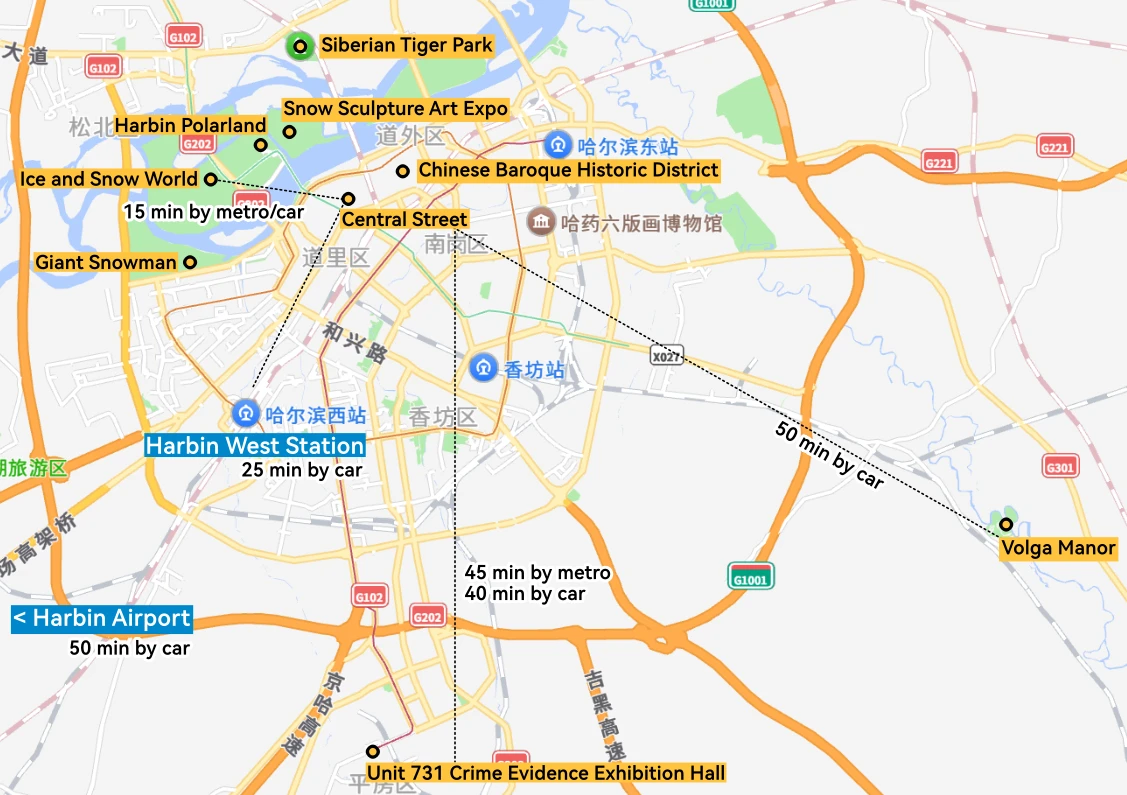
Harbin Taiping International Airport (HRB) The airport has two connected terminals: T1 (International) and T2 (Domestic). You can easily walk between them in 3–5 minutes. The airport sits about 40 km (~25 miles) outside downtown Harbin, with a normal driving time of around 50 minutes.
Getting from the Airport to Downtown
- Airport Shuttle Bus (Most Recommended) This is the most reliable, budget-friendly option for international travelers.
- Cost: ¥20 per person
- Hours & Frequency: Buses run every 30 minutes (or leave early when full) from early morning until the last flight arrives. Travel time is around 1 to 1.5 hours depending on traffic.
- Where to Board: Exit 7 on the 1st Floor of T2. Tickets can be bought at self-service machines or staffed service counters.
- Key Route: Line 3 goes directly to Zhongyang Street (and drops off near the Ibis Hotel).
- Official Taxis Follow the official overhead signs inside the terminal to the taxi pickup line outside.
- Cost: ~¥120–¥160 to downtown
- Best for: Direct hotel drop-offs, families, or travelers with heavy luggage.
- Ride-Hailing Apps (Didi) Usually slightly cheaper than taxis (~¥100–¥130), but not recommended if you don’t speak Chinese.
- Why: Drivers almost always call you upon arrival to coordinate a specific meeting point inside the massive parking garage, which can be very confusing for non-Chinese speakers.
Important Tip for Early Morning Departure Flights If you have an early morning flight leaving Harbin, arrive at the airport 2–3 hours before departure. Early morning flights are cheap, so the airport gets packed early, creating long lines at check-in and security.
Time Crunch: If you are in danger of missing your flight, show your boarding pass/ticket to airport staff immediately—they can fast-track you through security.
Hotel Hack: For very early flights, consider staying at a hotel near the airport the night before (e.g., Mclaren Business Hotel).
Where to Stay in Harbin
Hotels Near Airport Shuttle Bus Stops
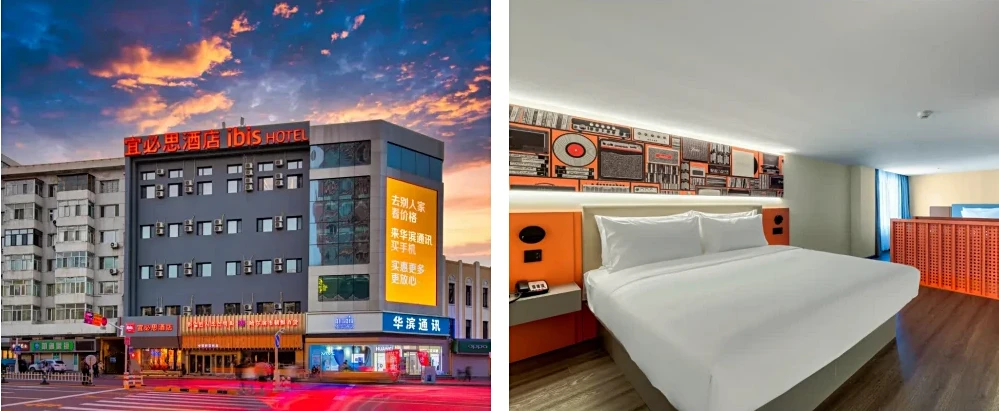
Ibis Harbin Zhongyang Street Airport Bus Station Hotel
The hotel is located directly on Zhongyang Street, next to the airport shuttle bus drop-off point, and an 8-minute walk from Zhongyang Street Metro Station. While the location is very convenient—with just a 10-minute metro ride to the Ice and Snow World—room rates are relatively high, and similarly priced hotels in less central areas often offer better value or larger rooms.
Country Inn by Radisson, Zhongyang Street, Harbin
About 400 meters (a 6-minute walk) from the airport shuttle bus stop on Zhongyang Street, and within a 5-minute walk of Zhongyang Street Metro Station.
Hotels Near Harbin West Railway Station
If you are arriving in Harbin by high-speed train from Beijing, staying right next to the station is usually not ideal due to limited hotel options. A better choice is to take one metro stop to Kaishengyuan Square, where you’ll find a wider range of good-value hotels near a shopping mall, making dining and shopping convenient. The main drawback is the longer daily commute, with travel times of around 30 minutes by taxi (12 km) or 50 minutes by metro to the Ice and Snow World.
Recommended options:
Ibis (Harbin West Railway Station Wanda Square Branch)
Crystal Orange Hotel (Harbin West Railway Station Wanda Square)
Other Good Hotel Areas Near Metro Stations
Harbin Zhongyang Street Habsburg Hotel (Sofia Church)
Located directly above Friendship Palace Metro Station. It is about 15 minutes by metro to the Ice and Snow World, and a 10-minute walk to Zhongyang Street and the Songhua River Ice & Snow Carnival area.
Hampton by Hilton Harbin Zhongyang Street
A 5-minute walk to Museum Metro Station. Despite the hotel’s name, Zhongyang Street is about a 30-minute walk away. From Museum Station, it takes around 15 minutes by metro to the Ice and Snow World.
Harbin Itinerary & Getting Around
Sample 3-Day Itinerary
Day 1: Spend the day at Sun Island International Snow Sculpture Art Expo, then head to Zhongyang Street in the evening and visit Saint Sophia Cathedral.
Day 2: Explore Siberian Tiger Park in the morning, then end the day at the Ice and Snow World in the afternoon or evening.
If You Have an Extra Day
- If you’d like to continue enjoying the snow, visit Volga Manor to see Russian-style architecture covered in snow.
- If you’re traveling with children, consider Harbin Polarland, where you can see a variety of polar animals.
Getting Around Harbin
Taxis & Ride-Hailing: Taxis and ride-hailing services are very convenient and affordable for getting around the city. However, hailing a car can be extremely difficult during peak hours, especially around Zhongyang Street and Ice and Snow World in the evening.
Metro (Subway): The metro network covers most major attractions and is the most reliable transportation mode in winter (no traffic or icy roads to worry about!).
- Hours: Generally runs from ~5:30 AM to 11:00 PM.
- Fares: Distance-based, typically between ¥3 and ¥7.
- How to Pay: You can pay using the transport transit code in the Alipay app, or purchase single-journey tokens with cash at station ticket machines/counters. (Note: Direct contactless payment with foreign credit/debit cards is currently not supported at turnstiles.)
Maps and Navigation Tips
- Avoid Google Maps: Google Maps is not reliable in China due to outdated map data and inaccurate location pins.
- For iPhone Users: Apple Maps works surprisingly well in China and provides accurate, up-to-date transit routing in English.
- For Android Users: Download Amap (Gaode Maps / 高德地图), one of China’s primary mapping apps, which now offers a basic English interface.
Harbin’s Top Attractions
Harbin Ice and Snow World 冰雪大世界
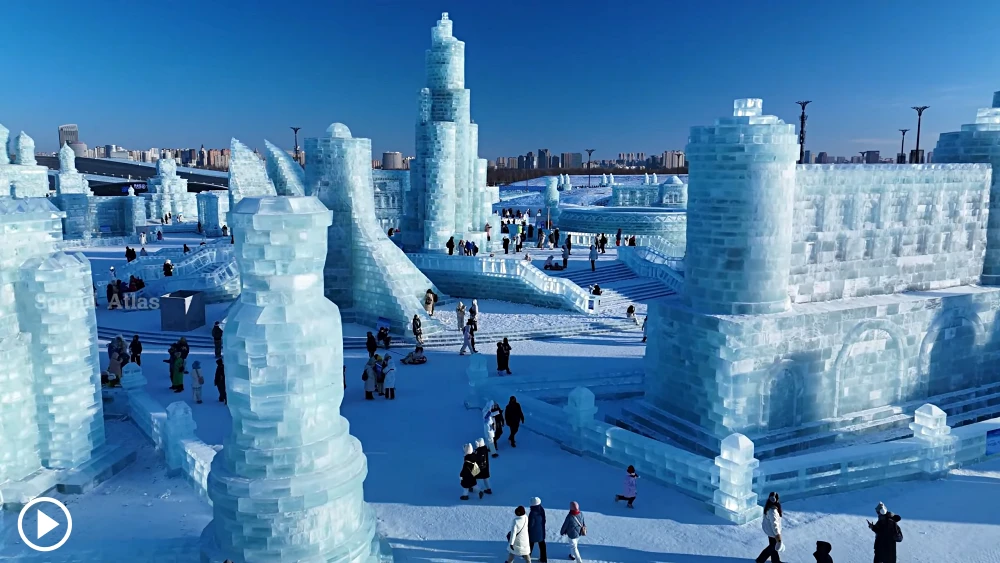
As the world’s largest ice-and-snow theme park, Harbin Ice and Snow World covers roughly 1.2 million square meters and has been held annually since 1999. It is world-famous for its massive, fairytale-like ice structures and dazzling evening light displays.
Season & Hours: Late December to mid-February | 10:00 AM–10:00 PM
Admission: Adults ¥328; Visitors under 18 ¥240; Kids under 1.2 m and Seniors (65+) Free. Tickets available at the gate or on Trip.com.
Recommended Time: ~2 hours if just viewing ice sculptures; ~6 hours if doing rides, shows, and photography.
Tips & Survival Guide:
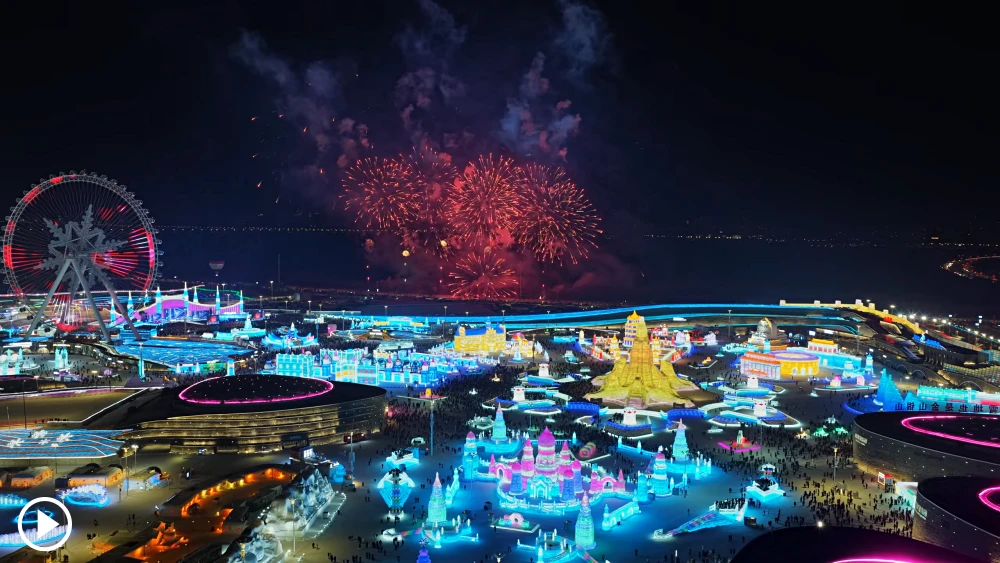
Day vs. Night: Daytime is best for photographing clean, crisp ice sculptures, while nighttime shows off the dramatic neon illuminations. Sunset is around 4:00 PM, and crowds swell rapidly after dark.
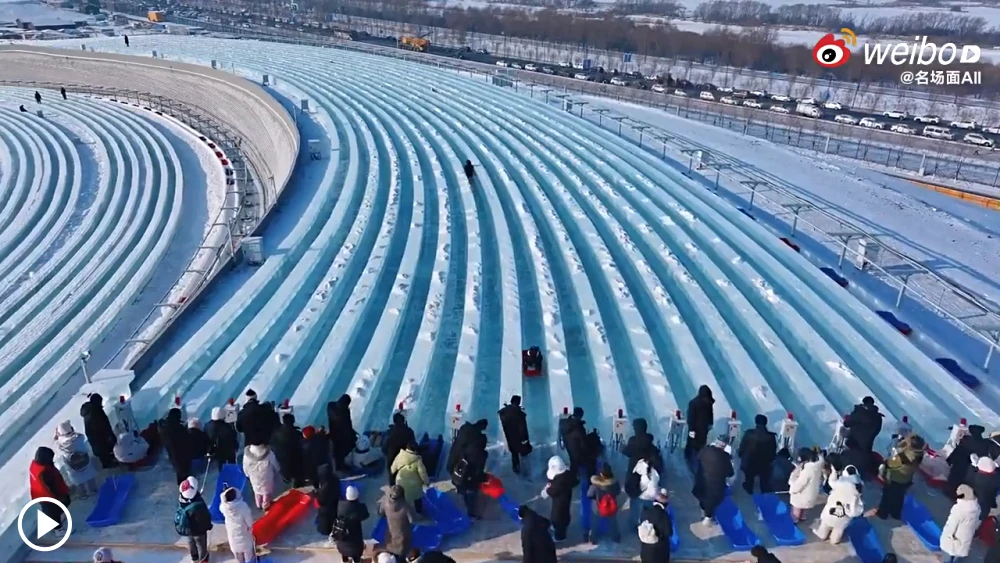
Shows & Rides: Included with your ticket are ice slides, a giant Ferris wheel, and live car/motorcycle stunt shows (usually 2–3 performances daily, e.g., 5:00 PM and 7:00 PM). Seating for shows is limited, so arrive early to line up.
Booking the Big Rides (Crucial!): The park’s three superstar attractions—the 521-meter slide, 300-meter slide, and Ferris wheel—require a virtual queue reservation. You must scan QR codes on signs inside the park to grab a slot.
How it works: Time slots drop every 1–2 hours. They sell out in under 20 seconds, so be fast!
Reality check: Even with a successful reservation, you’ll still wait about 30 minutes in an outdoor line. Lines are shortest during the day and peak after 6:00 PM.
Height & Age Limits: The main giant slides are restricted to guests aged 15–59 who are at least 1.6 m (5'3") tall.
Dressing for Survival: Temperatures drop brutally at night, and you’ll be outdoors for hours. Wear heavy layers, insulated boots, hand warmers, and complete cold-weather gear.
Food & Amenities: Outdoor snack stands are scattered around, but most restaurants are inside the heated Ice & Snow Food Court (great for warming up). Power bank rental stations are available inside.
Getting There & Getting Away:
By Taxi / Ride-Hailing: Search for “Harbin Ice and Snow World East Entrance 哈尔滨冰雪大世界东检票厅” as your destination.
By Metro: Take Line 2 to Ice and Snow World Station (Exits 3 or 4 are a 2–3 minute walk to the East Entrance).
Leaving at Night: Getting a ride-hailing car after 8:00 PM is nearly impossible due to traffic and massive crowds. Strongly consider booking a hotel along Metro Line 2. Even for the metro, expect a 20–30 minute line outdoors just to enter the station at night, so plan your exit wisely.
Watch: Harbin Ice and Snow Festival 2026
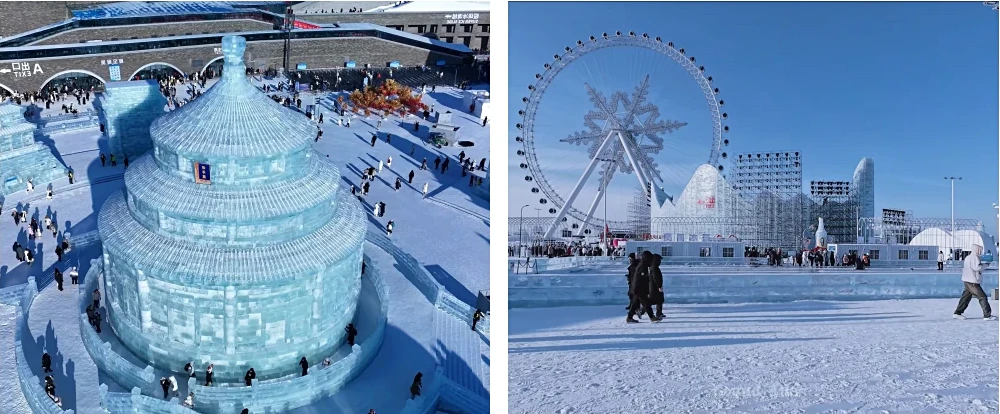
Watch: The Most Beautiful Night in China: Harbin Ice City Fireworks
Watch: Ice Slide at the Harbin International Ice and Snow Festival
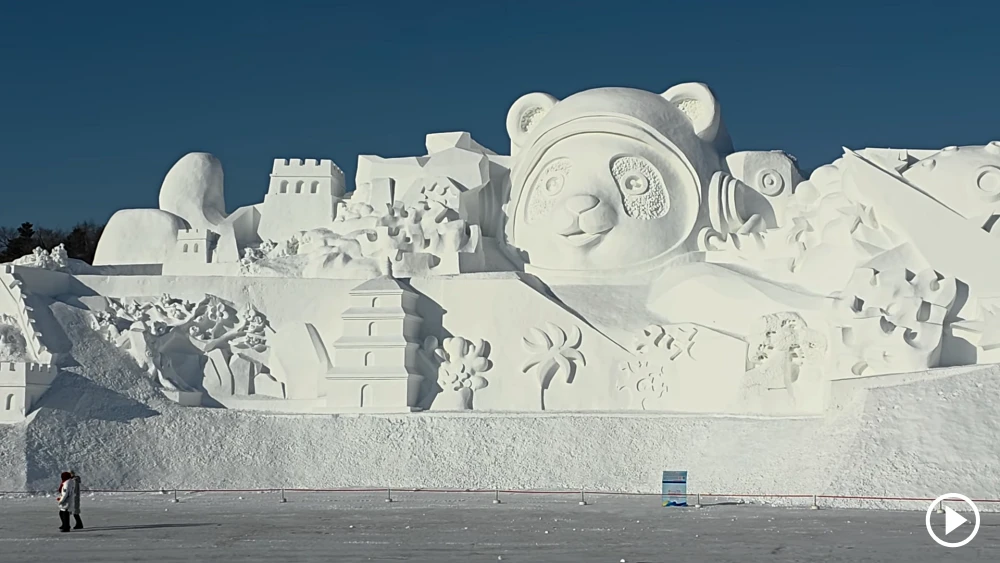
Sun Island International Snow Sculpture Art Expo 太阳岛国际雪雕艺术博览会
Covering roughly 600,000 square meters, this annual expo showcases a massive collection of intricate snow sculptures created by artists from over a dozen countries.
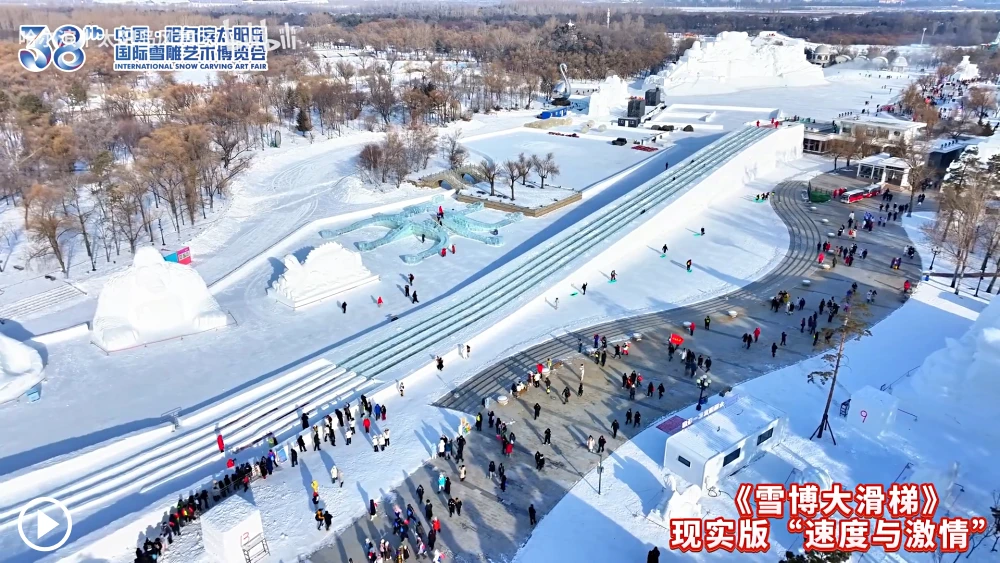
Unlike the Harbin Ice and Snow World, Sun Island is a daytime-only attraction. It is generally far less crowded, and its 240-meter ice slide usually has a very short wait—often just around 5 minutes, so you can ride it again and again. (By comparison, the 500-meter slide at Ice and Snow World often requires an hour-long wait.)
Best of all, most activities—including the ice slide, ice bikes, and carousel—are included in your admission ticket at no extra cost.
Season & Hours: Late December to early February, 9:00 AM–5:00 PM
Admission: Adults ¥198; Children ¥128 (Tickets available online or at the gate)
Recommended Time: 2–4 hours
Tips:
Timing Matters: Tickets are cheaper in early December, but many major sculptures won’t be finished yet, the ice slide may be closed, and snow cover can be sparse. The ideal time to visit is from late December through February.
Watch the Sunset: Sun Island is huge, and key sculptures are spread deep inside the park. Sunset in winter happens early (around 4:00–4:30 PM), so avoid entering too late if you want enough daylight to explore.
Off-Season Note: Outside of the winter snow expo, Sun Island is just a regular public park and not a must-see attraction for international travelers.
Getting There:
By Taxi / Ride-Hailing: Search for “Sun Island Snow Expo Gate 1 太阳岛雪博会1号门” as your destination.
By Metro: Take Line 2 to Sun Island Station. Exits 2 and 3 are a short 4–5 minute walk to Gate 1.
Watch: International Snow & Ice Art Expo
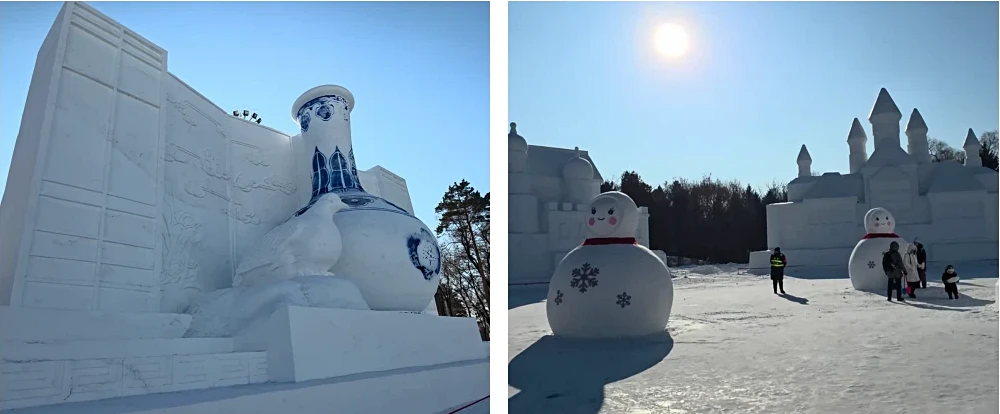
Watch: 坐上太阳岛雪博会《雪博大滑梯》,做追风的少年!
Harbin Zhongyang Street 中央大街
Measuring roughly 1,450 meters long, Zhongyang Street is lined with dozens of historic European-style buildings, giving Harbin its distinct “Oriental Moscow” character. It is the city’s most famous promenade and tourist hub.
Recommended Time: 30 minutes to 1 hour (longer if dining)
Where to Eat Nearby:
Laochang Spring Pancake (老昌春饼): An iconic local chain specializing in Chunbing (Spring Pancakes). While Beijing duck uses thin wrappers for roast duck, here you wrap a wide variety of savory, stir-fried meat and vegetable dishes inside warm, soft pancakes (~¥50 per person).
Shanhetun Iron Pot Stew (山河屯铁锅炖): A classic Northeast China culinary experience! A giant cast-iron pot is built directly into your dining table, filled with meats and veggies, and simmered right before your eyes. Perfect for freezing winter days (~¥90 per person). Warning: It takes about 40 minutes to cook, so lines move very slowly. Avoid weekends, peak meal hours, and public holidays.
Tatoc Western Restaurant (塔道斯西餐厅): Founded in 1901, this is one of Harbin’s oldest and most historic Russian restaurants (~¥150 per person).
Getting There:
- By Metro: Take Line 2 to Zhongyang Street Station (Exit 1), then walk about 300 meters east.
- By Taxi / Ride-Hailing: Set destination to “Lukfook Jewelry (Zhongyang Street Flagship Store) 六桂福珠宝(中央大街旗舰店)” at the southern end, or start at Saint Sophia Cathedral and walk down to Zhongyang Street.
Watch: HARBIN CENTRAL STREET ZHONGYANG DAJIE ONE OF THE FAMOUS STREETS IN HARBIN
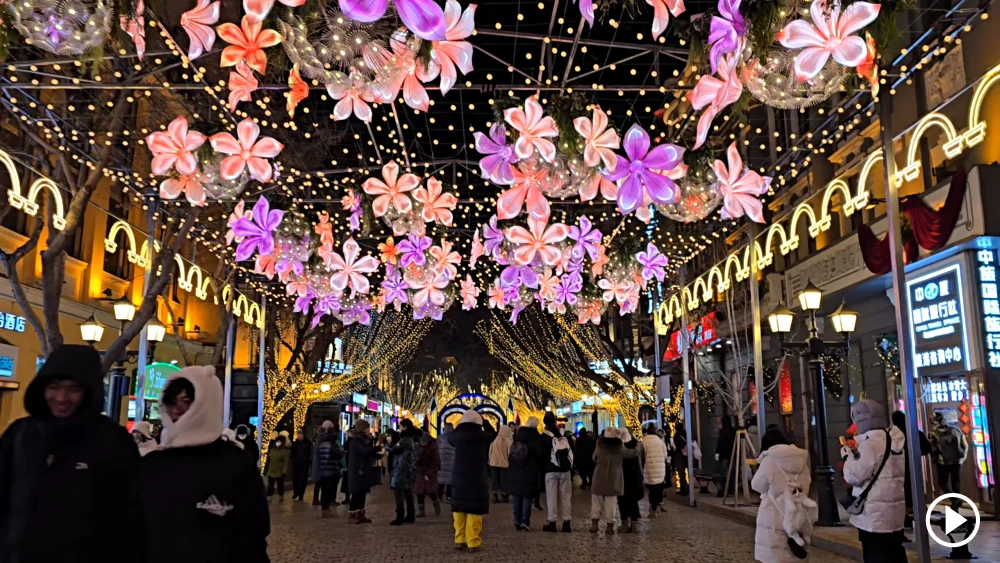
Watch: Central Street, Harbin | Asia’s Longest Pedestrian Street
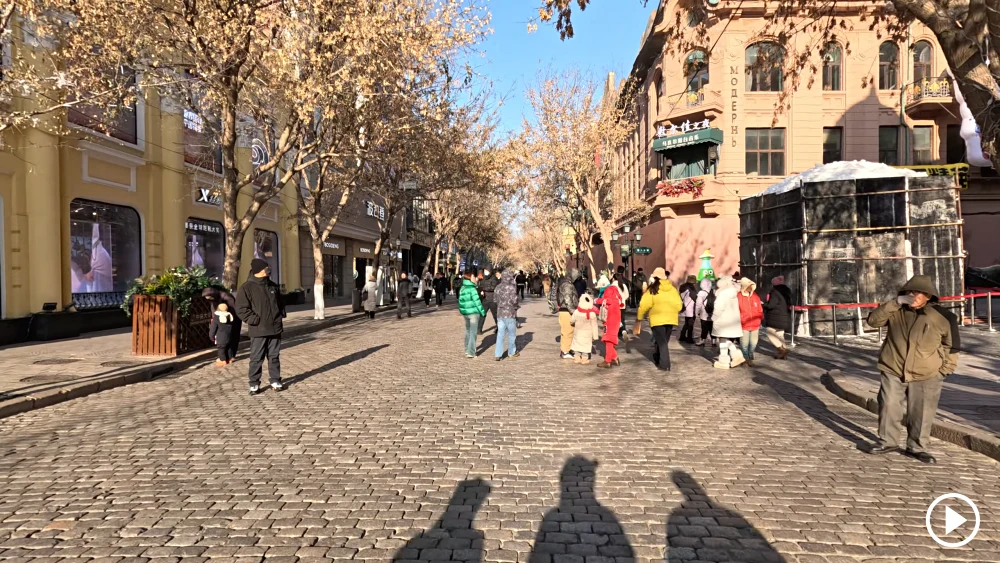
Nearby Attractions (Within Walking Distance)
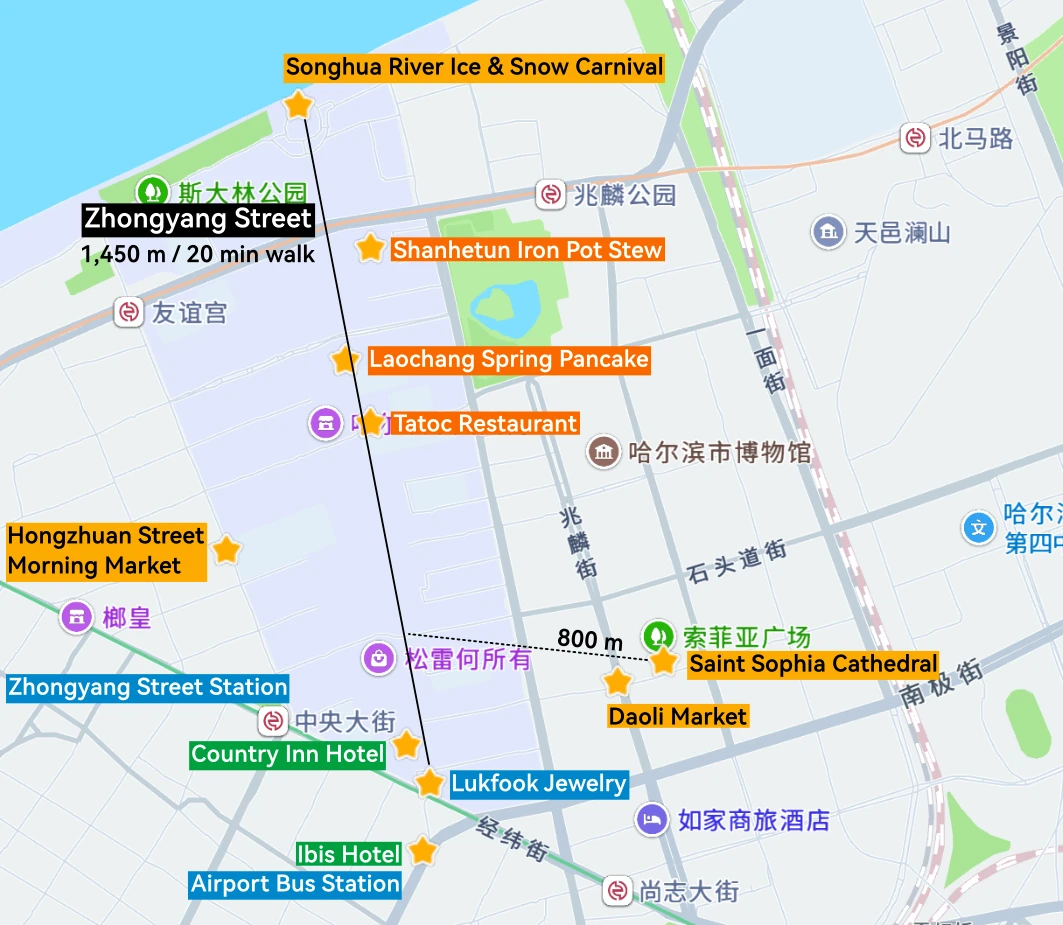
1. Saint Sophia Cathedral
A Byzantine architectural masterpiece completed in 1932, once the largest Eastern Orthodox church in the Far East. It was built to serve the Russian military and engineers constructing the Chinese Eastern Railway. Today, it is no longer an active church, but a museum/landmark featuring historical murals and occasional live classical music performances inside.
Admission: ¥20
Watch: 索菲亞大教堂
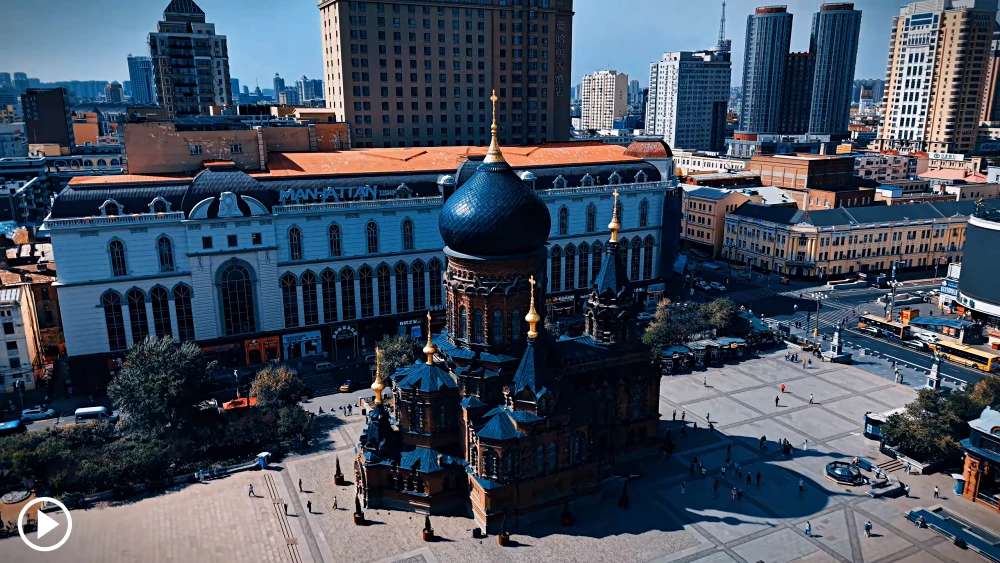
Watch: Harbin | St. Sophia Cathedral
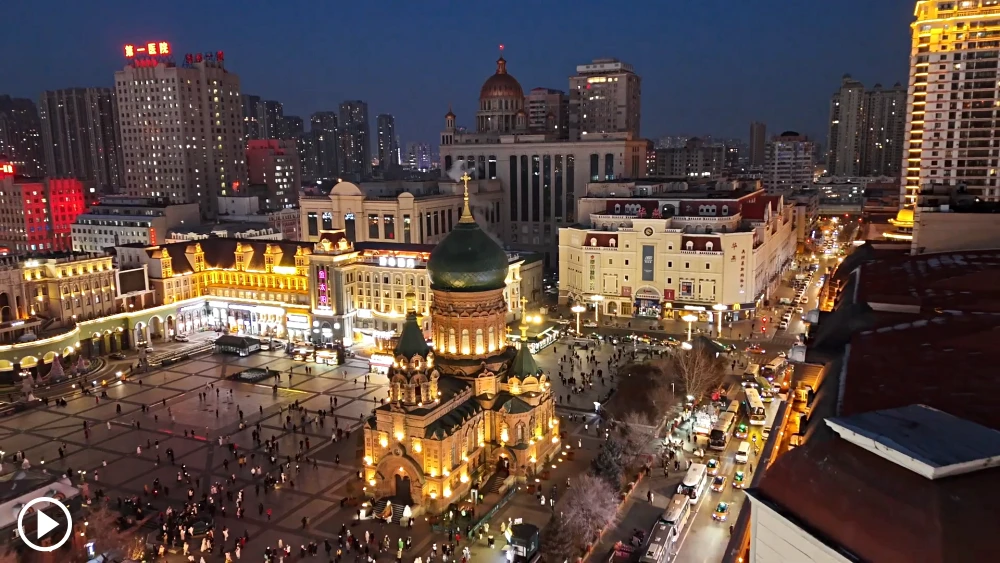
2. Daoli Market (道里菜市场)
Located right across from Saint Sophia Cathedral, this indoor market dates back to 1902. Originally a neighborhood grocery market, it is now a bustling food hall packed with local street snacks and pastries.
Hours: 8:30 AM–6:00 PM
Tip: Avoid 9:30 AM–2:00 PM when large tour groups completely pack the aisles.
Watch: Daoli Market (Harbin Travel Guide) - Harbin Daoli Vegetable Market

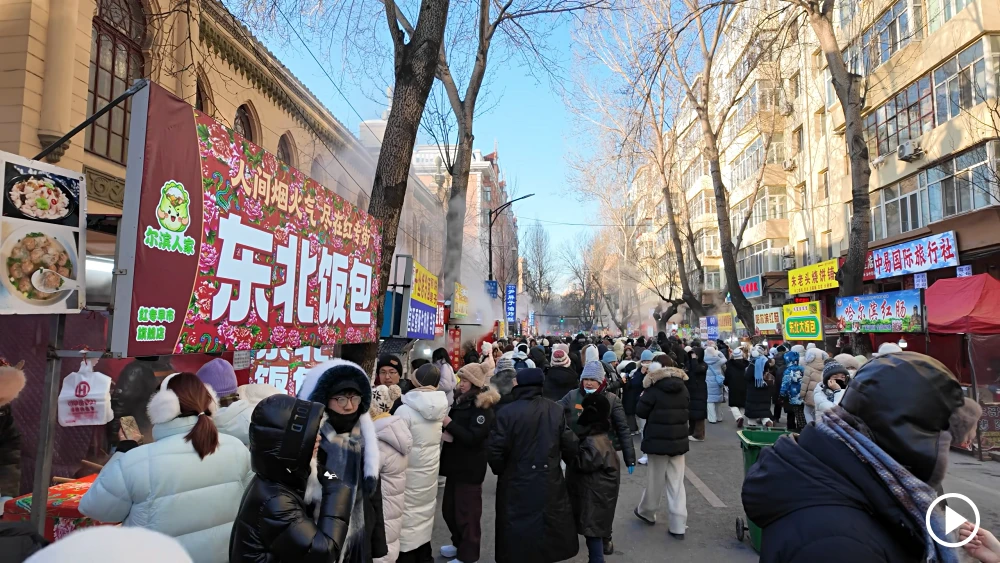
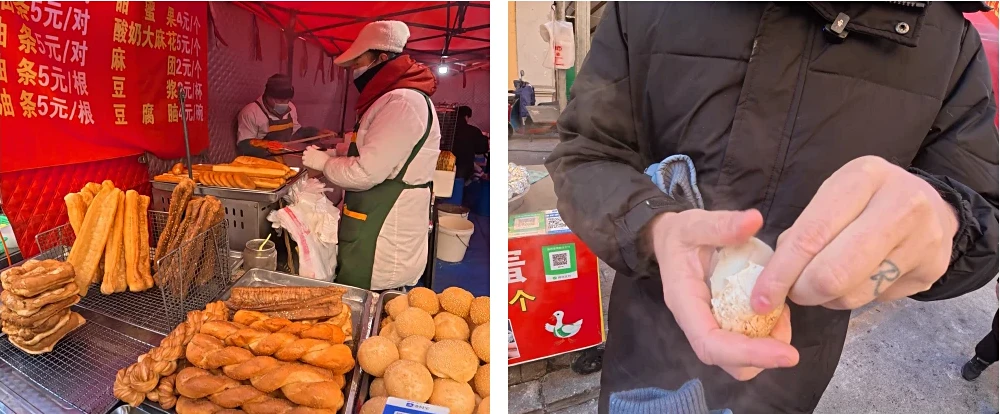
3. Hongzhuan Street Morning Market (红专街早市)
A 500-meter-long traditional morning market filled with steaming street food stalls, breakfast treats, and local life.
Winter Hours: 6:00 AM–10:00 AM (Extremely crowded with tourists)
Watch: 6AM in Harbin’s Craziest Market… Eating Like Locals
4. Songhua River Ice & Snow Carnival 松花江冰雪嘉年华
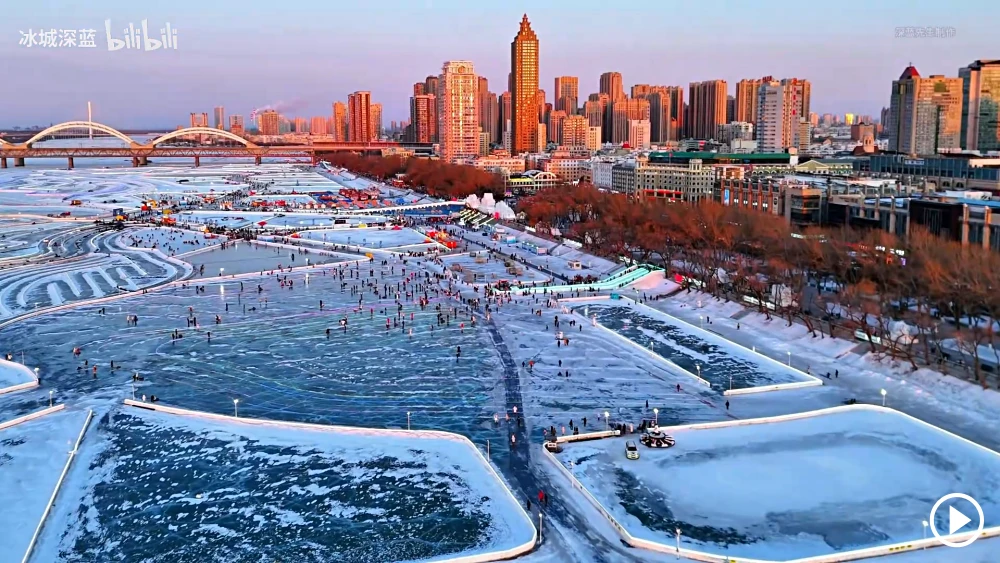
Located at the northern end of Zhongyang Street, the frozen Songhua River turns into a massive winter playground.
Season & Hours: Late December to mid-February | 9:30 AM–9:30 PM
Admission: Free entry (Rides and activities are pay-per-use)
Recommended Time: 1–2 hours
Tips & Money-Savers:
- Skip the Pass: Most rides cost ¥30–¥50 each. The ¥298 “all-access pass” includes many repetitive activities and is generally not worth it.
- Snow Tube Drifting: The most popular attraction! A Jeep pulls a ring of snow tubes in high-speed circles on the ice (~¥50 per ride).
- Kid Hack: Rent a basic snow sled/tube (¥30 rental + ¥100 deposit) and head near Gate 2 for the free public sliding area. It’s smaller than the paid slides, but totally free!
Watch: 获奖作品之哈尔滨松花江冰雪嘉年华气贯苍穹
Siberian Tiger Park 东北虎林园
Established in 1986, the Siberian Tiger Park spans 1.44 million square meters and is one of the world’s largest breeding and conservation centers for Siberian tigers. Starting with just eight tigers, the park’s population has grown to around 300 today.
Opening Hours: 8:00 AM–5:00 PM (Spring/Summer/Autumn) | 8:30 AM–4:30 PM (Winter)
Admission: Adults ¥90; Children under 18 ¥45; Kids under 1.2 m and Seniors (65+) Free.
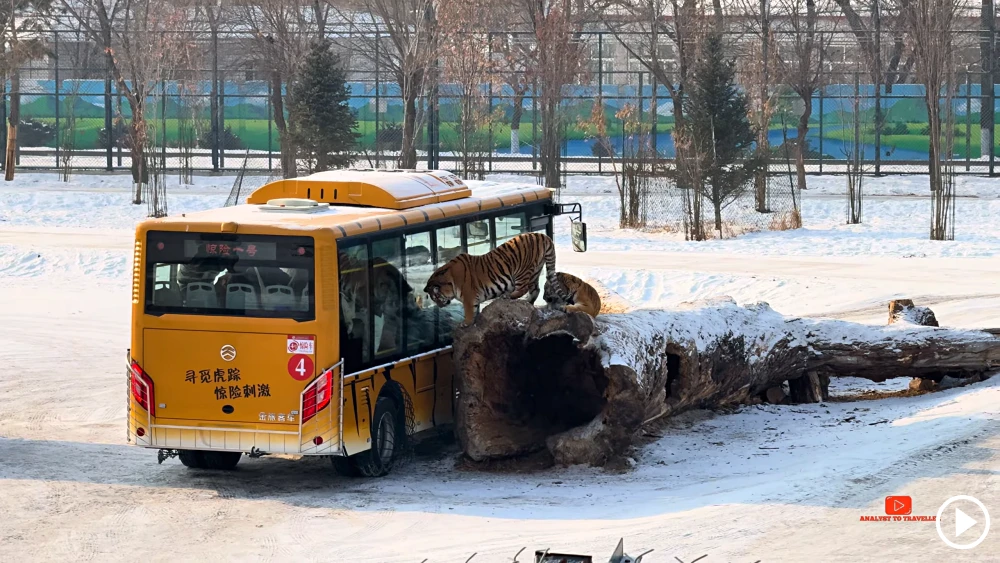
Sightseeing Bus Ticket (Mandatory): Standard Bus ¥20 | Adventure Bus ¥40. (Note: Only the Adventure Bus operates during winter.)
Booking: Tickets are available on Trip.com.
How to Visit:
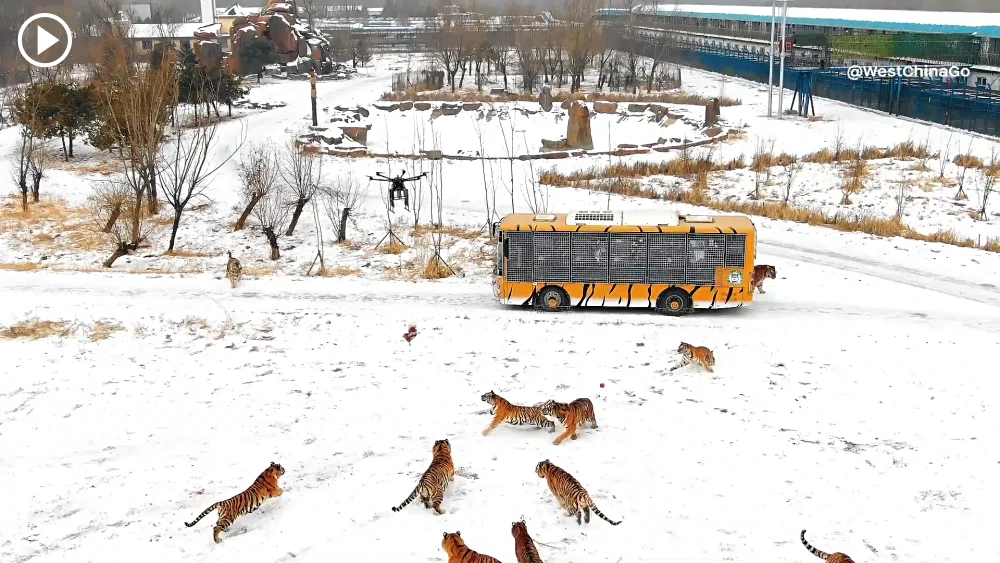
Tour Route: Every visit starts with a mandatory sightseeing bus tour through the open tiger enclosures, followed by a self-guided walk through the pedestrian area.
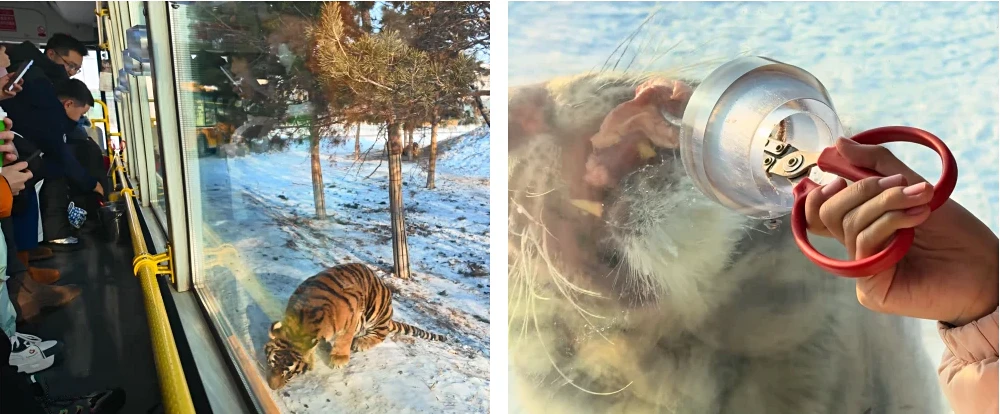
Standard Bus vs. Adventure Bus: Both follow the same route, but only the Adventure Bus allows you to feed the tigers. Lines for the Standard Bus are usually shorter.
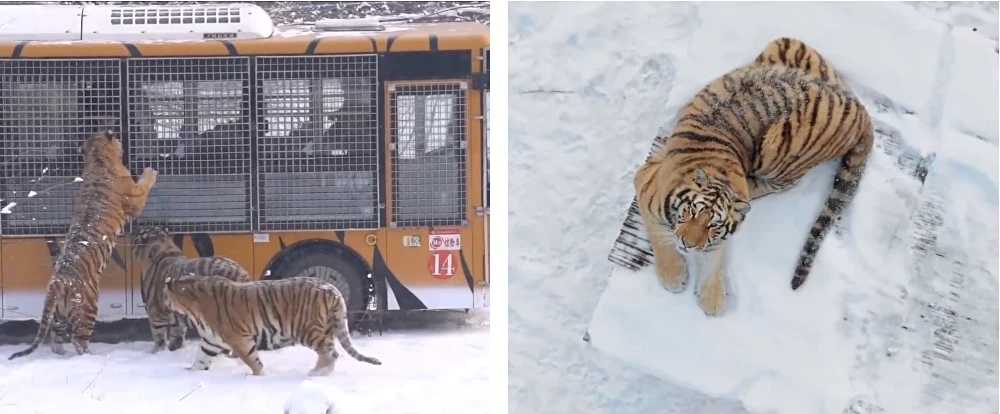
Bus Types: The Adventure Bus comes in two types—one with metal mesh/cages and another with reinforced glass windows. Both cost the same ¥40, so choose based on your preference.
Feeding Tigers: On the Adventure Bus, you can buy raw meat strips from the driver to feed the tigers through the feeding slots. Meat costs ¥20 per piece (sold in buckets of 5 pieces for ¥100). You pay after the ride.
Pedestrian Area: Don’t miss the tiger cub nursery here, where you can see baby tigers roughly the size of house cats.
Getting There: By Taxi / Ride-Hailing: There is no metro station nearby. Search for “Siberian Tiger Park Visitor Center 东北虎林园游客中心” as your destination. It takes about 25 minutes by car from Zhongyang Street.
Note & Conservation Context:
- Siberian tigers are native to Asia, and all six surviving tiger subspecies are endangered. The park’s core mission is to prevent their extinction, and some adult tigers are periodically transferred to zoos worldwide to maintain genetic diversity.
- While the park’s ultimate vision is to reintroduce tigers into the wild, doing so is extremely complex. Unlike social lions, tigers are solitary hunters. A single male Siberian tiger needs a home range of 500–1,000 square kilometers to survive—an area roughly five to ten times the size of Manhattan! Because tigers here are regularly fed by humans, their natural territorial aggression is softened, allowing them to coexist in large numbers within the park. While this captive breeding approach saves the species from immediate extinction, it also makes true wild reintroduction a massive challenge.
Watch: World’s Largest Siberian Tiger Park in China Harbin
Watch: Harbin Siberian Tiger Park
Harbin’s Optional Attractions
Volga Manor 伏尔加庄园
A scenic area famous for its Russian-style architecture. Its biggest plus is that it’s usually far less crowded than major city-center attractions. The downside is its location—about 30 km (18 miles) outside downtown Harbin.
Opening Hours: 9:00 AM–4:30 PM
Admission: Adults ¥188; Visitors 18 & under ¥98; Kids 12 & under Free. Tickets can be booked on Trip.com.
Recommended Time: 3–5 hours
Tips:
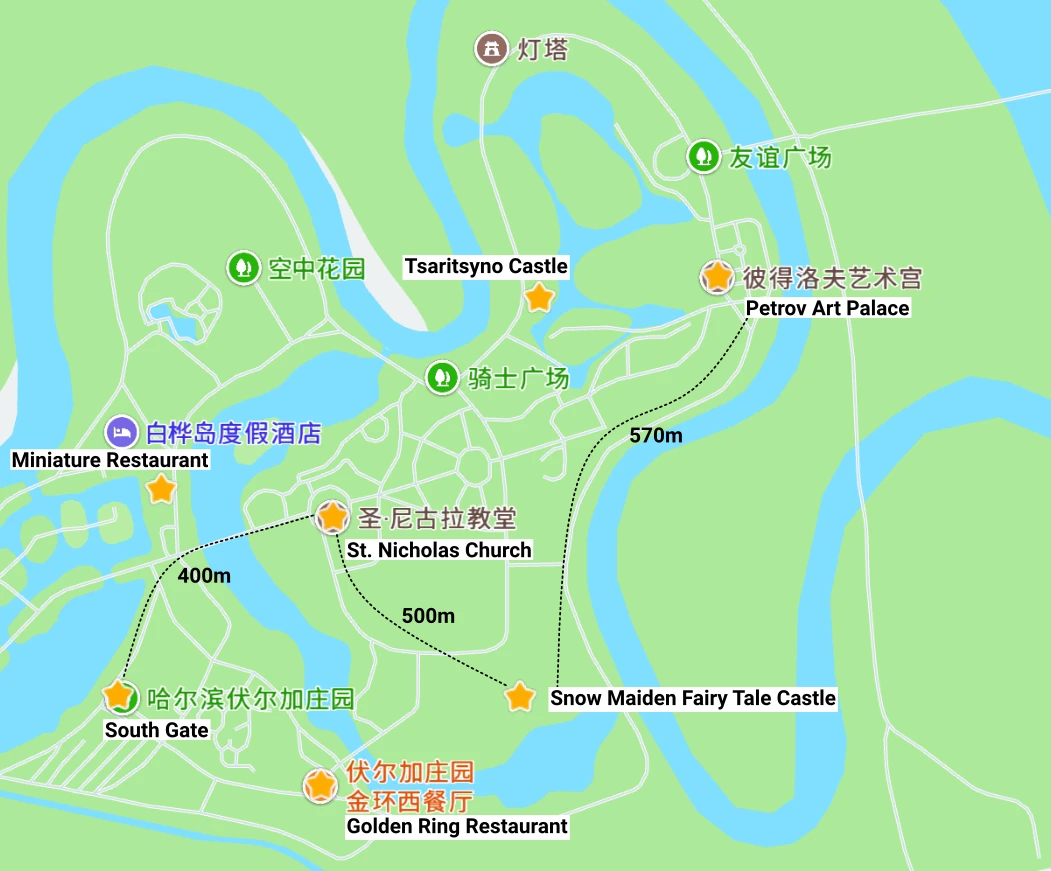
Getting Around: After entering, take the free shuttle bus to the last stop, Snow Maiden Fairy Tale Castle (雪姑娘童话城堡), and explore on foot from there. If you get tired, sleigh trains are available for ¥20–¥40 per ride.
Exhibitions: All indoor exhibition halls in the park are free to enter.
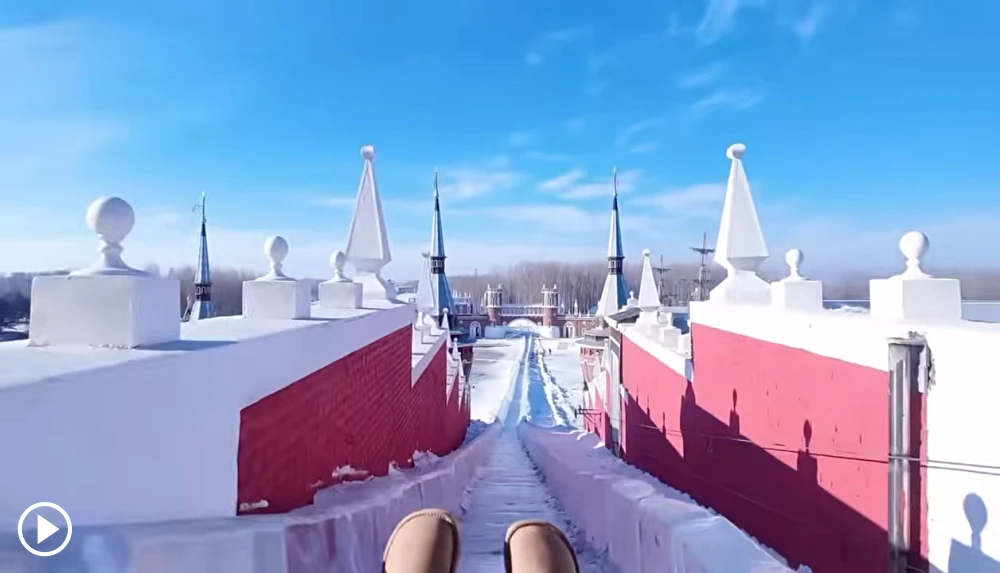
Snow Slides: The big ice/snow slides cost about ¥20 per ride. The most recommended one is at the Petrov Art Palace 彼得洛夫艺术宫. Alternatively, just buy a plastic sled inside the park for ¥20 and slide down any small hill on your own!
Dining Options: There are three main restaurants in the park:
Golden Ring Western Restaurant 金环西餐厅: Russian food (~¥100 per person).
Miniature Restaurant 米尼阿久尔餐厅: Chinese buffet (¥70 per person).
Tsaritsyno Castle 察里津诺堡 (3rd Floor): Fast food like burgers and fries.
Getting There & Away:
Going There: For ride-hailing services, set your destination to “Volga Manor (South Gate), Harbin. 哈尔滨伏尔加庄园(南门)” The ride takes about 50 minutes and costs roughly ¥70. (Trip.com also sells combo deals that include admission and round-trip shuttle service.)
Getting Back: Hailing a ride online from the manor can be difficult and may take a long time. If you can’t get one:
- Head straight to the parking lot to look for waiting taxis (they may charge a bit extra).
- Ask the entrance staff for help—they can call a cab for you.
- Look for the shuttle vans outside the entrance (~¥30 per person). They depart when full (roughly once per hour), and Route 1 drops off near Saint Sophia Cathedral.
Watch: Harbin | Volga Manor | DJI Mini 4 Pro
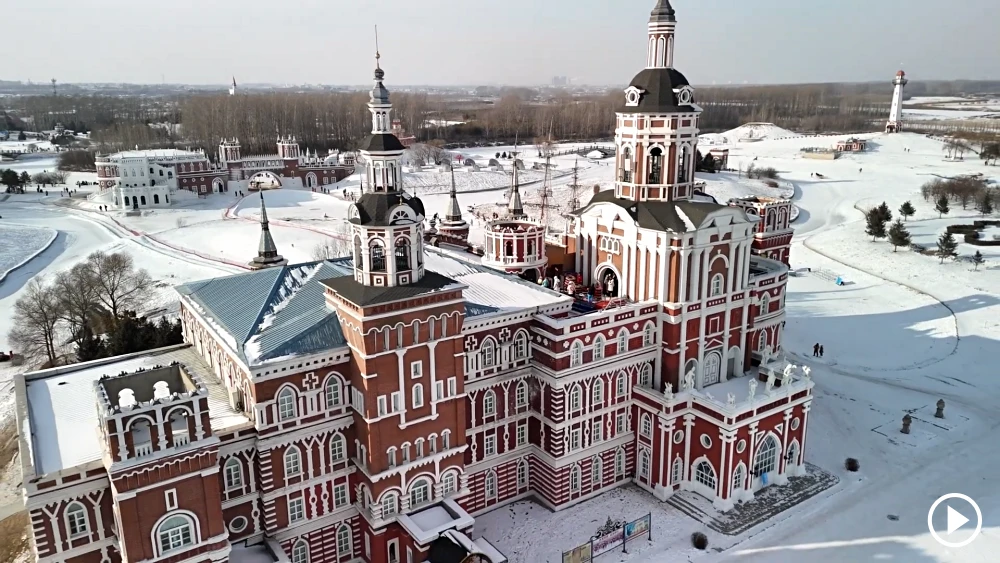
Watch: I Didn’t Expect This in Harbin, China | Russian Architecture 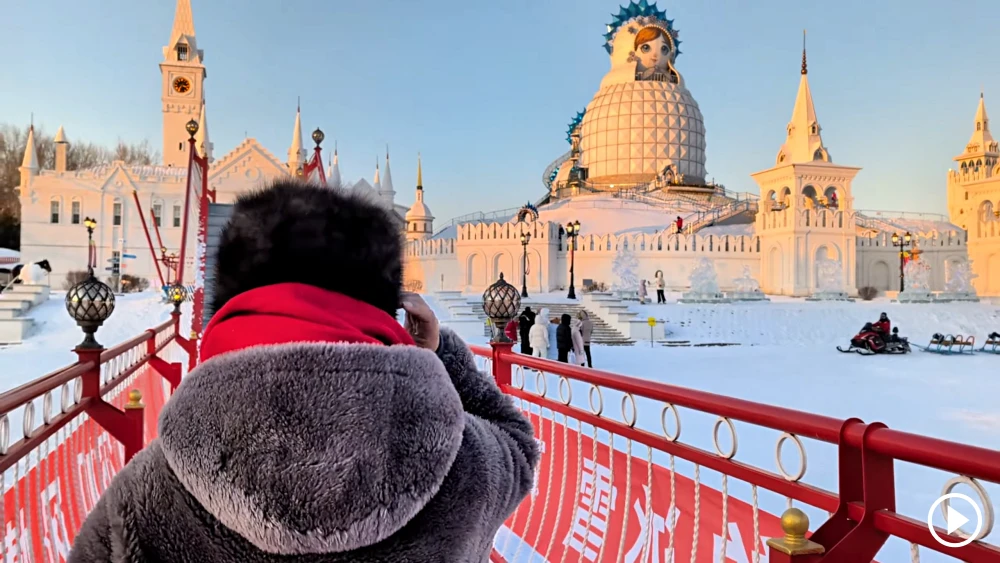
Watch: Gliding down the slide at Volga Manor
Harbin Polarland 极地公园
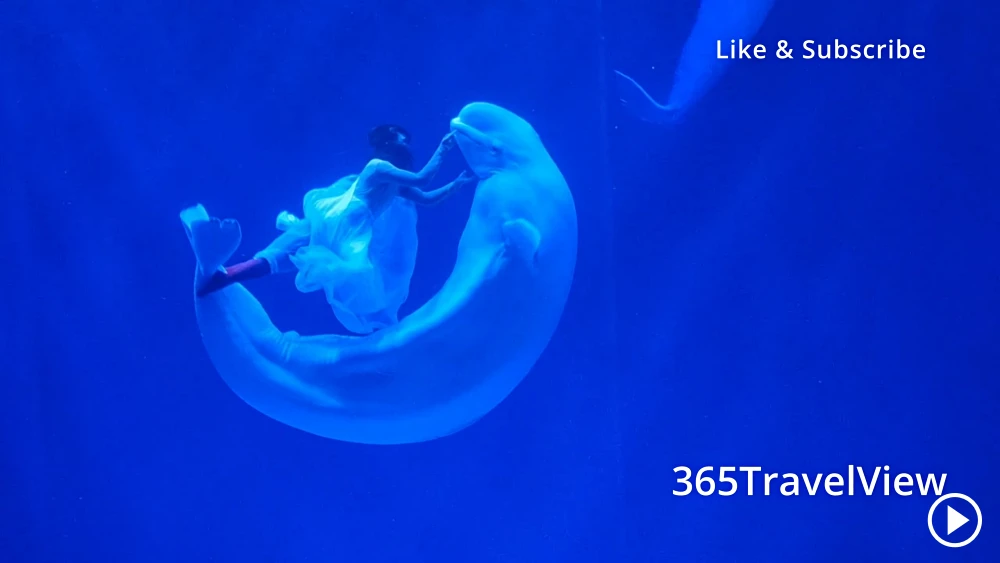
One of Harbin’s top family-friendly attractions, Harbin Polarland features four main venues: the Polar Park (most popular), Oceanarium, Penguin Pavilion, and Exotic Pets Pavilion. The main highlights are the beluga whale shows and the outdoor penguin parade.
Opening Hours: 9:00 AM–5:00 PM
Admission: Single tickets cost ¥198 for Polar Park, ¥130 for Oceanarium, ¥70 for Penguin Pavilion, and ¥60 for Exotic Pets Pavilion. (Combo tickets are also available.) Tickets can also be booked through Trip.com.
Recommended Time: 2–5 hours
Tips:
- Beluga Whale Show: Don’t miss this in the main Polar Park. Shows run at least twice daily at 10:30 AM and 3:30 PM.
- Dolphin Show: Also worth catching, with daily shows at 11:30 AM and 2:30 PM.
- Winter Penguin Parade: Features around 50 penguins marching in the outdoor plaza daily at 10:30 AM and 1:30 PM. It’s completely free to watch—you do not need a ticket to the Penguin Pavilion. (Note: Parades may be canceled due to extreme cold or animal well-being.)
- Ticket Advice: Most visitors only visit the main Polar Park. If you want to see extra venues, buy a combo ticket on-site (e.g., Polar Park + Oceanarium is ~¥240; all 4 venues is ~¥319).
- Booking Warning: Be careful on Trip.com. The “6-venue ticket” listed online is NOT for six separate buildings—it just refers to six zones inside the main Polar Park. True combo tickets must be purchased on-site or via WeChat.
Getting There:
- By Taxi / Ride-Hailing: Search for “Harbin Polarland 哈尔滨极地公园” as your destination.
- By Metro: Take Line 2 to Sun Island Station. Exit 1 leads directly to Polar Park, while Exit 2 goes toward the Oceanarium.
Watch: Explore Harbin Polarland: A Must-See Besides the Ice Festival!
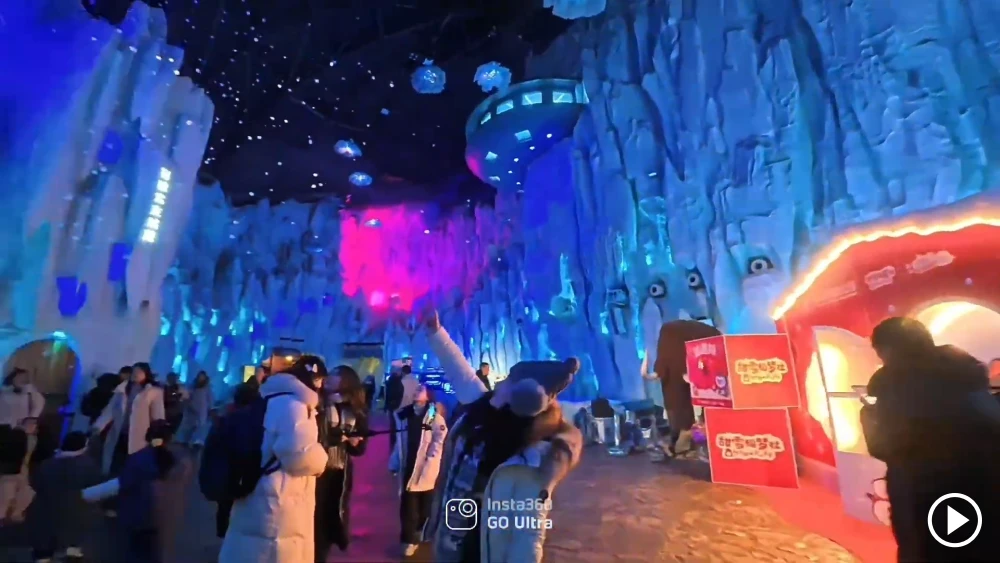

Watch: Penguins Parade In Tiny Backpacks For Winter Visitors In China’s Harbin

Watch: Beluga Whale Show Harbin
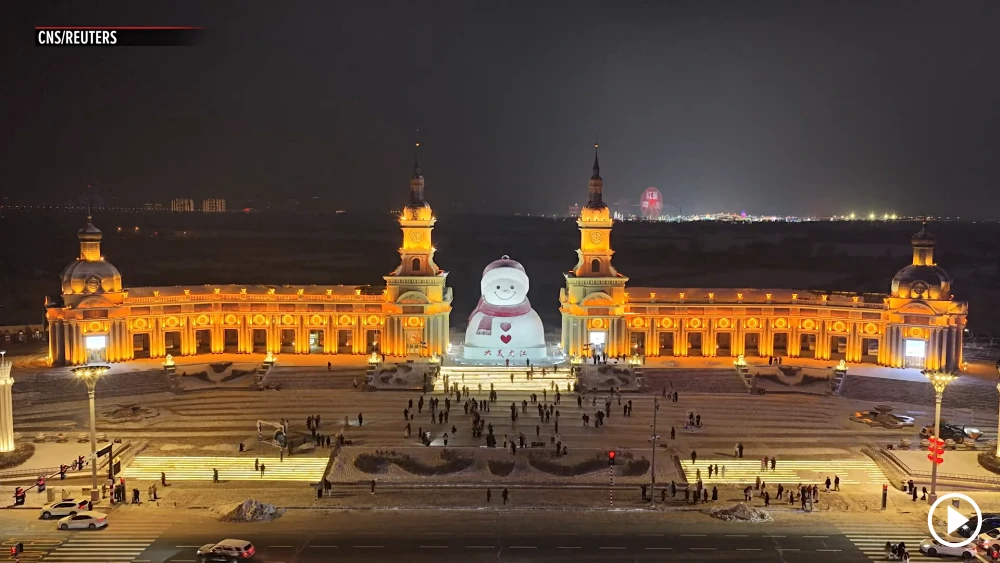
Qunli Music Park Giant Snowman 群力音乐公园大雪人
In 2019, sanitation workers spontaneously built a 3-meter-tall snowman after their shift at the Music Corridor. Though simple and rough, it brought warmth and joy to local residents during the freezing winter.
The snowman went viral, leading the Harbin government to fund the project and hire professional teams to create a giant snowman as an annual winter landmark. Today’s version stands about 19 meters (62 feet) tall, 14 meters (46 feet) long, and 11 meters (36 feet) wide. Wearing a bright red hat and scarf, it takes 64 sculptors 11 days to carve.
Season: Late December to mid-February (Accessible 24/7)
Admission: Free
Recommended Time: 15 minutes
Tips:
Most visitors stop briefly just for photos. The best time to visit is around 4:00–4:30 PM, when the lights turn on. This way, you can see it both in natural daylight and illuminated after dark.
Getting There: By Taxi / Ride-Hailing: There is no metro station nearby. Search for “Qunli Giant Snowman (Bus Stop) 群力大雪人(公交站)” as your destination.
Watch: 19-meter-tall snowman illuminates night sky in northeast China’s Harbin
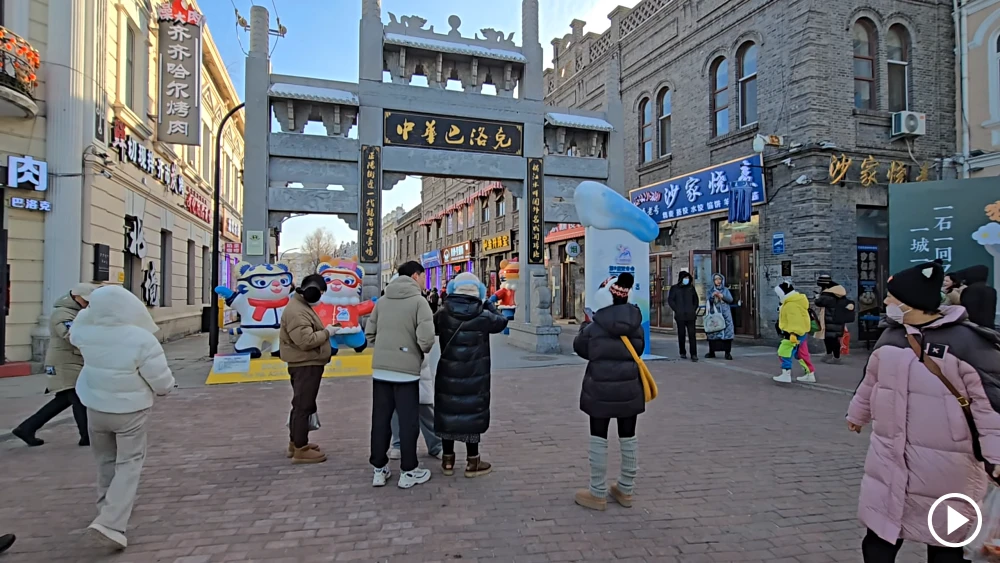
Chinese Baroque Historic District 中华巴洛克街区
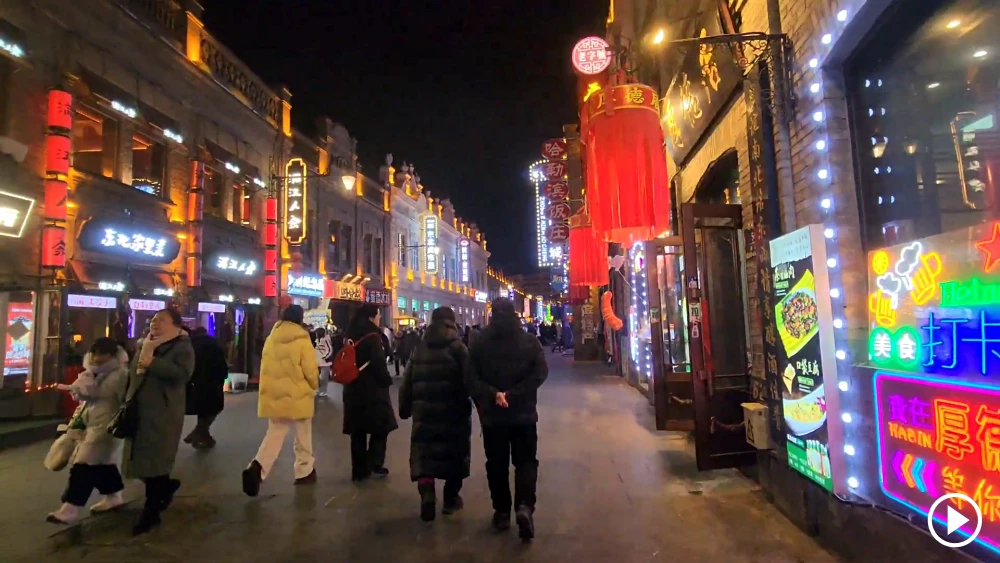
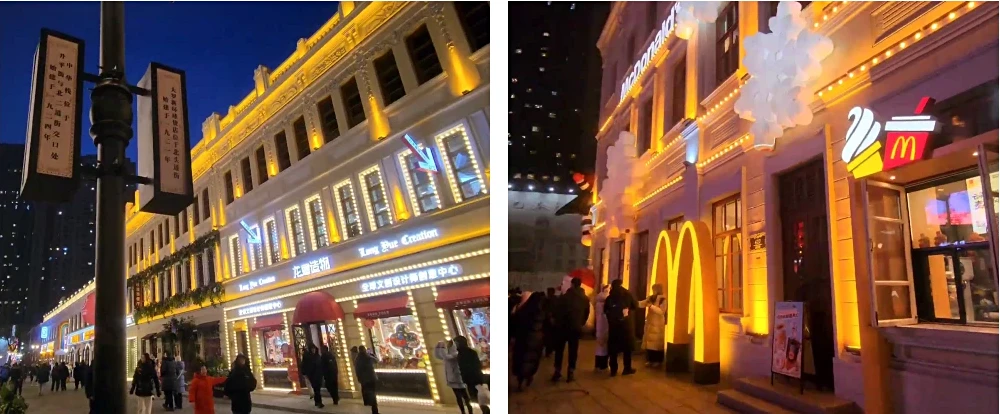
The district’s architecture combines European Baroque exteriors with traditional Chinese decorative motifs like peonies, pomegranates, and bats—symbols of good luck, prosperity, and wealth. Inside, however, the buildings follow the layout of traditional Chinese courtyard houses (Siheyuan).
Developed in the early 20th century, the area is now lined with local restaurants and souvenir shops. The vibe is somewhat similar to Zhongyang Street, but it is usually less crowded with tourists, and it looks especially beautiful at night.
Opening Hours: Most shops open from 10:00 AM to 9:00 PM
Recommended Time: 30 minutes–1 hour
Tip: The area is especially atmospheric and photogenic after dark.
Getting There
- By Taxi / Ride-Hailing: Search for “McDonald’s (Chinese Baroque Restaurant) 麦当劳(中华巴洛克餐厅)” as your destination.
- By Metro: Take Line 3 to Chinese Baroque Historic District Station (Exit 1), which opens directly into the area.
Watch: THE LARGEST PRESERVED AREA OF CHINESE BAROQUE ARCHITECTURE IN CHINA
Watch: Harbin, Chinese Baroque street
Unit 731 Crime Evidence Exhibition Hall 731罪证陈列馆
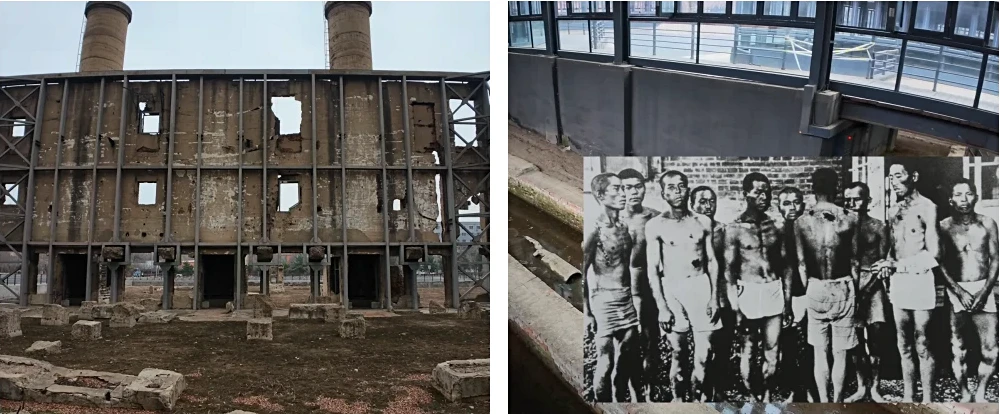
Harbin is a city full of festive and cheerful charm, but like many places around the world, it also carries a painful history that shouldn’t be forgotten. Unit 731 was established in 1933 by Japanese militarists. During World War II, it became the largest biological warfare research, experimentation, and production unit in world history. With Harbin as its headquarters, the unit conducted biological warfare and human experiments across Asia, including China, Singapore, Thailand, Malaysia, the Philippines, and Indonesia.
The museum is split into two main areas:
- Exhibition Hall: Covers the history of Unit 731, its biological warfare program, and the destruction of evidence related to chemical and biological weapons.
- Historic Site Area: Preserves the physical remains of original facilities, including laboratories, prisons, the frostbite lab, and cremation furnaces.
Opening Hours: Tuesday–Sunday, 9:00 AM–5:30 PM (Closed on Mondays)
Admission: Free. Foreign visitors do not need an advance reservation
Recommended Time: 1–2 hours
Getting There:
- By Taxi / Ride-Hailing: Search for “Exhibition Hall of Evidence of Crimes Committed by the Japanese Army Unit 731 侵华日军第七三一部队罪证陈列馆” as your destination.
- By Metro: Take Line 1 to Xinjiang Dajie Station (Exit 3), then walk about 400 meters.
Visitor Notes:
- Most exhibits have bilingual Chinese-English descriptions. Because the museum displays extensive documentation and evidence of brutal atrocities, the atmosphere is deeply somber. It is not recommended for young children.
- During WWII, Nazi Germany also conducted human experiments in concentration camps, leading to the famous Nuremberg Doctors’ Trial after the war. However, the U.S. government granted immunity to key Unit 731 leaders in exchange for their research data—a deeply troubling decision in history. Declassified documents later showed that this data actually had very limited practical value.
Watch: “Once Infected, Death Was Certain”: Inside Japan’s Secret Death Lab

Watch: I Visited Unit 731 in China
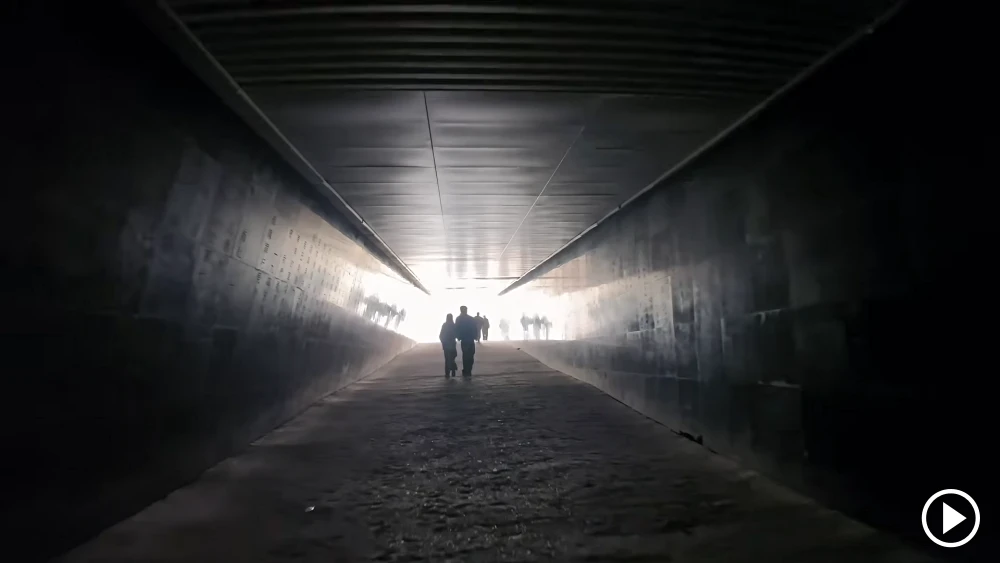
 The exit of the museum leads through a long, narrow, dark tunnel. The confined space feels oppressive, with very little light. Natural light only begins to appear as you approach the end. The tunnel is designed to give visitors a sense of the darkness and horror of Unit 731. The light at the end symbolizes that the darkness has passed and that we have emerged from this painful chapter of history, serving as a quiet reminder to cherish the peace we have today.
Thank you for reading. Hope you have a wonderful journey! ヽ(´▽`)/