Kunming Itinerary: A Complete 3-Day Guide for First-Time Visitors
Located in southwestern China, Kunming is the capital of Yunnan Province. Famously called the “Spring City,” it is celebrated for its pleasant climate—free from scorching summers and bitter winters—and flowers that bloom all year round.
With a history spanning over 2,000 years, Kunming has a long and rich history. More than 20 ethnic groups gather here, creating a rich and diverse culture. The city is home to world-renowned natural wonders such as Dianchi Lake and the Stone Forest. At the same time, Kunming serves as a pivotal gateway and hub connecting China to South and Southeast Asia.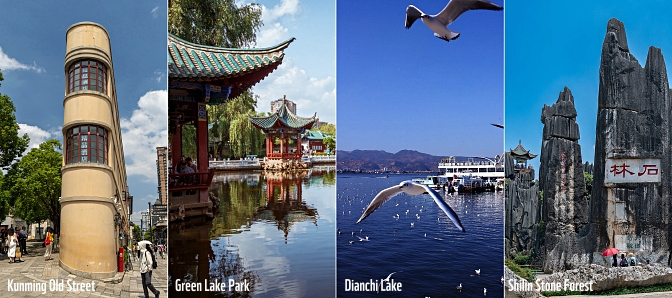 Photo by 瑞丽江的河水 | Darren Wang | Zhangmoon618 | xiquinhosilva
If you are planning to explore Dali, Lijiang, or Shangri-La, this city is the ultimate first stop that you won’t, and simply cannot, miss.
Best Time to Visit Kunming
Kunming is a great destination all year round. Spring (March to May) and autumn (September to November) are the golden times to visit, as most days are sunny. Late April to early May is the best season to enjoy the beautiful jacaranda blossoms in the city.
June to August is the rainy season, but it mostly rains at night, and daytime showers usually clear up quickly. The weather is cool and temperatures are much lower than in many other parts of China at this time, making it a great place to escape the summer heat. The rainy season is also when Yunnan’s famous wild mushrooms hit the market.
Winter runs from December to February, with plenty of sunshine and average temperatures between 5°C and 17°C. From December to March, black-headed gulls from Siberia fly to Kunming to spend the winter. Green Lake (Cuihu) and the Dianchi Haigeng Dam are the best spots to see these seagulls.
Avoid visiting during Chinese national holidays, when the scenic spots get very crowded, hotels are expensive, and high-speed train tickets are hard to get.
Kunming Map
Exploring Kunming can generally be divided into three areas: the City Center, Western Hills & Dianchi Lake, and Shilin (the Stone Forest). The map below also highlights the locations of Kunming’s transportation hubs: Kunming Changshui International Airport (KMG), Kunming Railway Station, and Kunming South Railway Station.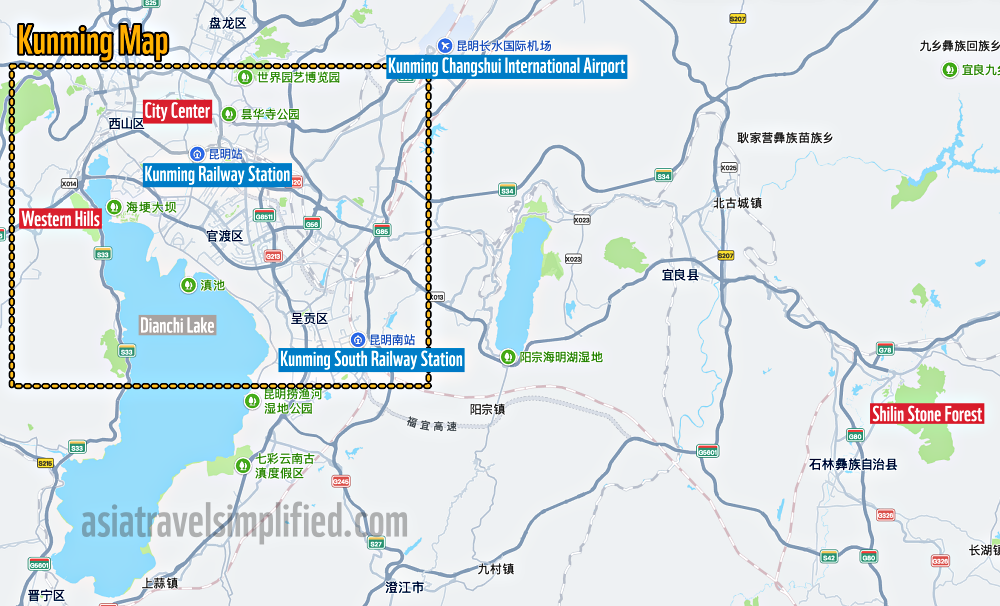
Zooming in on the Kunming city map shows the relative positions of Dianchi Lake & Western Hills, Dounan Flower Market, and the City Center.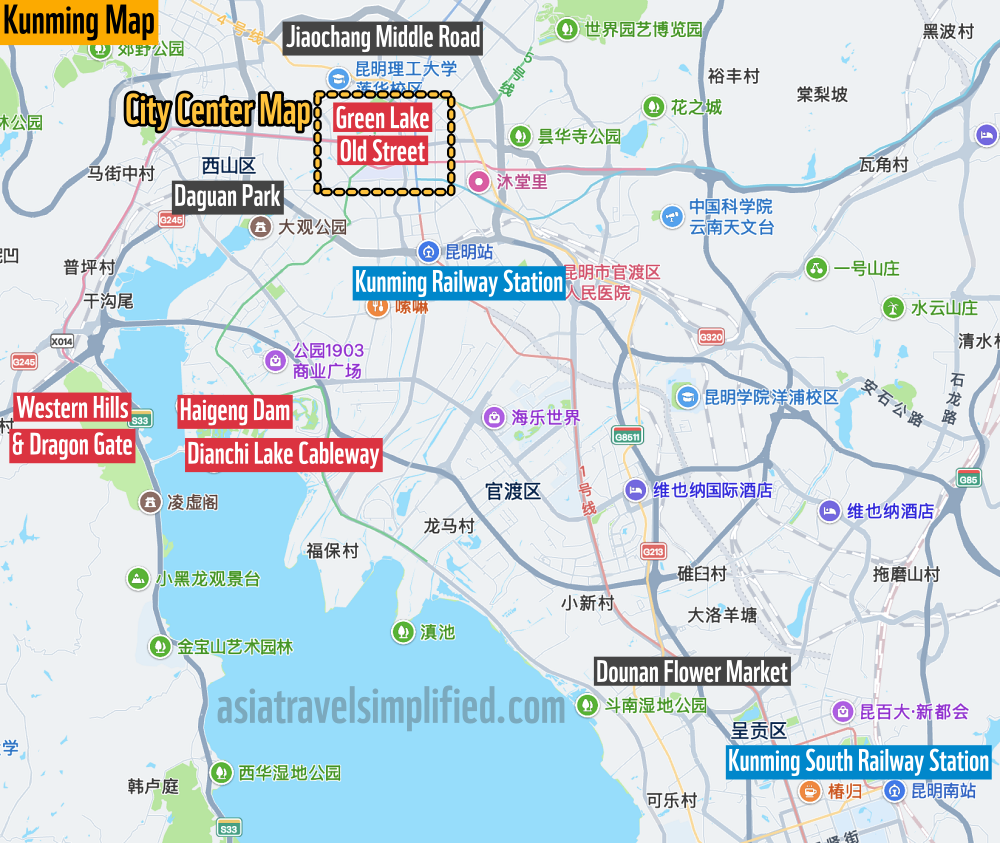
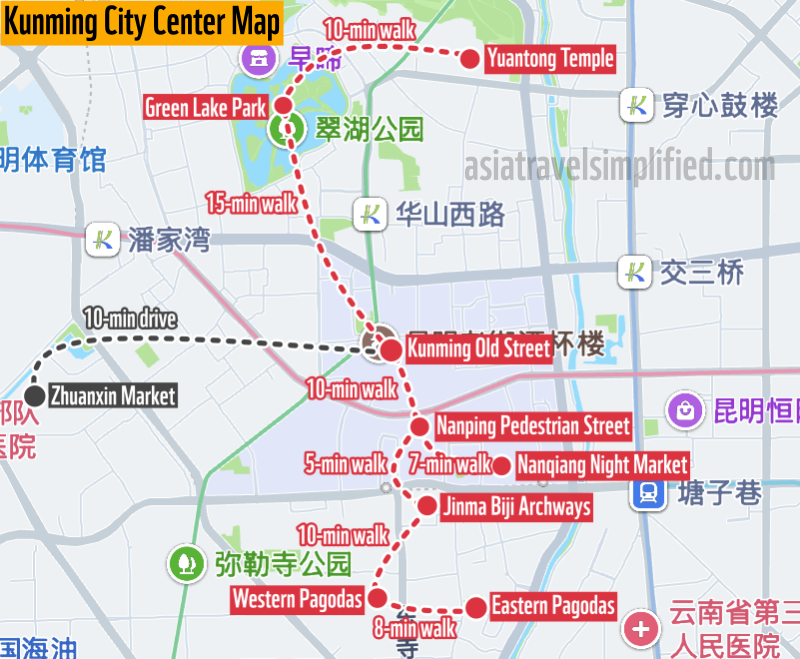
Zooming in on the Kunming city center map reveals that the attractions are clustered around Green Lake Park and Kunming Old Street, with most accessible on foot.
3-Day Kunming Itinerary
Day 1: City Center
- Morning: Yuantong Temple & Green Lake Park
- Noon/Afternoon: Kunming Old Street, Nanping Pedestrian Street, and Jinma Biji Archway
- Evening: Nanqiang Night Market
Day 2: Western Hills & Dianchi Lake
- Morning: Longmen (Dragon Gate), Western Hills
- Noon/Afternoon: Descend via the Dianchi Cableway to explore the Haigeng Dam
- Optional: If time and energy permit, add Zhuanxin Farmers Market in the early morning, or Dounan Flower Market in the late afternoon.
Day 3: Shilin (Stone Forest)
- All Day: Shilin (Stone Forest) Scenic Area
If You Have Fewer Than 3 Days
With limited vacation time, many travelers choose to allocate more days to Dali, Lijiang, and Shangri-La, which is completely understandable. How to filter Kunming’s attractions depends entirely on your personal interests.
Green Lake Park and Kunming Old Street are essential stops for every visitor. Staying nearby is highly recommended to easily fit them into your schedule. Note that parts of the Old Street and Nanping Pedestrian Street are highly commercialized; you may want to shorten your visit if you prefer less crowded, more authentic spots.
Temples similar to Yuantong Temple can be found throughout China, making it skippable if your time is limited. The Jinma Biji Archway and the East and West Pagodas are iconic landmarks, but they require extra walking and can also be omitted if you are on a tight schedule.
For nature lovers, the Stone Forest and Western Hills (Dragon Gate) are must-visits. Comparatively, the Stone Forest is more distinctive, as its unique karst topography is a rare geological sight worldwide.
While Dounan Flower Market and Zhuanxin Farmers Market are listed as optional extensions in this guide, they are essential additions to your itinerary if you enjoy observing authentic local life.
Where to Stay in Kunming
The main attractions in downtown Kunming are concentrated around Nanping Pedestrian Street, the Old Street, and Green Lake, making this area the most convenient place to stay.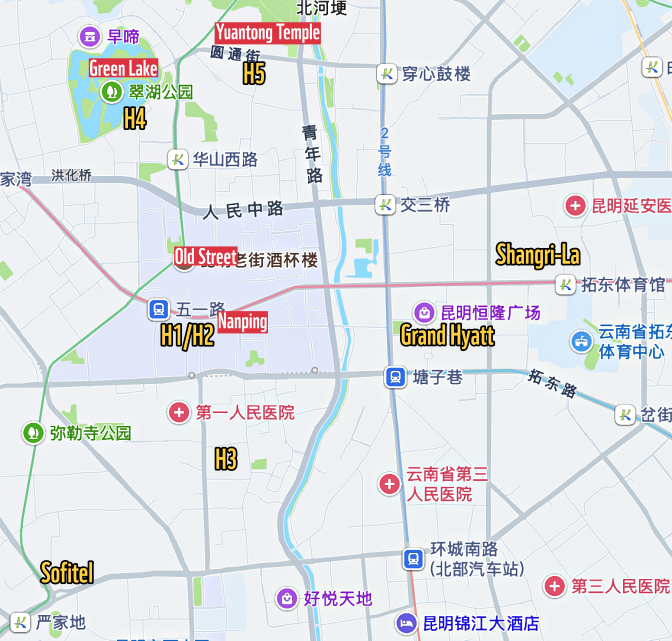
Nanping Pedestrian Street Area
H1: Atour Hotel Kunming Nanping Pedestrian Street Old Street
Rating: 9.6 (4000+ reviews)
About a 5-minute walk from Exit B of Wuyi Road Metro Station (五一路). Located on Nanping Pedestrian Street. Very convenient to walk to the Old Street and Nanqiang Night Market.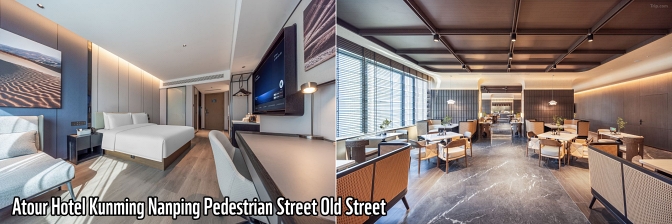
H2: FourPoints by Sheraton Kunming City Centre Hotel
Rating: 9.6 (4000+ reviews)
About a 5-minute walk from Exit B of Wuyi Road Metro Station (五一路). Located on Nanping Pedestrian Street. Very convenient to walk to the Old Street and Nanqiang Night Market.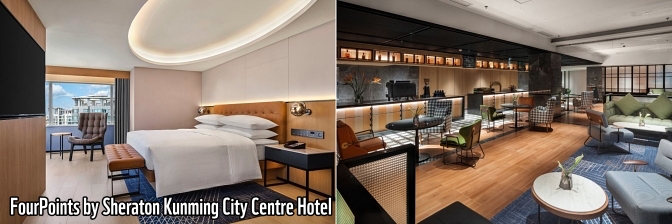
H3: Moonlight Courtyard Hotel
Rating: 9.7 (4000+ reviews)
Relatively far from the metro station, so it is best reached by ride-hailing services or taxis. It is 500 meters from the Jinma Biji Historic Site (Golden Horse and Jade Rooster Archways), close to the Eastern and Western Pagodas, and a 15-minute walk to Nanqiang Night Market. Although its location is not as convenient in terms of public transit, the hotel boasts a distinct and charming Chinese architectural style.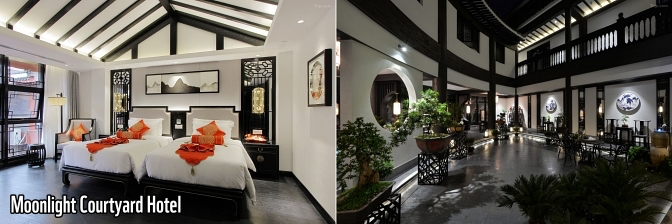
Green Lake Area
H4: Zhongwei Green Lake Hotel
Rating: 9.4 (4000+ reviews)
About an 8-minute walk from Exit D of Huashan West Road Metro Station (华山西路). Located southeast of Green Lake (Cuihu). As Yunnan’s most famous, classic 5-star hotel, its design was guided by the legendary architect I. M. Pei.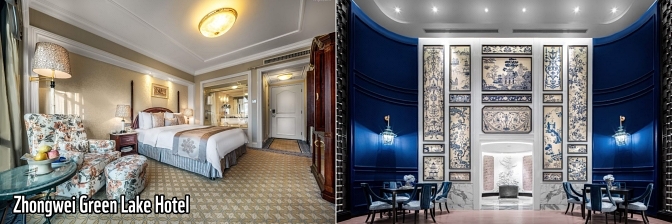
H5: Atour Hotel Kunming Green Lake Yunnan University
Rating: 9.5 (3000+ reviews)
Relatively far from the metro station, so it is best reached by ride-hailing services or taxis. Located opposite Yuantong Temple, it is just a 10-minute walk to Green Lake (Cuihu).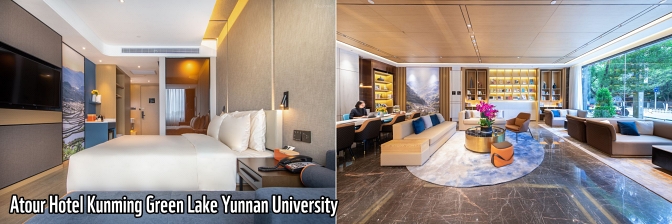
5-star hotel recommendations
If you have high standards for accommodation quality, you can consider the following options—Grand Hyatt and Shangri-La are relatively convenient and have newer facilities, while Sofitel is located in a taller building and offers great views.
Grand Hyatt Kunming
Rating: 9.7 (6000+ reviews)
About a 2-minute walk from Exit B of Dongfeng Square Metro Station (东风广场), or a 7-minute walk from Exit F of Tangzixiang Metro Station (塘子巷). Line 6 at Tangzixiang Metro Station offers a direct, 33-minute ride to the airport with no transfers required.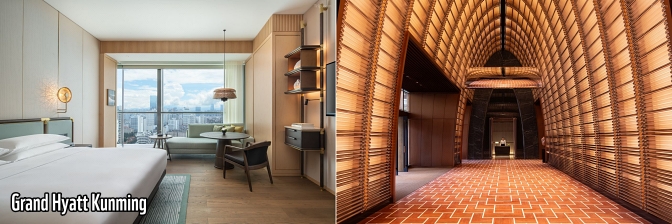
Kunming Shangri-La Hotel
Rating: 9.5 (400+ reviews)
About a 2-minute walk from Exit D of Tuodong Sports Center Metro Station. This Shangri-La hotel newly opened in 2025. Additionally, JEN Kunming by Shangri-La, another more budget-friendly hotel under the Shangri-La brand, is located within the very same building.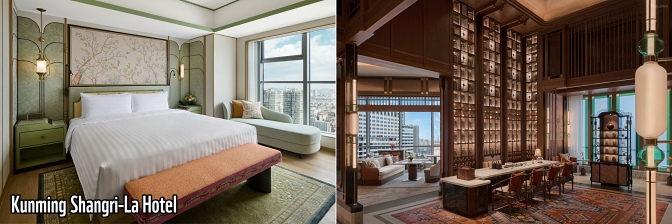
Sofitel Kunming
Rating: 9.4 (7000+ reviews)
About an 8-minute walk from Exit A of Yanjiadi Metro Station (严家地). As a hotel that offers panoramic views of both the Kunming cityscape and Dianchi Lake’s Western Hills, its rooms are located on the 27th to 48th floors.
Getting to Kunming
From Major Chinese Cities:
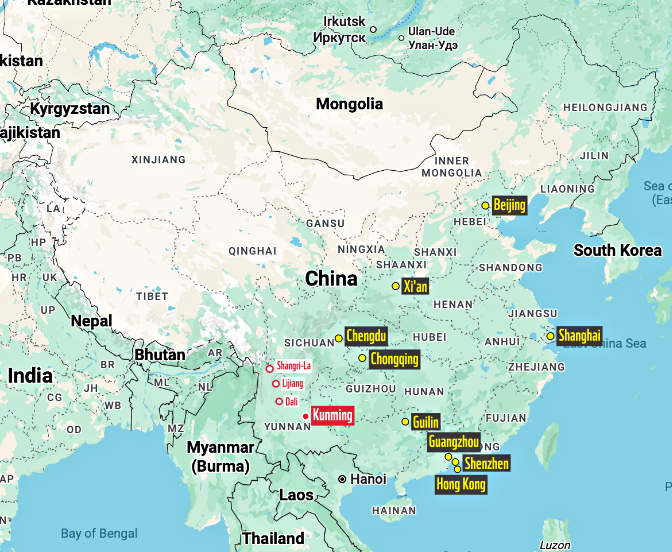
| From | Distance | Flight | HSR (Train) | Recommended |
|---|---|---|---|---|
| Beijing | 2,600km | 3.5 hours | 11 - 12 hours | Flight |
| Shanghai | 2,300km | 3 hours | 9.5 - 12 hours | Flight |
| Xi’an | 1,500km | 2.5 hours | 10.5 - 11 hours | Flight |
| Chengdu | 850km | 1.5 hours | 6 - 8 hours | Flight|HSR |
| Chongqing | 800km | 1.5 hours | 5 - 6 hours | Flight|HSR |
| Guilin | 1,000km | 1.5 hours | 4.5 - 8 hours | Flight|HSR |
| Guangzhou | 1,300km | 2.5 hours | 6.5 - 8 hours | Flight|HSR |
| Shenzhen | 1,400km | 2.5 hours | 7.5 hours | Flight |
| Hong Kong | 1,500km | 2.5 hours | 7.5 hours | Flight |
Notes: The new Chongqing-Kunming High-Speed Railway is expected to open in 2027. By then, the fastest travel time will be reduced to just 2.5 hours from Chongqing and 3 hours from Chengdu to Kunming.
Getting from Kunming Changshui International Airport to the City
Kunming Changshui International Airport is located about 30km northeast of Kunming city center. There are three main ways to reach the city: taxi, ride-hailing, or metro. If your destination is the railway station, you can also choose the airport shuttle bus.
Taxi:
- Cost: Around RMB 100-120 (plus a RMB 10 highway fee). Fares increase by 20% during late-night and early-morning hours.
- Duration: About 40 minutes to the city center.
- Pros & Cons: Taking a taxi is the easiest option. Just follow the airport signs to the official taxi stand and wait in line. The downside is that it’s relatively expensive.
- Tip: While rare, you should be prepared for potential overcharging, as a few drivers might take the long route. But don’t worry—you can pay the fare first, keep the paper receipt, take a photo of the license plate, and ask your hotel front desk for help later. Making a phone complaint is very efficient, and you will get your refund.
Ride-Hailing (e.g., DiDi):
- Cost: Around RMB 60-100 (plus a RMB 10 highway fee, which the driver will add to the app). Prices surge during rainy days and peak hours.
- Duration: About 40 minutes to the city center.
- Tip: Follow the airport’s ride-hailing signs to the designated pickup point. However, please note that these areas can be crowded with people and cars. The driver might call you, so language barriers could be an issue.
Metro:
- Cost: RMB 6-7 to the city center (transfers required).
- Duration: 45-60 minutes.
- Tip: The airport is the starting station of Metro Line 6.
Airport Shuttle Bus:
- Cost: RMB 25 per person.
- Routes: There are two main routes that go directly to Kunming Railway Station or Kunming South Railway Station. It is more convenient than transferring via metro.
- Duration: Without traffic jams, it takes about 50 minutes from the airport to Kunming Railway Station, and about 1 hour to Kunming South Railway Station.
Travel Tips for Departures:
Kunming Changshui International Airport currently has only one operational terminal, Terminal 1 (T1), while Terminal 2 (T2) is still under construction and not yet in use. T1 is connected to a Satellite Terminal, which handles boarding gates 301 to 342.
Please note that if your flight departs from the Satellite Terminal, it is highly recommended to arrive at the airport earlier. After completing check-in and security screening, you will need to take a shuttle train (APM), which takes a few minutes, to get to the Satellite Terminal.
Kunming Railway Stations
Kunming has two main railway stations: Kunming Railway Station and Kunming South Railway Station (Kunmingnan). Both stations serve high-speed trains. Kunming Railway Station is located right in the city center, making it the more convenient option for most travelers.
Important Ticket Tip: When booking train tickets, Kunming South Railway Station is written as “Kunmingnan Station”. “Nan” is the Chinese pinyin for “South.”
Kunming Railway Station (昆明站)
- This station is located about 6km away from the historic Kunming Old Street and the Nanping Pedestrian Street.
- Ride-Hailing: Costs around RMB 15-20 and takes 20-30 minutes. (Note: Traffic jams are very common around here, even though the distance is short.)
- Metro: Takes about 25 minutes to Wuyi Road Station (the closest stop to the Old Street), costs RMB 3, and requires a transfer.
Kunming South Railway Station (昆明南站 / Kunmingnan)
- This station is located further out, about 32km away from the city center (Kunming Old Street and Nanping Pedestrian Street).
- Ride-Hailing: Costs around RMB 60-70 and takes about 45 minutes to 1 hour.
- Metro: Takes about 70 minutes to Wuyi Road Station, costs RMB 7, and requires a transfer.
Getting Around Kunming: City Transportation Guide
Ride-Hailing (DiDi)
The easiest and most convenient option. Generally cheaper than traditional taxis, averaging RMB 15–35 for short trips around the city center. Prices surge during rainy days and rush hours. When waiting for your ride, try to stand next to a clear landmark or a specific store name so the driver can spot you easily.
Taxi
Base fare starts at RMB 10 for the first 3km, then RMB 2 per kilometer after that. A 20% surcharge applies during late-night hours (23:00 to 06:00). It is highly convenient—you can simply hail one on the street. However, very few drivers speak English, so you must have your destination written in Chinese characters or show it on a map. Always ensure the driver turns on the meter (“Da Biao”). Keep the paper receipt at the end of your trip; it contains the taxi’s registration info if you accidentally leave your belongings behind or need to report an issue.
Metro
Fares are usually between RMB 2 to RMB 7, depending on the distance. Most lines run from 06:20 to 22:45. You can buy single-journey tokens at the station vending machines (which have an English interface and accept cash, WeChat Pay, or Alipay). Alternatively, you can use the Alipay app’s transport QR code to scan directly at the turnstiles.
Tip: Kunming Metro has a unique feature in the city center. Line 1 and Line 2 are directly connected and run through the same track. When traveling between them through South Ring Road Station (环城南路), you can just stay on the train—there is no need to get off and transfer.
Traveling to Other Cities in Yunnan from Kunming
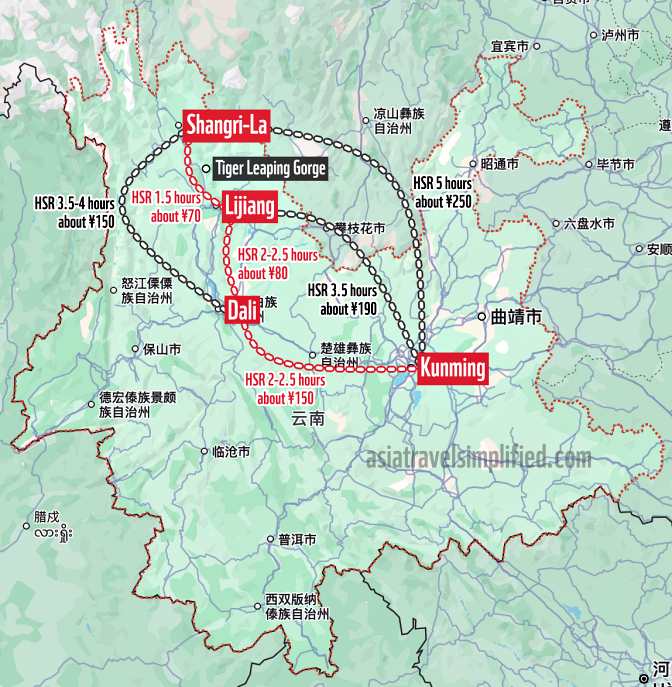
If it is your first time visiting Yunnan, Dali, Lijiang, and Shangri-La are the perfect destinations to start with. From Kunming, you can easily connect all these places by high-speed trains, and tickets can be conveniently booked via Trip.com.
Important Station Check: Most high-speed trains heading to northwest Yunnan depart from Kunming Railway Station, but some scheduled trains leave from Kunming South Railway Station (Kunmingnan) instead. It all depends on the departure time you choose, so please double-check your station carefully when booking.
Top Attractions in Kunming (City Center)
Green Lake Park 翠湖公园
Green Lake Park (Cuihu Park) is located right in the center of Kunming. The character “Cui” (翠) in its Chinese name comes from the word for emerald, a beautiful green gemstone. The park is 675 meters long and 500 meters wide, with three-quarters of its area covered by water. It has a rich history, traditional Chinese designs, and a wonderful natural environment home to many cute animals. Every winter, thousands of red-billed gulls fly from the north to arrive at the lake.
This park is also the favorite place for Kunming locals to relax. Here, you can experience the most authentic local life by watching people dancing, playing chess, walking, or just daydreaming.
Wang Zengqi, one of China’s most famous writers, once described the lake like this:
“To call a lake the ’eye’ of a city is a very old and tired cliché. Yet, when it comes to Green Lake, there is no escaping it. You can only say: Green Lake is the eye of Kunming. But what can you do? It is just so perfectly fitting.”
Admission: Free
Opening hours: 6:00 AM – Midnight (12:00 AM)
Recommended Visit Time: 1 hour.
Tips: The neighborhoods around the park are also very interesting. If you like, please leave some extra time to get lost there!
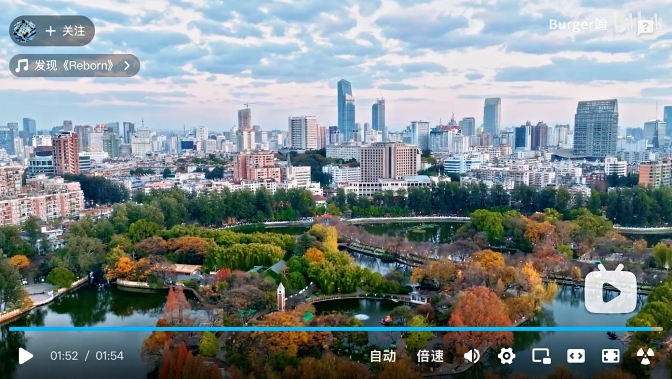
Watch: Warm Winter Vibes at Green Lake Park
Watch: Yunnan Kunming Green Lake Park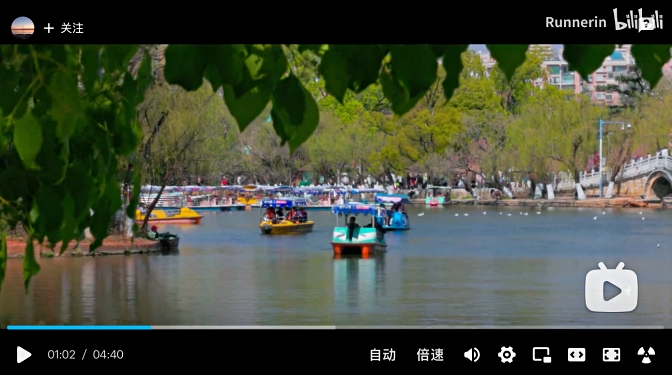
• Guanyulou (Fish-Viewing Pavilion) in the heart of Green Lake Park.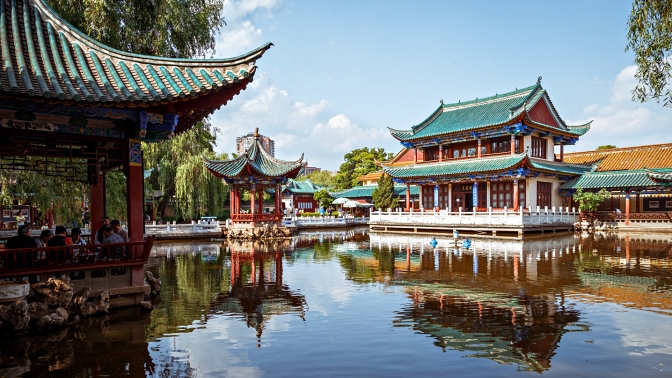 Photo By Darren Wang
• The South Gate of Green Lake Park (The park has five gates in total).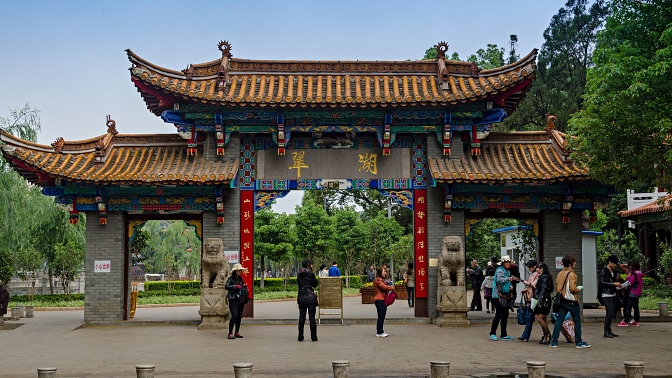 Photo By xiquinhosilva
• Below is a map of the area around Green Lake Park. If time permits, it is highly recommended to explore the surroundings!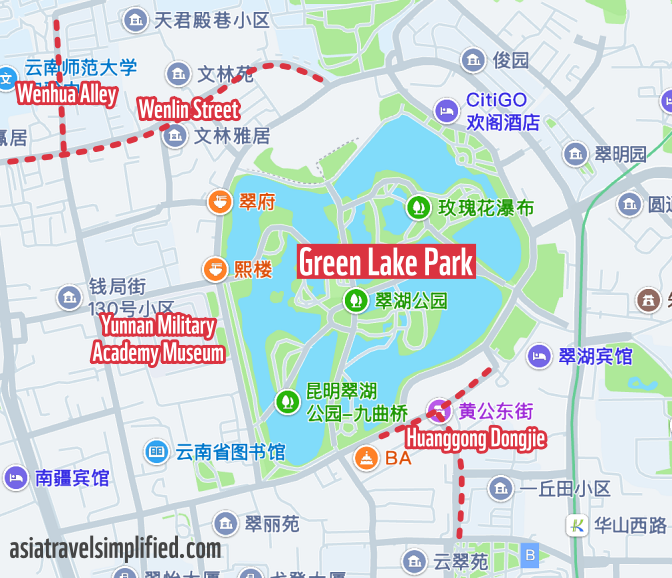
• To the northwest of Green Lake Park, there are two streets—Wenlin Street and Wenhua Alley. This area is packed with bookstores, cafes, and all kinds of interesting little shops.
• Recommended Xiaohongshu Post: What a Hidden Gem Wenlin Street Is!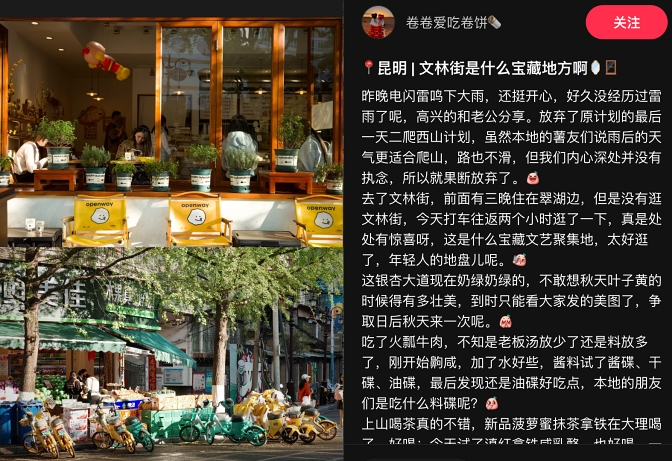
• On the west side of Green Lake Park stands a historic building—the Yunnan Military Academy. It was one of the three major military academies in modern Chinese history.
• Recommended Xiaohongshu Post: Yunnan Military Academy: A Century of History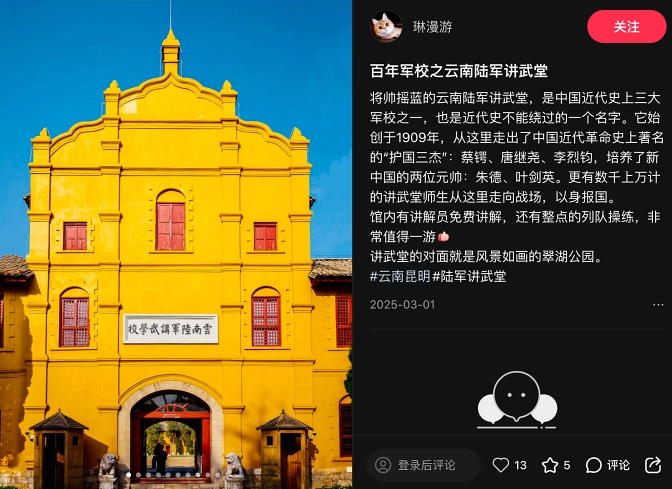
• To the south of the park lies Huanggong East Street. The bright yellow buildings are the trademark of this street. Together with the colorful flowers that bloom in different seasons, they give this neighborhood a vibrant, high-saturated look.
• Recommended Xiaohongshu Post: Yunnan Kunming Huanggong East Street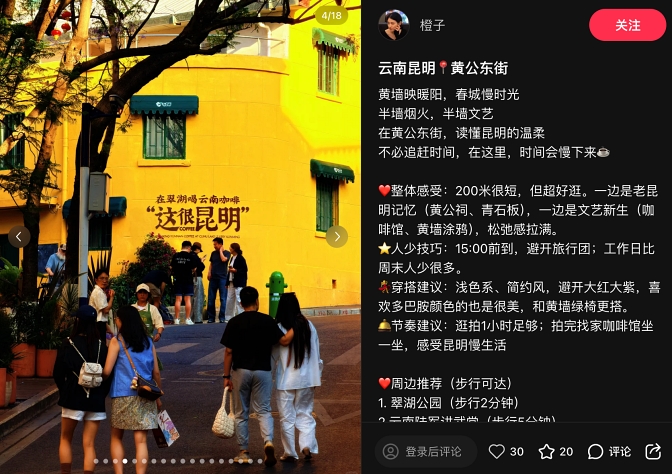
Kunming Old Street 昆明老街
Kunming Old Street is a historic district located in the heart of the city, consisting of over ten streets and alleys with a history dating back over 900 years. Most of the surviving architecture features Qing Dynasty and Republic of China styles, beautifully preserving traditional elements like cobblestone paths, wooden doors and windows, and intricate carvings.
At the same time, it is one of Kunming’s most famous commercial hubs. If you want to experience authentic Yunnan cuisine, savor local tea and coffee, or pick up some traditional souvenirs, this is the perfect place to go.
Admission: Free
Opening hours: 24/7 (Open District)
Recommended Visit Time: 1-2 hour.
The map below shows the area of the Kunming Old Street. The main east-west road, Guanghua Street, is only 435 meters long —— this is not a very large district.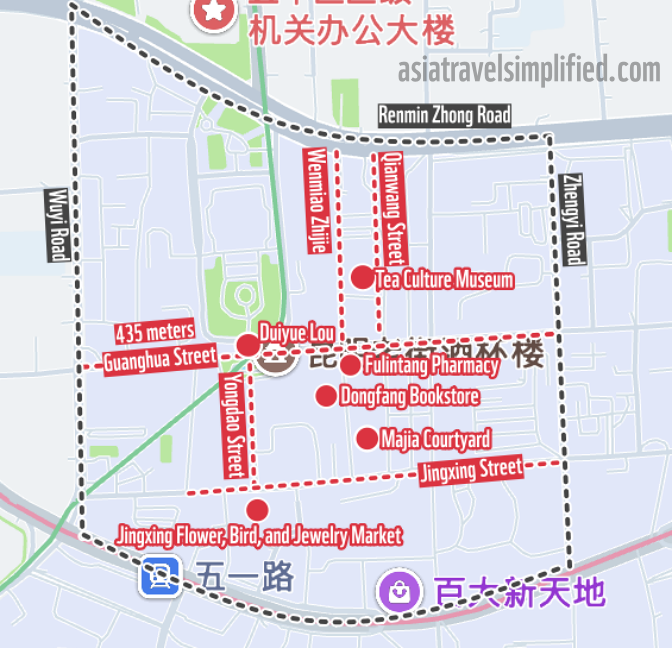
Watch: Kunming Old Street-Wandering Through China.
The video screenshot shows Guanghua Street.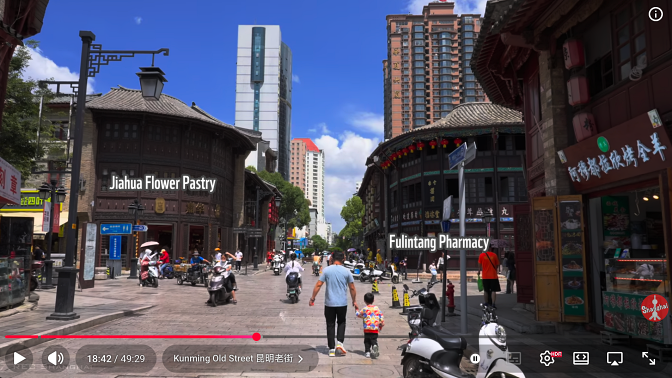
• Commonly known as “The Wine Glass Building,” Duiyue Lou is one of the most famous and beautiful places in Kunming Old Street. From the side, it looks incredibly thin, but its grand, curved shape creates a wonderful view that you must see.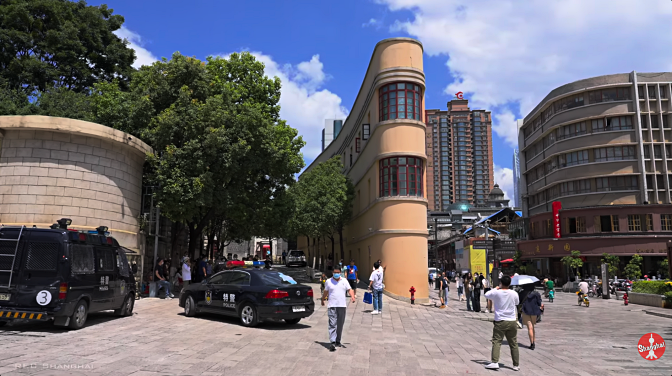 Photo from video Kunming Old Street-Wandering Through China.
• The most famous streets in Kunming Old Street:
• Wenmiao Zhijie Street (Famous for historic bookshops and snacks)
• Qianwang Street (Known for old courtyards and trendy cafes)
• Yongdao Street (The historic path with local charm)
• Jingxing Street (The vibrant flower and bird market street)
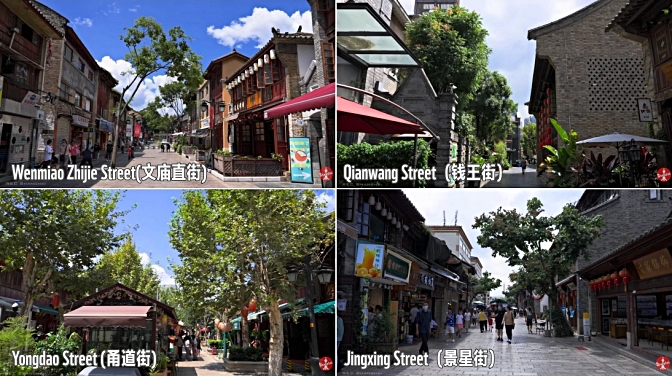 Photo from video Kunming Old Street-Wandering Through China.
• Founded in 1857, Fulin Tang is the oldest traditional Chinese pharmacy still operating in Yunnan.Its name comes from an ancient story of a kind doctor who treated patients for free, only asking them to plant apricot trees in return.Today, you can still visit Fulin Tang to get a traditional pulse reading and buy Chinese herbal medicine.
• Recommended Xiaohongshu Post: Fulin Tang—The Oldest Pharmacy in Yunnan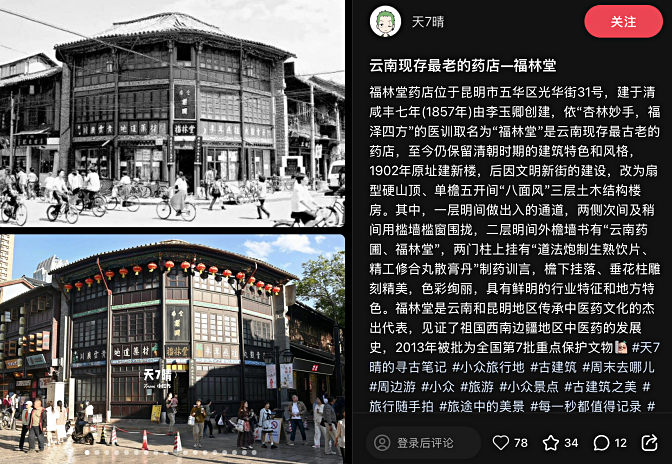
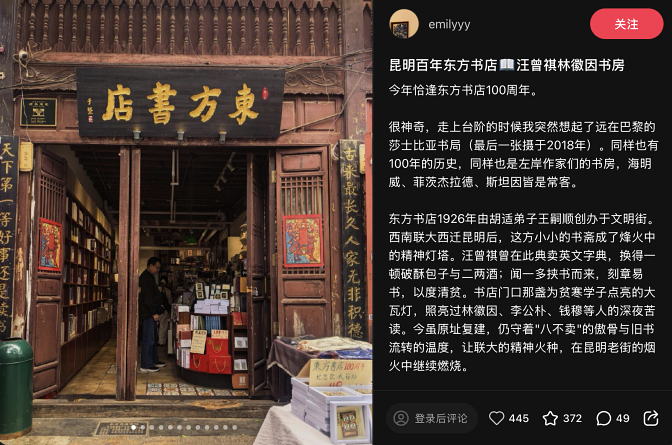
• Founded in 1926, Dongfang Bookstore was a favorite gathering place for many famous Chinese scholars during the Republic of China period.
• Recommended Xiaohongshu Post: The Century-Old Dongfang Bookstore
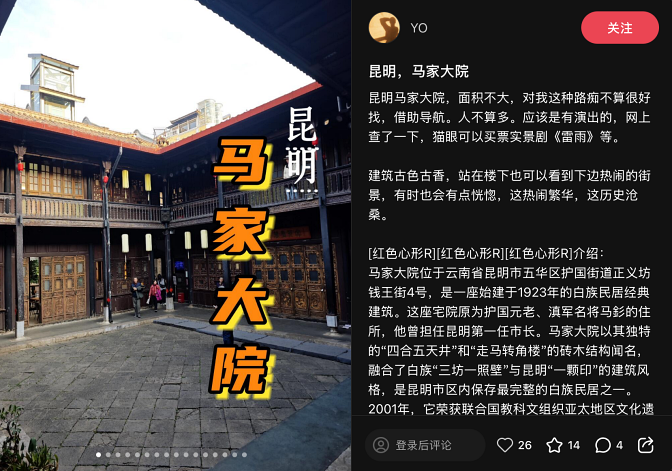
• Built in 1923, Majia Courtyard is the best-preserved classic Bai-style residence in Kunming. It was once the home of Ma Zhen, the city’s first mayor and a military leader during the War of Resistance Against Japanese Aggression. Today, entry is free, and you can enjoy tea at the courtyard’s teahouse during the day. At night, the venue transforms into a theater hosting classic local plays.
• Recommended Xiaohongshu Post: Kunming Majia Courtyard
• Yunnan has always been a key tea-producing and trading hub in China. Located on Qianwang Street, the Yunnan Tea Culture Museum is quite small but houses nearly 1,000 rare items, including teas, teaware, and historical artifacts. While English tour guides are not available yet, entry is free, and you can experience an authentic Yunnan tea ceremony for a very small fee.
• Recommended Xiaohongshu Post: Yunnan Tea Culture Museum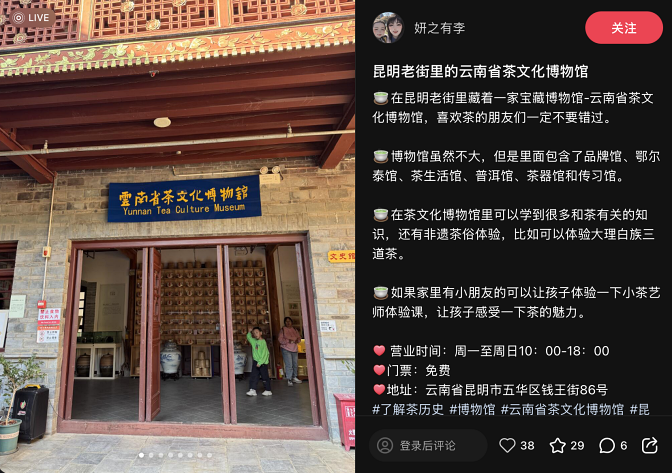
• Jingxing Flower, Bird, and Jewelry Market is a historic market located on Jingxing Street. The first floor is filled with fresh flowers, potted plants, aquarium fish, and pets, while the second floor offers jewelry like jade, wood carvings, and Buddhist prayer beads. The third floor features Yunnan ethnic handmade crafts, and the fourth floor sells traditional Chinese paintings and calligraphy stationery. Please note: if you lack expert knowledge, avoid buying expensive jewelry here; instead, head straight to the highly recommended third floor to hunt for amazing local handicrafts.
• Recommended Xiaohongshu Post: Jingxing Flower, Bird, and Jewelry Market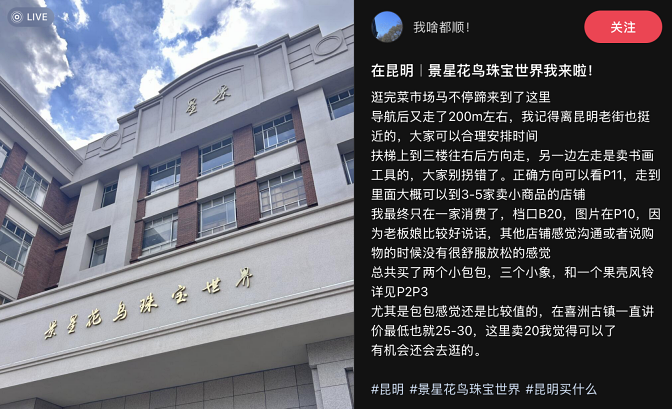
• Although some crafts on the third floor might be mass-produced, you can still find hidden gems in the corners if you look closely. These are beautifully crafted, authentic ethnic handmade goods and vintage pieces.
• Recommended Xiaohongshu Post: Vintage Fabrics & Antique Silverware in Market Corners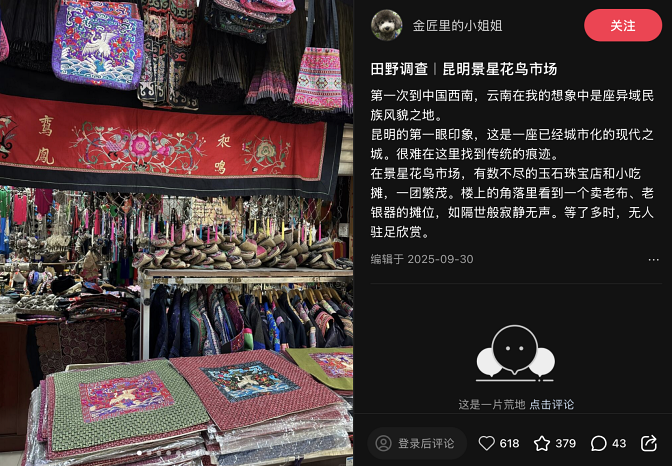
Nanping Pedestrian Street 南屏步行街
As the commercial center of Kunming, Nanping Pedestrian Street is lined with multiple large shopping malls. Stretching 738 meters long from Huguo Road in the east to Zhengyi Road in the west, it is located very close to the Old Street and makes for a perfect side trip.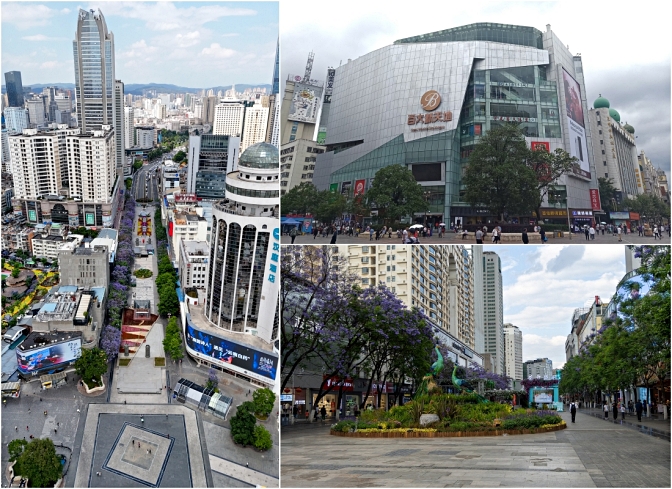 Photo By 瑞丽江的河水 | 瑞丽江的河水 | 瑞丽江的河水
Nanqiang Night Market 南强夜市
Nanqiang Night Market is the most popular night market in Kunming, packing over a hundred food stalls, restaurants, and bars into one short street. Officially named “Nanqiang Jiexiang” (Nanqiang Lane), it is also open during the day, but the atmosphere truly comes alive at night, sometimes featuring vibrant street performances.
Opening hours: 11AM-Midnight
Watch: Nanqiang Street in Yunnan
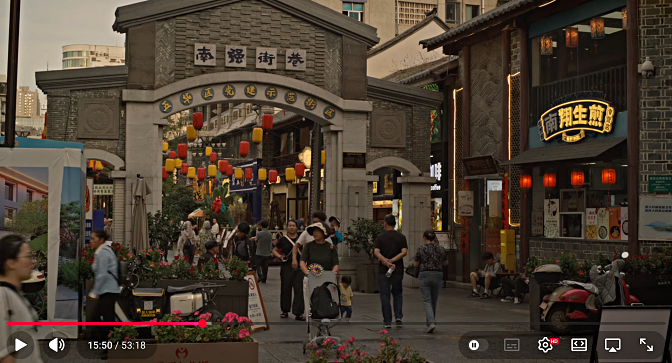
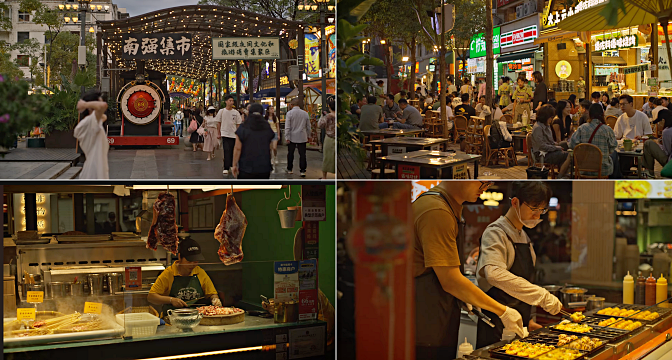 Photo From Video Nanqiang Street in Yunnan
Jinma Biji Archways 金马碧鸡坊
Standing just dozens of meters apart, the Jinma Biji Archways are iconic historic landmarks located at the southern end of Kunming’s traditional central axis, right at the intersection of Jinbi Road and Zhengyi Road. First built during the Ming Dynasty, these twin archways boast a history of over 400 years. “Jinma” (Golden Horse) represents Jinma Mountain to the east, while “Biji” (Jade Rooster) represents Biji Mountain to the west.
What makes these monuments truly legendary is a rare astronomical wonder known as “The Interlocking Shadows of Gold and Jade.” According to historical records, a precise celestial alignment occurs here every 60 years during the autumn equinox. As the sun sets in the west and the moon rises in the east, the shadows of the two archways gradually move toward each other and perfectly overlap in the center.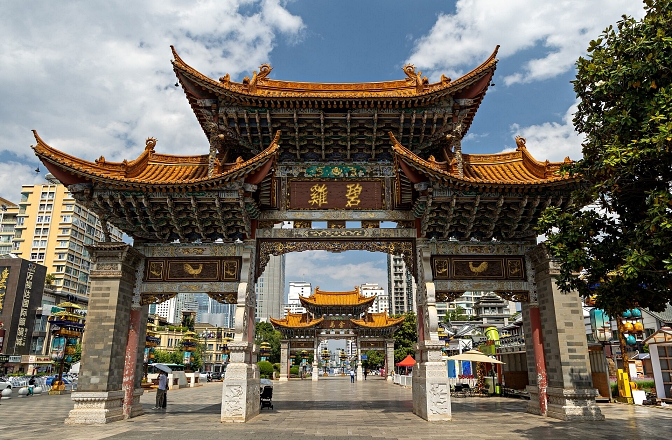 Photo By 瑞丽江的河水
Eastern and Western Pagodas 常乐塔&慧光塔
Located 600 meters south of the Jinma Biji Archways, the Eastern and Western Pagodas are another iconic pair of historic landmarks in Kunming, boasting a history of over 1,000 years. Standing about 500 meters apart, the twin pagodas face each other across a pedestrian street.
The Western Pagoda is named Huiguang Pagoda(慧光塔), which literally translates to “The Grace of Light.” Its counterpart, the Eastern Pagoda, is called Changle Pagoda(常乐塔), a name that beautifully signifies “Eternal Happiness.”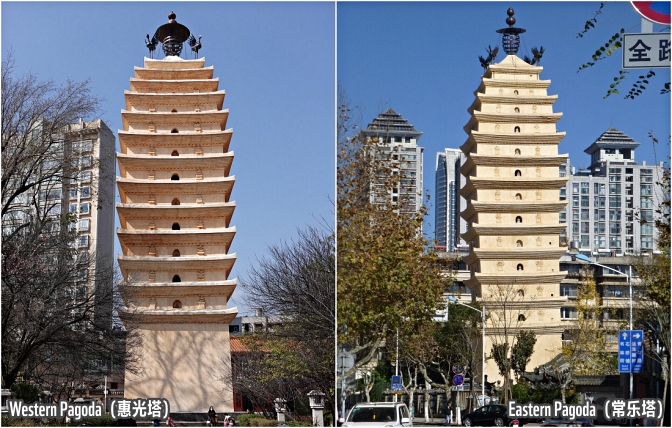 Photo By XuasdYX | Vmenkov
Yuantong Temple 圆通寺
As the largest Buddhist temple in the urban area of Kunming, Yuantong Temple enjoys a very favorable geographical location. It was originally constructed between the late 8th century and the early 9th century. Built according to the natural topography, the temple features a rare inverted-slope layout in China, with the mountain gate situated at a higher elevation than the main hall. Furthermore, Yuantong Temple is a unique sanctuary that integrates three major Buddhist schools: it is primarily dedicated to Mahayana Buddhism, while simultaneously incorporating Theravada and Tibetan Buddhism.
Admission: ¥6
Opening hours: 8:00 AM – 5:00 PM (last entry)
Recommended Visit Time: 1 hour.
Tips: A complimentary set of one candle and three incense sticks is included with your admission ticket. Please avoid taking photos of the Buddha statues, as this may be seen as disrespectful by some religious practitioners.
• The Yuantong Shengjing Archway (meaning ‘Yuantong Wonderland’) is a magnificent landmark gate built during the Qing Dynasty.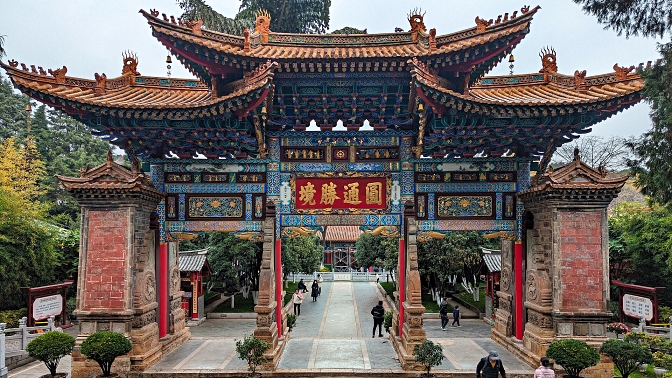 Photo by Kcx36
• The Octagonal Pavilion sits beautifully at the center of a large, emerald-green release pond, connected to the main halls by elegant three-arched stone bridges. Encircled by covered corridors, it creates a unique ‘water temple’ landscape and houses a sacred statue of the Thousand-Armed Guanyin for visitors to worship.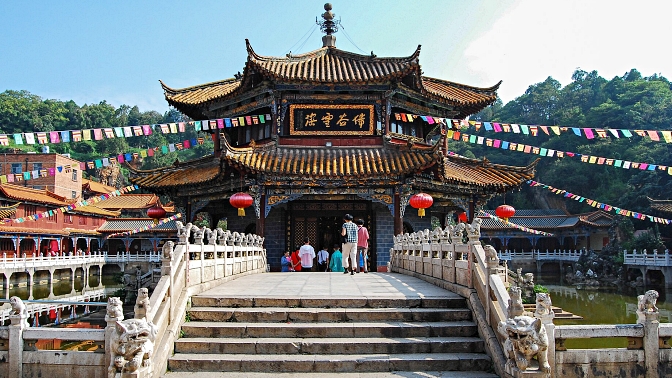 Photo by Shizhao
• The Yuantong Treasure Hall is the grand main hall of the temple, featuring a beautiful traditional roof. Inside, it holds three solemn Buddha statues and two amazing, 10-meter-tall pillars with dragons carved around them.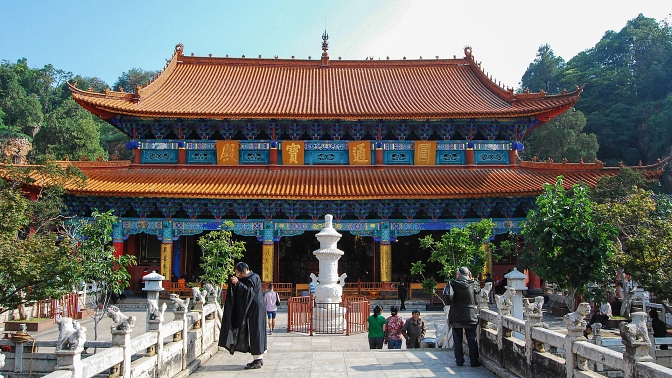 Photo by Shizhao
• The Copper Buddha Hall is a unique, white Thai-style building that shows the beautiful mix of different Buddhist cultures. Inside, it houses a large, four-ton bronze statue of Buddha given as a gift from Thailand.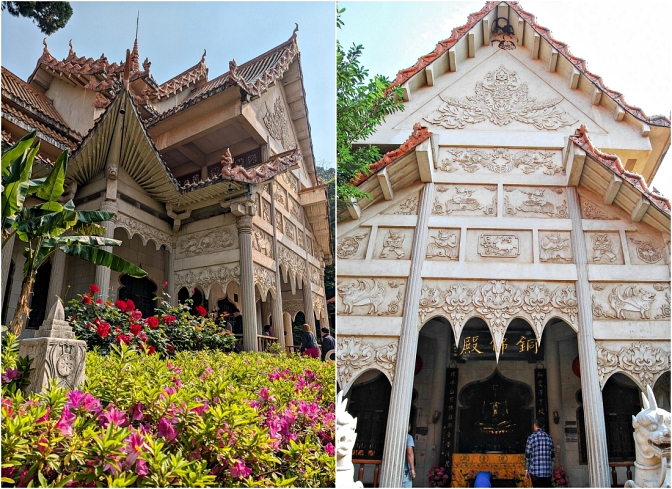 Photo by Roller Coaster Philosophy | Shizhao
Top Attractions in Kunming (Dianchi Lake Area)
Western Hills & Dragon Gate 西山&龙门
Located at the northern end of Dianchi Lake’s western shore, the Western Hills (Xishan) are also known as “Sleeping Buddha Mountain” or “Sleeping Beauty Mountain” because of its shape.
The highlight of Western Hills is the Dragon Gate (Longmen) Scenic Area, a stunning complex of Taoist grottos carved entirely into the sheer cliffs. Initiated during the Ming Dynasty and expanded throughout the Qing Dynasty, it eventually reached its present grandeur. Along this route, you can marvel at the unique thrill of walking right on the cliff’s edge while enjoying a breathtaking, panoramic view of the vast Dianchi Lake and the Kunming skyline below.
Opening hours: 8:30 AM – 5:00 PM (Mon-Fri); 8:30 AM – 5:30 PM (Sat-Sun)
Admission: ¥30 (adult) / ¥15 (student) / Free (children under 6 and seniors 60+).
Recommended Visit Time: 4–5 hours (Can be combined with Dianchi Travel Cableway and Haigeng Dam)
Watch: Kunming Dianchi Western Hills Scenic Area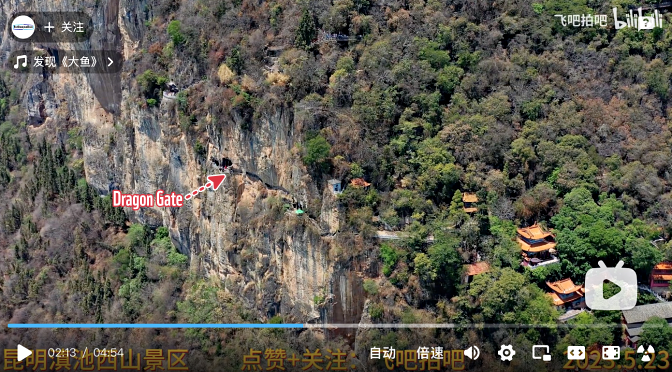
Getting to Dragon Gate & Best Itinerary
The Western Hills Scenic Area is massive. If your time or energy is limited, this curated route will help you cover the most iconic highlights while avoiding excessive climbing.
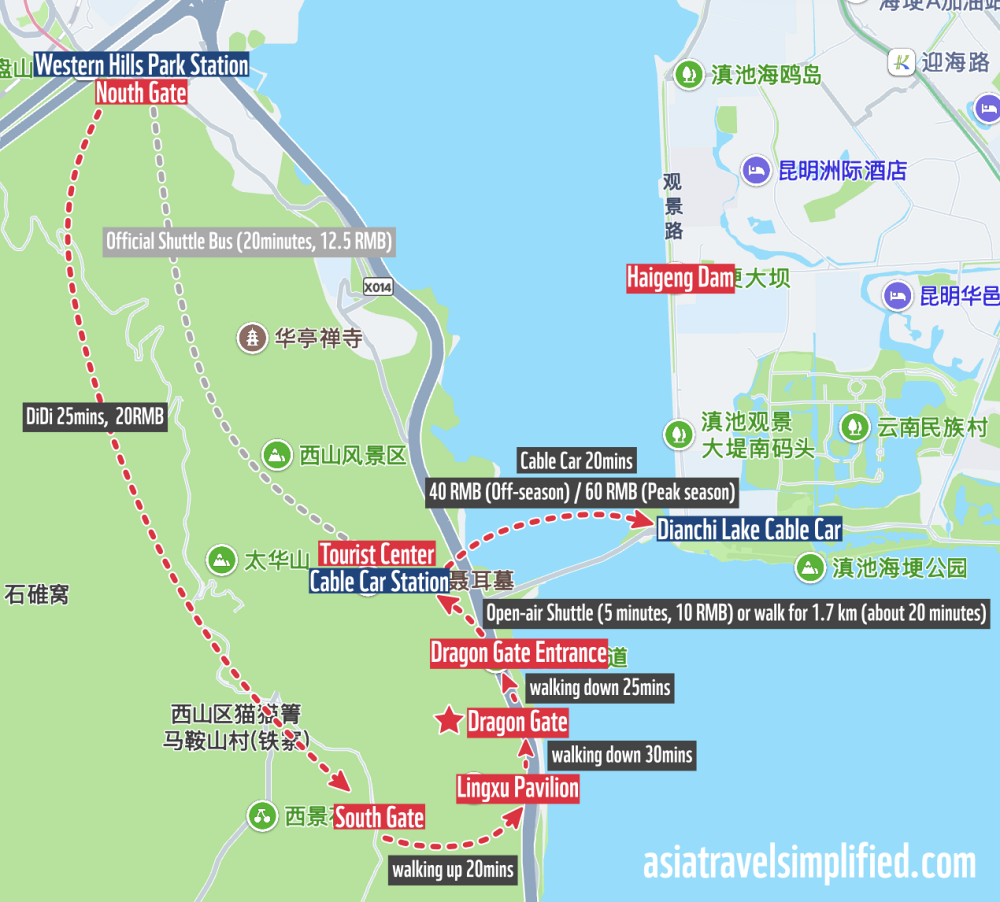
Take Metro Line 3 and get off at Xishan Park Station (西山公园站), which is about a 30-minute ride from the city center. This station is located right next to the North Gate (北门) at the foot of the mountain.
Take a ride-hailing car (like Didi) up the mountain to the South Gate (西山风景区-南门). The ride takes about 25 minutes and costs around 20 RMB.
Buy your ticket and enter the Dragon Gate Scenic Area. Starting from the gate, a 20-minute uphill hike will take you to Lingxu Pavilion (凌虚阁), the highest point of this route. This is the absolute best observation deck to enjoy a panoramic view of Dianchi Lake and the Kunming skyline.
From Lingxu Pavilion to the Dragon Gate Stone Arch (龙门牌坊): This section is entirely downhill and takes about 30 minutes.
From the Dragon Gate Stone Arch to the Dragon Gate Entrance (龙门入口): Continue heading downhill for about 25 minutes.
From the Dragon Gate Entrance to the Visitor Center: The path becomes flat from here. You can choose to walk for about 20 minutes to reach the Visitor Center.
Alternatively, you can take an open-air shuttle bus to the Visitor Center for 10 RMB (takes only 5 minutes).
The Visitor Center is right next to the Dianchi Travel Cableway (Upper Station/景区索道站). It is highly recommended to take the cable car down the mountain.
The cable car rides right across Dianchi Lake directly to the opposite shore. The scenic 20-minute ride will drop you off at the southernmost tip of Haigeng Dam (海埂大坝).
If you don’t want to take the cable car, you can also choose to take the official shuttle bus from the Visitor Center back to the North Gate (西山风景区-北门). It costs 12.5 RMB and takes about 20 minutes. From there, you can hop back on Metro Line 3 to return to the city center.
Tips & Reminders:
Reverse Route Available: If you enjoy the challenge of hiking uphill, this entire route can also be done in reverse.
Wear Comfortable Shoes: Proper walking or hiking shoes are highly recommended for this trip.
The North Area: The section from the North Gate to the Visitor Center is part of the free scenic area. If you have plenty of time and energy, you can choose to walk this 6-kilometer stretch. It is mostly a gentle, paved uphill slope, heavily shaded by trees, and features many small attractions along the way.
Watch Out for the Cliff Path: Near the Dragon Gate Entrance (by the open-air shuttle bus station), there is a famous descending path called Qianbu Cliff (千步崖). It is quite steep, and hiking down it takes about 30 minutes. If you are a hiking enthusiast, you might consider taking this route; however, if you want to save your energy, please be careful not to take the wrong fork in the road here.
You might see another cableway mentioned in older articles or videos—the Dragon Gate Cableway (龙门索道), which features open-air chairs. However, this cableway was decommissioned in April 2025 for a major upgrade and modernization project.
Dragon Gate Highlights
- Lingxu Pavilion (凌虚阁) is the highest point of this route. The name itself carries a poetic Taoist concept:
- Ling (凌): Means “to rise above,” “to soar,” or “to transcend.”
- Xu (虚): Means “the void,” “emptiness,” or “the boundless sky.” It represents a state of pure, untouched nature and spiritual freedom.
- Right near the pavilion, you will find a famous local café called BeanGreat. It is a specialty coffee shop that focuses deeply on the quality of its beans, and it is also the highest-altitude café in Kunming. It’s the perfect spot to grab a premium brew while soaking in the breathtaking views from the top.
Recommended Xiaohongshu Post: Kunming Western Hills Scenic Area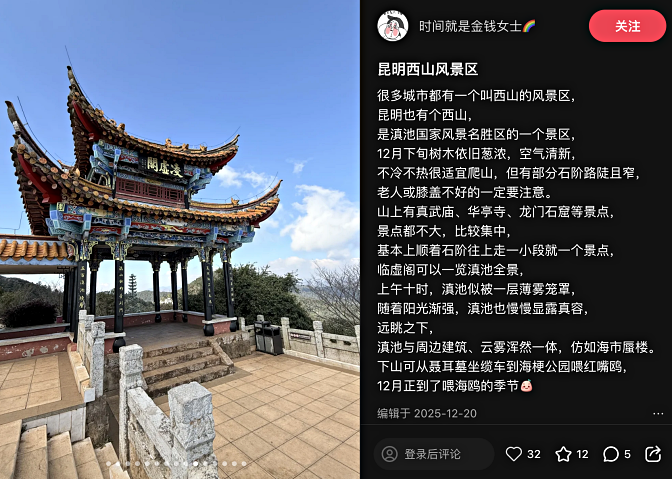
- From the Lingxu Pavilion Observation Deck, you can enjoy a stunning view of Dianchi Lake and the Kunming skyline.
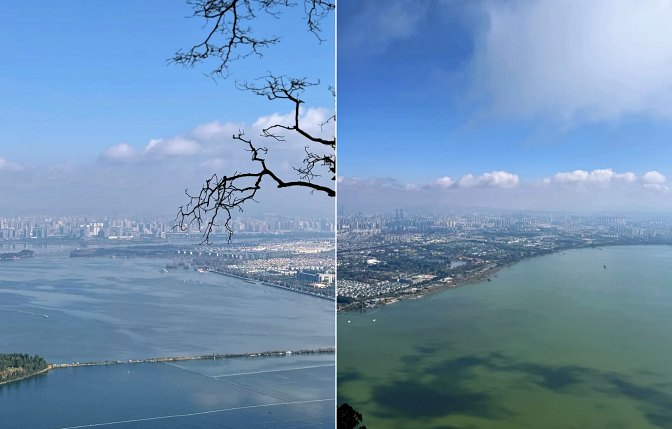 Photo From Xiaohongshu Post: Kunming Western Hills Scenic Area
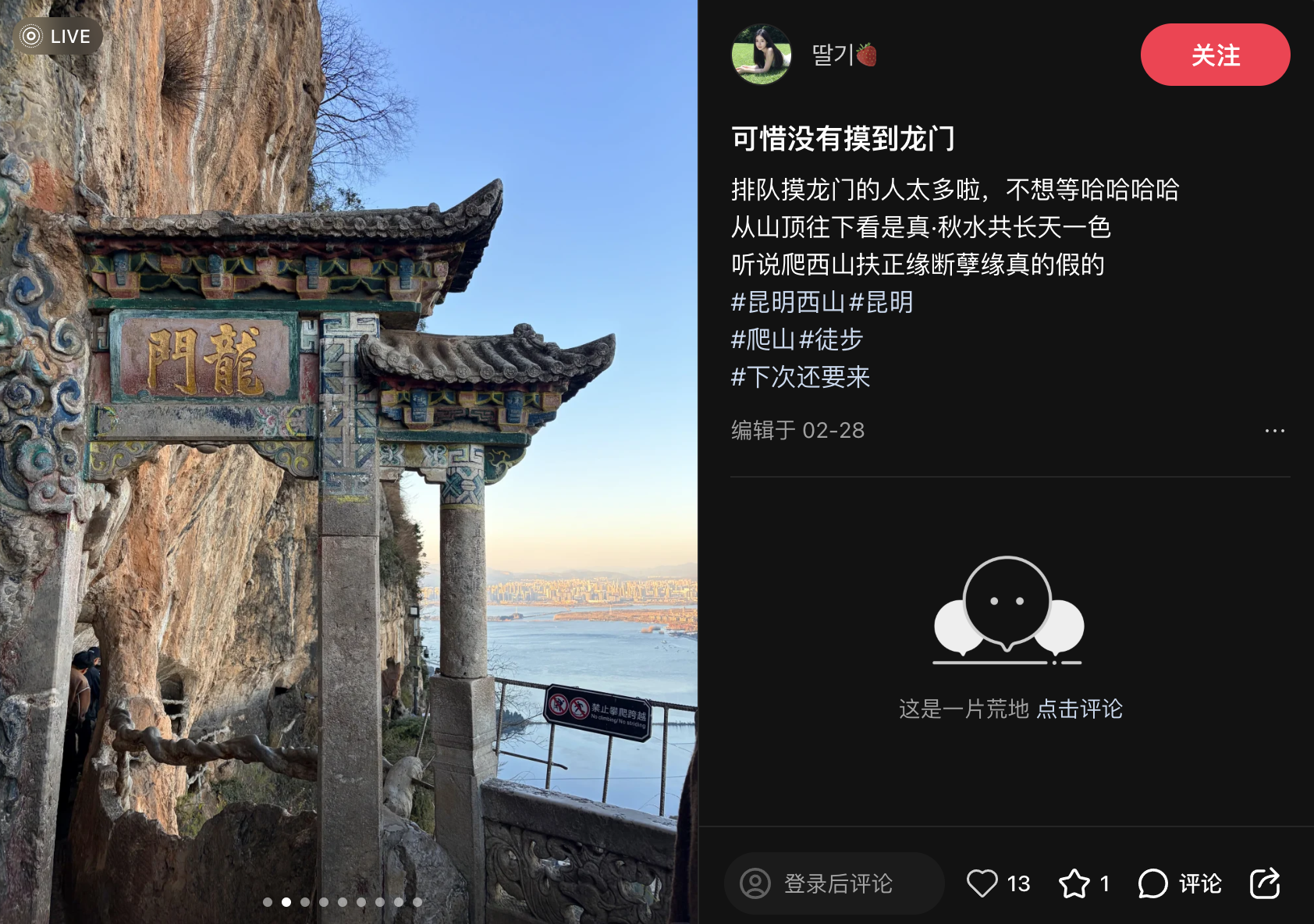
- The Dragon Gate Stone Arch (龙门牌坊) was hand-carved directly out of the raw cliff face.
- In Chinese culture, the arch symbolizes the ancient legend of the “Carp Leaping over the Dragon Gate,” which represents overcoming hardships to achieve great success.
- Visitors traditionally touch the bottom of the arch when passing through, a gesture believed to bring good fortune, career advancement, and academic luck.
Recommended Xiaohongshu Post: Missing Out on the Lucky Touch
- The unique cliffside pathway located near the Dragon Gate Stone Arch
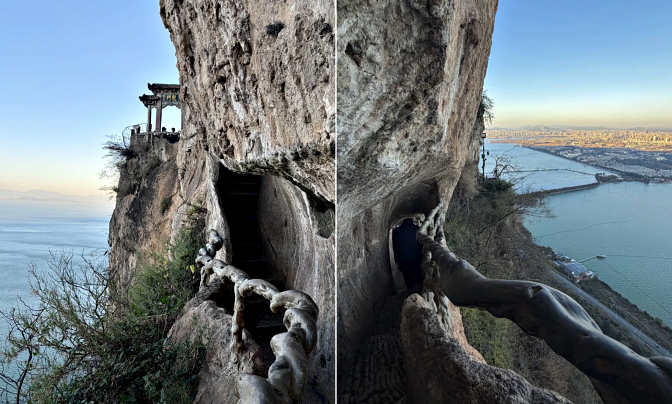 Photo From Xiaohongshu Post: Missing Out on the Lucky Touch
Dianchi Lake Cableway 滇池索道
The Dianchi lake Cableway (officially named Kunming Tourism Cableway) spans 2 kilometers and offers a scenic 20-minute ride that stretches halfway across Dianchi Lake and climbs up the Western Hills. Tickets are available for purchase on Trip.com.
Admission:
- Regular Season: ¥60 one-way / ¥100 round-trip
- Off-Peak Season (June & September): ¥40 one-way / ¥70 round-trip
- Children Discounts: Half price for children between 1.2 and 1.4 meters; free for children under 1.2 meters.
Opening hours:
- Monday to Friday: 9:00 AM – 5:00 PM
- Saturdays & Sundays: 9:00 AM – 5:30 PM
- Public Holidays: 9:00 AM – 6:00 PM
Lower Station: Located at the southernmost end of the Haigeng Dam. If taking a taxi, you can set the destination to Kunming Dianchi Cableway Station (昆明滇池索道, No. 16 Hubin Road).
Upper Station: Located at the Dragon Gate Scenic Area Visitor Center, this station serves as the starting point for climbing up to the Dragon Gate. Alternatively, after walking down from the Dragon Gate, you can board the cableway here to ride back across to the opposite shore of Dianchi Lake.
Watch: Kunming Western Hills Dianchi Cableway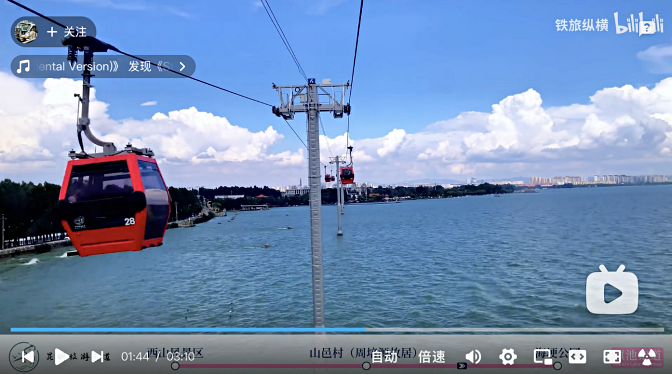
Haigeng Dam 海埂大坝
Located in southwest Kunming, Dianchi Lake is the largest lake in Yunnan and the sixth-largest freshwater lake in China. Every year from November to March, thousands of red-billed gulls from Siberia come here for the winter, drawing huge crowds of tourists to watch them along the lakeshore. A highly recommended spot is the Haigeng Dam, a 2.8 km-long scenic walkway on the northeast coast of Dianchi Lake that is quite close to the city center. After exploring the dam, you can take a cable car at the southernmost end of the path to cross the lake and head to Western Hills (Xishan).
Admission: Free
Recommended Visit Time: 1 hour
Getting There:
- By Metro: Line 5, Yinghai Road Station, Exit A. Walk 1.5 km or take a shared bike to the lakeside.
- By Ride-Hailing (Taxi): About 10 km from the city center. It takes 30-40 minutes and costs ¥25-35.
Watch: The Spring City’s Winter Date with Seagulls

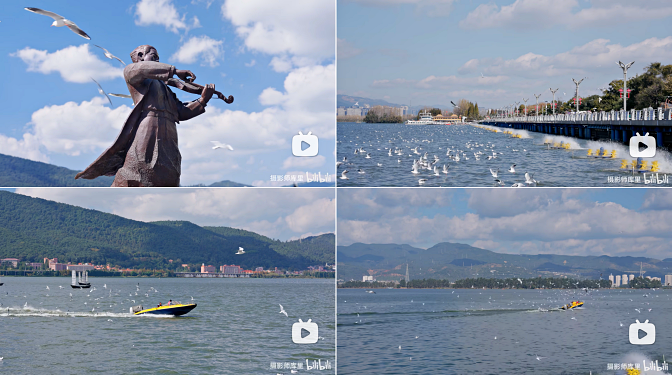 Photo From Video The Spring City’s Winter Date with Seagulls
Watch: Strolling along Haigeng | Humans and Gulls of Kunming
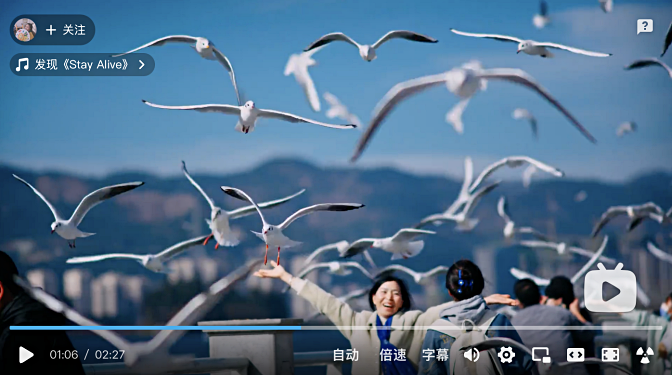
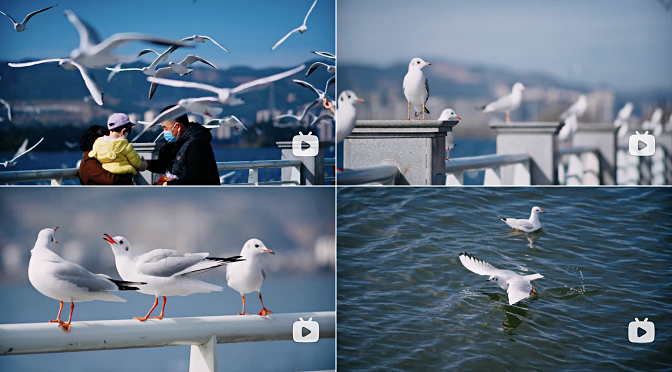 Photo From Video Strolling along Haigeng | Humans and Gulls of Kunming
Top Attractions in Kunming —— Shilin Stone Forest 石林
Located about 90 km (56 miles) southeast of Kunming, the Shilin(Stone Forest) is one of China’s most famous natural wonders. These dramatic rock formations began forming around 270 million years ago, when the area was covered by a shallow sea. Over millions of years, water slowly dissolved the limestone and carved it into the stone “forest” you see today. Walking through it feels a bit like exploring a maze of giant stone trees frozen in time.
Watch: A Bird’s-Eye Journey Through Yunnan’s Stone Forest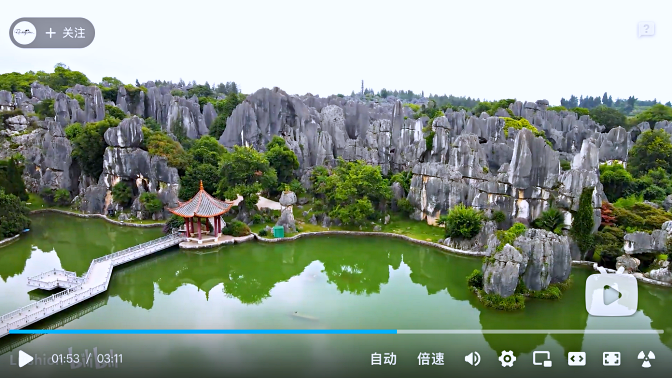
Recommended Visit Time: 3-5 hours. Including travel time from and back to Kunming, plan for at least half a day, or a full day if you prefer a more relaxed pace.
Opening hours: Daily, 7:30 am–6:00 pm (last entry at 6:00 pm).
Admission: ¥130 (adult) / ¥65 (children aged 7–18 and seniors 60+).
Shuttle bus: ¥25.
How to Buy Tickets: Usually, tickets can be purchased at the ticket office on the day of your visit. During Chinese national holidays, advance booking is recommended. You can also scan the QR code below using WeChat to purchase tickets online. The booking page can be translated into English.
How to Visit
Option 1: Join a Day Tour
Price: USD 30–80
Booking: Available via Trip.com
Booking Tips: Most day tours allow around 2–2.5 hours at the Stone Forest. This is usually enough time to see the park’s main highlights, though it offers less freedom and sightseeing time than making the trip on your own. In return, you can avoid navigating public transport connections, and the language barrier is usually much easier to manage.
Admission to the Stone Forest is often not included in tour prices, so it is worth checking carefully what is covered before booking.
Some tours also include a visit to Jiuxiang Cave, located about 42 km (26 miles) from the Stone Forest. This impressive cave system is a AAAA-rated tourist attraction and a National Geopark, known for its underground rivers, waterfalls, and limestone formations. It is well worth a visit if you have the time. Admission to Jiuxiang Cave is ¥189.
Most tours provide a Chinese-speaking driver who uses translation apps to communicate with visitors, while some tours include an English-speaking guide. Basic communication is generally not a problem.
Option 2: Travel Independently by Public Transport
Step 1: Take a high-speed train from Kunming to Shilin West Railway Station (石林西站). Tickets can be booked on Trip.com.
Kunming Railway Station(Kunming) → Shilin West(Shilinxi): About 47 minutes, ¥28.5. This station is closer to the city center, but has fewer departures.
Kunming South Railway Station(Kunmingnan) → Shilin West(Shilinxi): About 24 minutes, ¥18. This station is farther from the city center but accessible via Metro Line 1, and offers more frequent departures.
If your schedule is tight, consider purchasing a return ticket in advance (changes can usually be made in the app for a small fee).
There is also another station called Shilin Railway Station (Shilin, 石林站), which is closer to the scenic area. However, it is served only by slow trains, and the journey from Kunming usually takes 2–3 hours with very limited schedules.
Step 2: From Shilin West Railway Station to the Stone Forest Scenic Area, you can take either public transport or a ride-hailing service.
You can take Bus Route 99 outside Shilin West Station. The fare is ¥10, payable via Alipay or WeChat QR code. The journey takes about 50 minutes, and the final stop is Shilin Scenic Area Bus Terminal (景区售票处), the terminus of Bus 99.
Alternatively, you can use a ride-hailing service. The distance is about 25 km, with a travel time of around 35 minutes, costing approximately ¥35–50.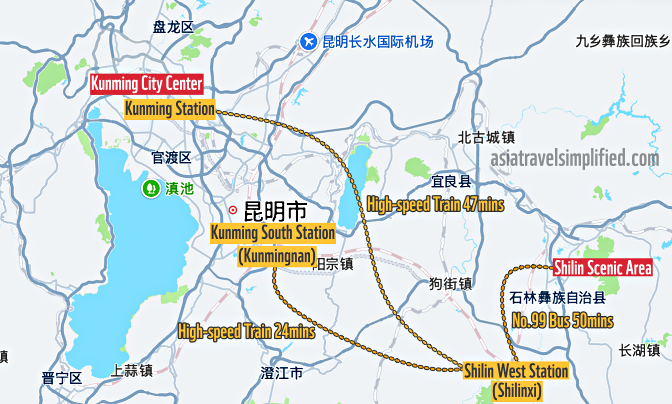
Tips for Visiting the Stone Forest Scenic Area (inside the park)
It is highly recommended to purchase the scenic area shuttle bus ticket, as it can save a significant amount of walking. The shuttle system is roughly divided into two routes. One connects the Visitor Center and Yingbin Square (welcome square); there are no attractions along this 2 km stretch, so walking is not recommended. The other is the scenic shuttle loop, which is useful when you feel tired or want to explore less-visited areas from the bus.
The Stone Forest is divided into five main areas: Major Stone Forest, Minor Stone Forest, Liziyuanqing, Wannian Lingzhi, and Bushao Hill. Among them, the Major Stone Forest and Minor Stone Forest are the most popular and crowded sections, and most of the iconic photos you see on social media are taken here.
Large tour groups usually arrive starting at 9AM and mainly visit the Major and Minor Stone Forest areas, so if you want to avoid crowds, you can plan to explore these sections at other times of the day. The Liziyuanqing, Wannian Lingzhi, and Bushao Hill areas are much quieter; if you enjoy hiking and a more peaceful atmosphere, these are highly recommended and should not be missed. It is also best to avoid Chinese public holidays, as these are the busiest times of the year and the entire park is extremely crowded throughout the day.
As for food, there are small snack stalls inside the scenic area offering basic options. Restaurants are mainly located near the main entrance outside the park, but quality is quite mixed—if needed, there is also a KFC nearby.
The park offers a paid English-speaking guide service for ¥200. No advance reservation is required; you can simply arrange it directly at the visitor center service desk.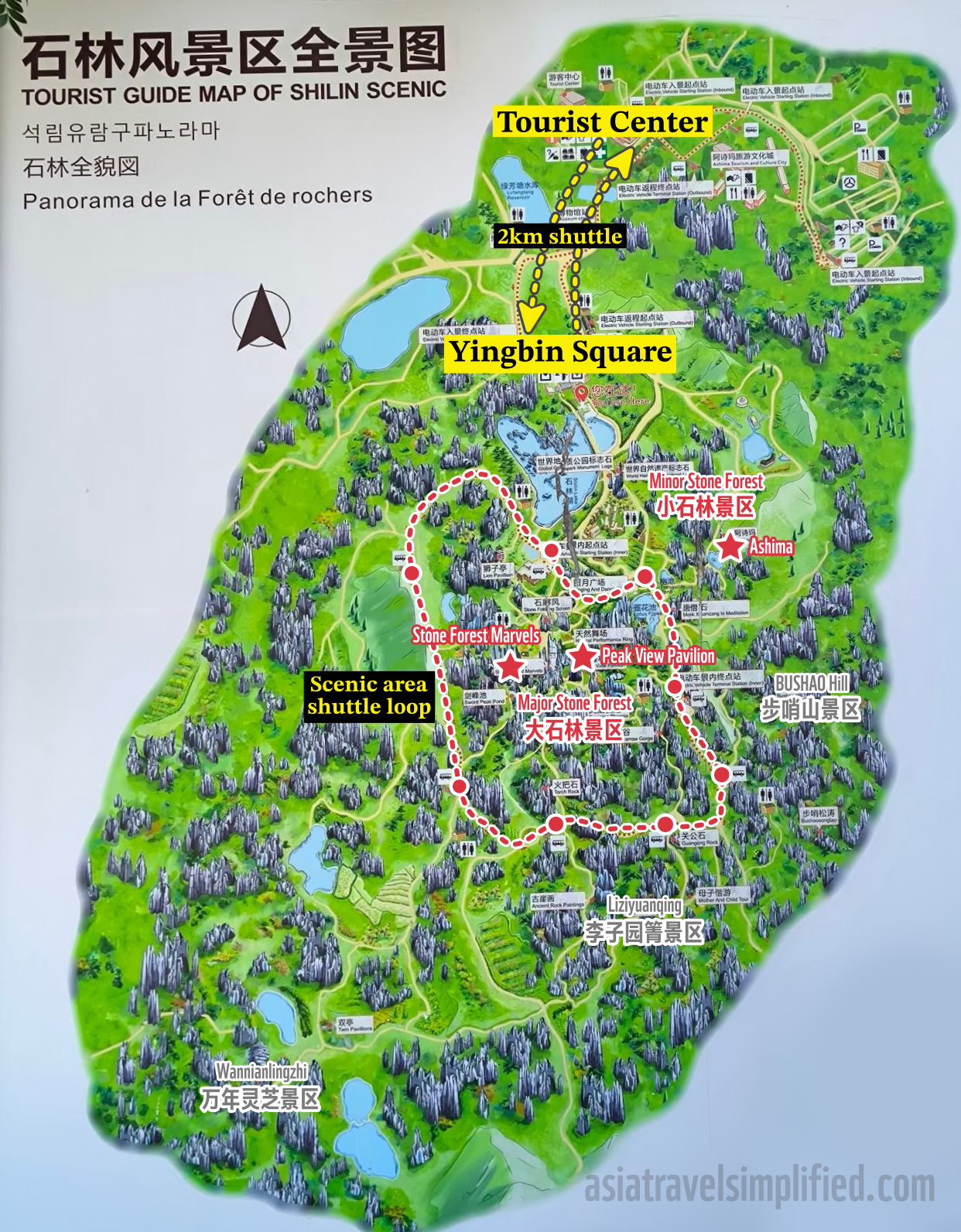
• Scenery near the entrance to the Major Stone Forest area.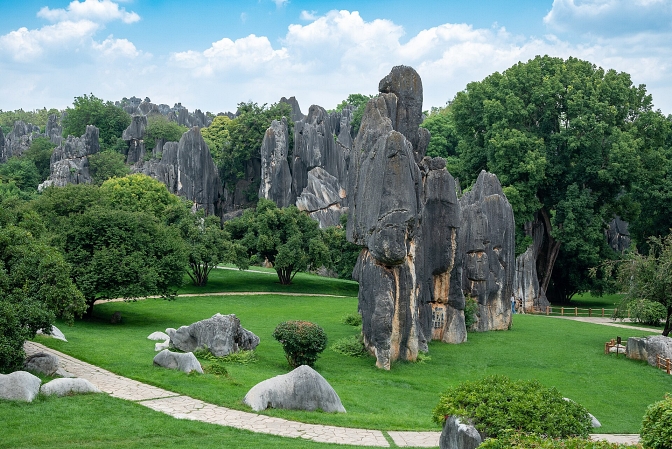 Photo By xiquinhosilva
• Stone Forest Marvels is the most iconic landscape in the Major Stone Forest area and a must-visit photo spot for nearly all visitors. The two characters “石林” (Shi Lin) are carved into the rock—literally meaning “stone forest”—a fitting name as densely clustered stone pillars rise all around, showcasing the astonishing artistry of karst formations.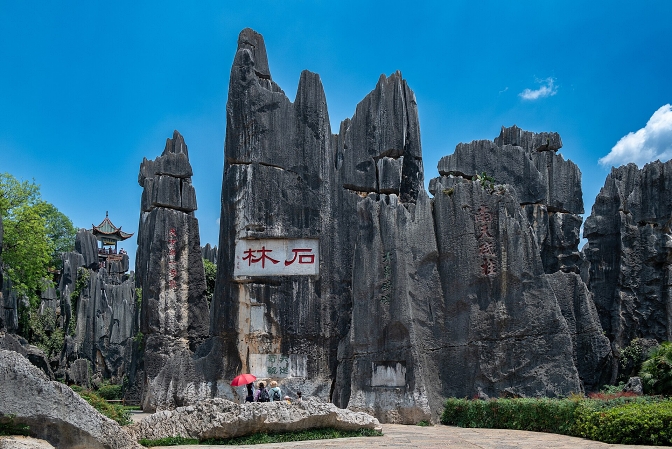 Photo By xiquinhosilva
• Sitting right behind the Stone Forest Marvels, the Peak View Pavilion is the absolute best spot to get a bird’s-eye view of the whole area.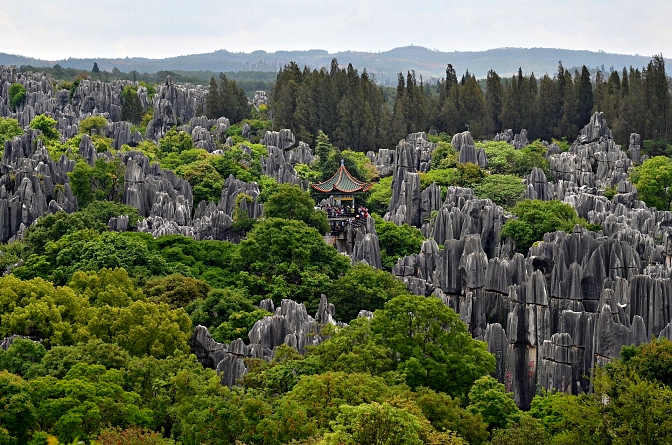 Photo By Pavel Špindler
• Ashima is the most popular attraction in the Minor Stone Forest. According to Sani legend, Ashima was a beautiful girl who was tragically torn apart from her lover, Ahei, by a tyrannical ruler. She ultimately turned into this stone peak, staying in the forest forever as a symbol of eternal, faithful love.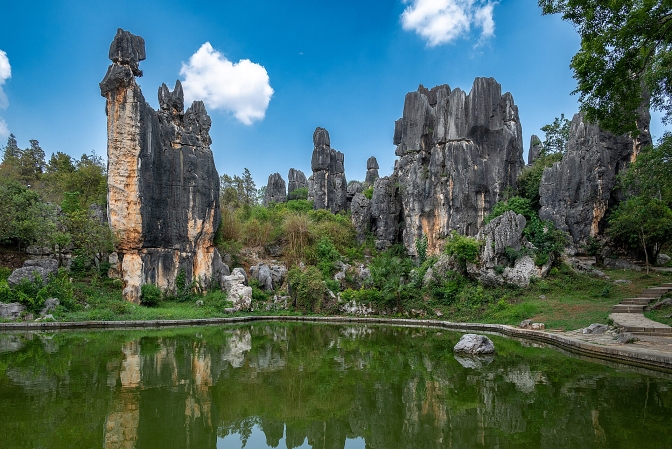 Photo By xiquinhosilva
• From the picture below, you can really see the resemblance—the rock looks just like a Sani girl carrying a basket on her back.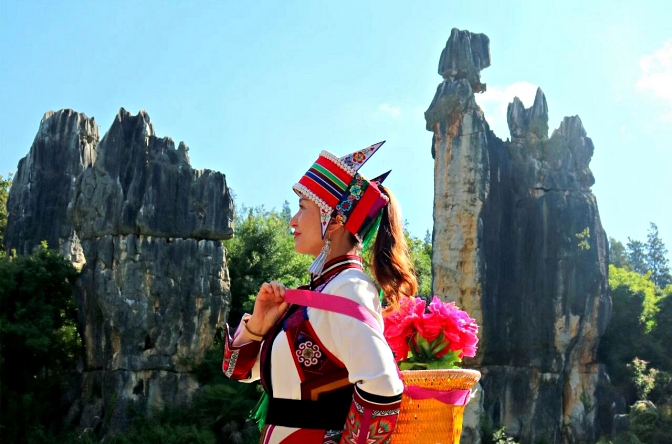 Photo By Stone Forest Official WeChat Account
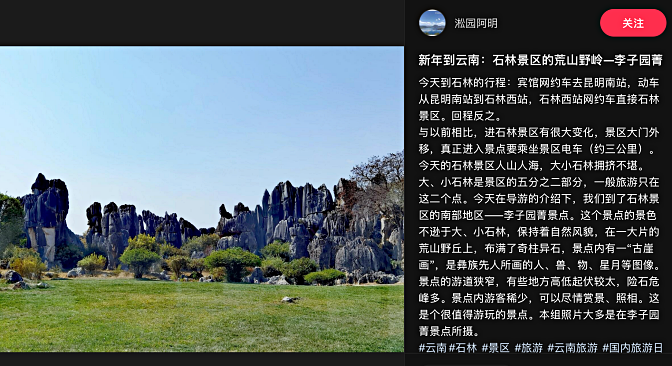
• Liziyuanqing area: a much quieter alternative.
• Recommended Xiaohongshu Post: Liziyuanqing: The wild and rugged side of the Stone Forest
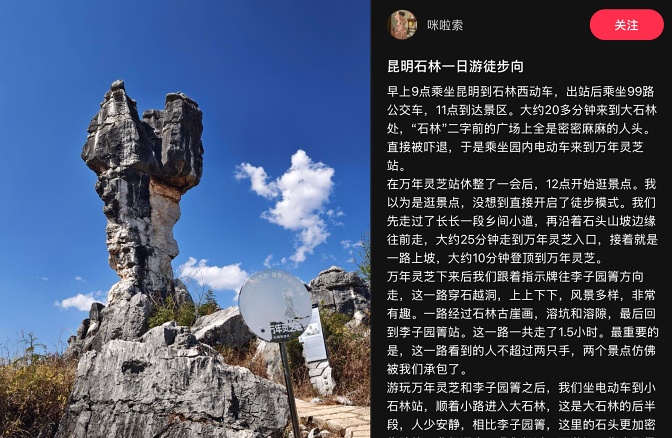
• Wannian Lingzhi: Located in the southern, most remote part of the Stone Forest, this area has a much wilder and more rugged vibe. Its landmark is a 15-meter-high, mushroom-shaped stone peak perched on a small hill, which tapers from a broad top to a narrow base.
• Recommended Xiaohongshu Post: Kunming Stone Forest One-Day Hiking Tour
Optional Stops in Kunming
Dounan Flower Market 斗南花市
Dounan Flower Market is Asia’s largest and the world’s second-largest fresh cut flower trading market. It supplies 70% of China’s fresh cut flowers and exports to over 50 countries and regions worldwide.
Operating as both a retail and wholesale hub, the market allows casual visitors to buy high-quality flowers at incredibly low prices. Even if you are not looking to buy, it is well worth a visit. The sheer scale, the endless variety of flowers, and the high-energy lifestyle of the people working in the industry make it an unforgettable experience.
Recommended Visit Time: 1-2 hours
Getting There: Metro Line 4, Jingui Street Station(金桂街站), Exit B (approx. 50 minutes from the city center)
Dounan Flower Market consists of multiple pavilions, but the Main Pavilion is usually enough for most visitors. The first floor is dedicated to fresh cut flowers, green plants, and potted plants, while the third and fourth floors feature succulents, handicrafts, and travel souvenirs.
The market is open 24 hours a day, but here are the recommended visiting times:
- Day Market (9:00 AM – 6:00 PM): Best for casual visitors looking to stroll around in a more relaxed atmosphere.
- Night Market (8:30 PM – Midnight): The prime time for wholesale trading, ideal for experiencing the high-energy vibe of the flower industry.
- Time to Avoid (5:30 PM – 6:30 PM): Not recommended, as day vendors are packing up, making the market hectic and crowded.
Watch: How Cheap is Asia’s Largest Flower Market? 100 RMB Buys More Than You Can Carry
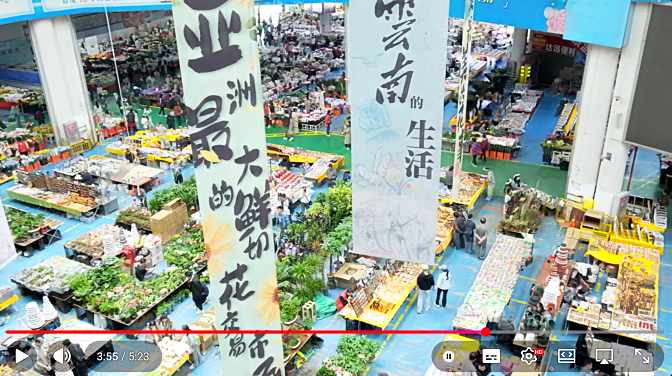
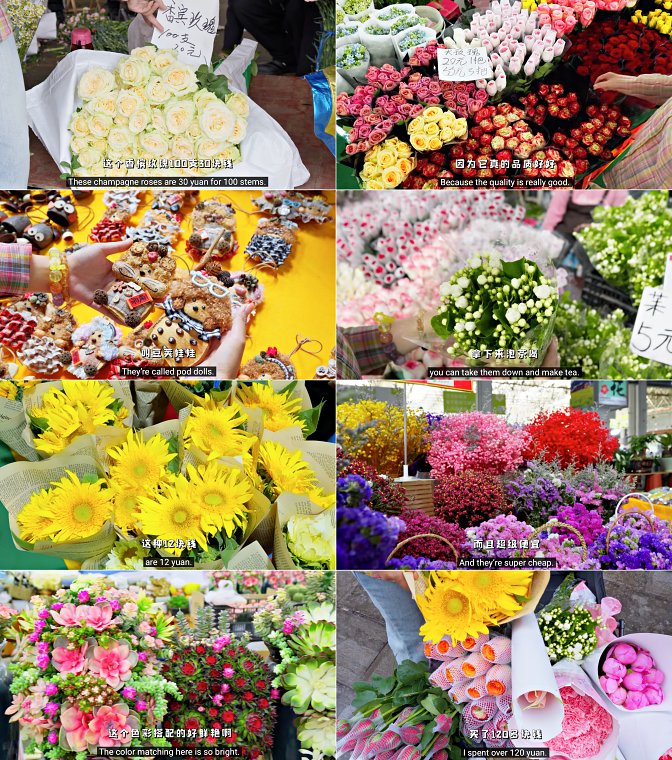
Photo from video How Cheap is Asia’s Largest Flower Market
Daguan Zhuanxin Farmers’ Market 大观篆新农贸市场
If you enjoy exploring local markets, Daguan Zhuanxin Farmers’ Market is a must. Located in the heart of Kunming, it is the city’s most comprehensive and well-maintained market. It draws both curious travelers and locals shopping for their daily meals.
Thanks to Yunnan’s diverse climates and varied altitudes, the region possesses incredibly rich botanical resources. You can easily view this market as a living museum of fruits and vegetables, where you will encounter unique varieties that even some locals might not recognize.
Additionally, nearly half of Zhuanxin Market is dedicated to prepared foods, making it an excellent venue to sample Yunnan snacks. As a province with diverse ethnic groups, the market offers a unique opportunity to taste traditional foods from various cultural backgrounds.
Opening hours: 8AM - 7PM
Recommended Visit Time: 1-2 hours
Getting There:
- On Foot: Approximately 2 km from Green Lake Park and Kunming Old Street—a pleasant walk if you prefer to stroll.
- By Metro: Line 3, Panjiawan Station (潘家湾), Exit A (then a 900-meter walk).
- By Metro: Line 5, Milesi Station (弥勒寺), Exit E (then a 1.2 km walk).
- By Ride-Hailing / Taxi: Set your destination to 篆新农贸市场. It costs around 10–15 RMB from the city center.
Watch: Yunnan Winter Market Tour with A-Xia: Fresh Eats & Local Fruits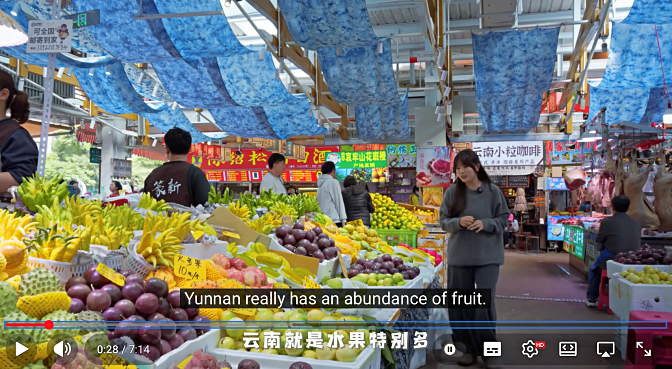
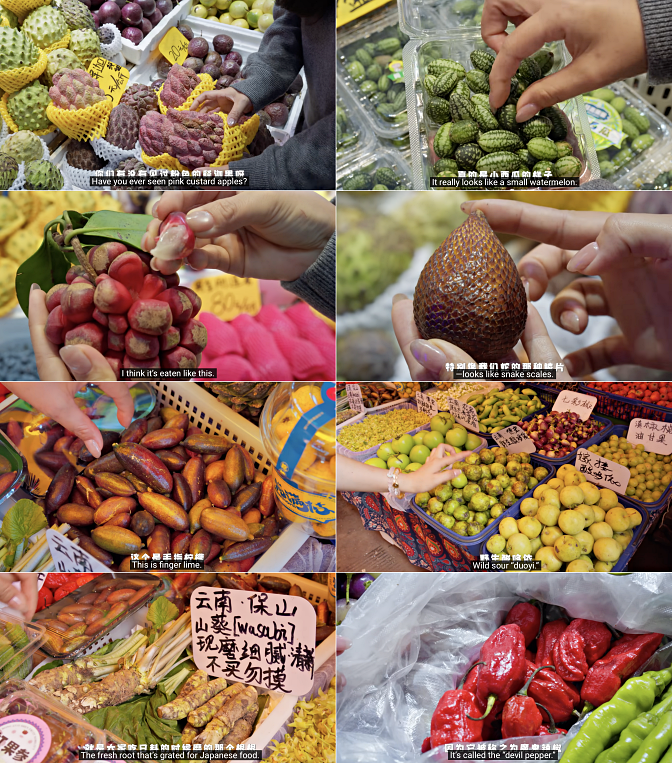 Photo from video Yunnan Winter Market Tour with A-Xia
Watch: Street Snapping at Zhuanxin Market! So Many Fruits & Snacks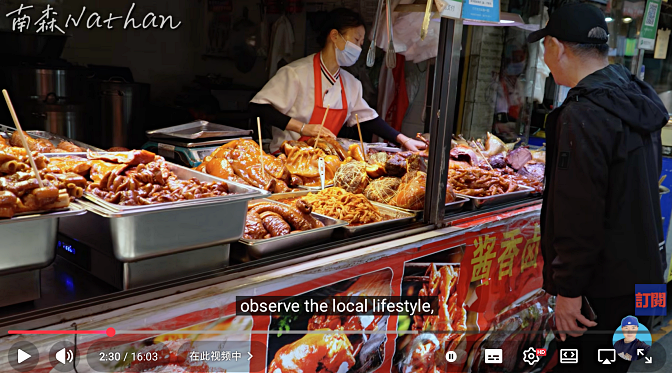
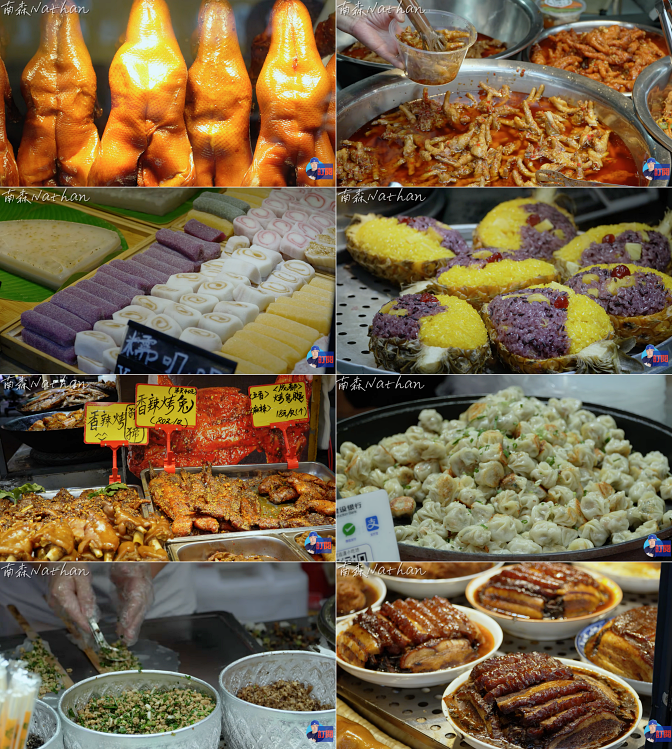 Photo from video Street Snapping at Zhuanxin Market
Daguan Park(Grand View Park)大观公园
Daguan Park, situated on the northern shore of Dianchi Lake, is the largest park in urban Kunming. It features classic Chinese garden architecture, with weeping willows, lotus ponds, traditional courtyards, and zigzag bridges thoughtfully arranged to create changing vistas with every step.
The park’s central landmark is the Daguan Pavilion. Originally built during the Qing Dynasty, this three-story pavilion presents a serene and grand profile against the backdrop of the lake.
Its seasonal highlights are highly distinct: June to August is ideal for viewing lotus flowers, while November to March is perfect for watching seagulls.
Admission: Free
Opening hours: 7AM - 7PM
Recommended Visit Time: 3 hours
Getting There: Take a ride-hailing service and set your destination to “大观公园(大门)”. A south exit is available, so no backtracking is needed at the end of your tour.
Watch: Kunming Grand Yunnan China
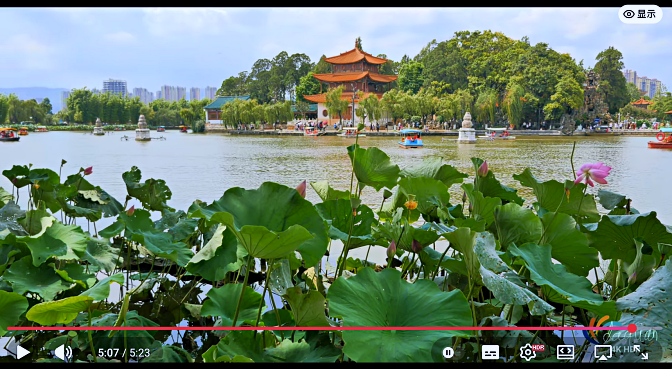
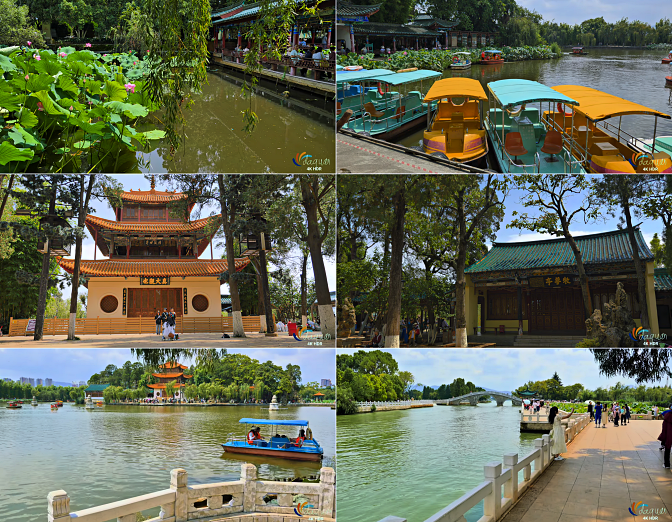 Photo from video Kunming Grand Yunnan China
Jiaochang Middle Road Jacarandas 教场中路蓝花楹
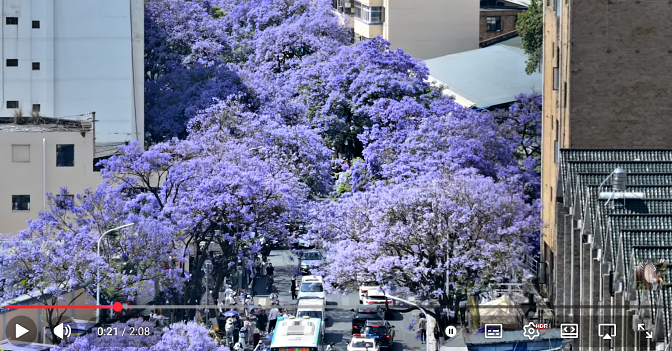
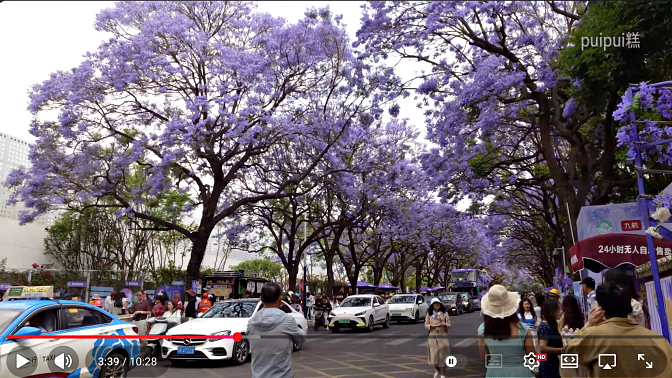
Late April to early May is the best time to admire jacarandas in Kunming. Jiaochang Middle Road (教场中路) is one of the top viewing spots, featuring around 500 jacaranda trees whose interlocking canopies form a stunning, 2-kilometer-long purple avenue.
Recommended Visit Time: 1 hour
Getting There:
- By Metro: Take Line 4 to Sujiatang Station (苏家塘站), Exit C, followed by a 450-meter walk.
- By Ride-Hailing: Set your destination to “昆明理工大学莲华校区北门” (North Gate of Kunming University of Science and Technology, Lianhua Campus). After getting off, cross the pedestrian overpass to reach the core flower-viewing area.
Tips:
- Crowd Alert: Expect large crowds and heavy traffic on Jiaochang Middle Road during the blossom season. Be mentally prepared!
- Open-Top Sightseeing Bus:
- During the peak season, you can take an open-top sightseeing bus for 25 RMB per person, which includes a complimentary Jacaranda-themed ice cream.
- The entire ride takes 20 minutes with no stops along the way, returning to the original boarding location.
- Boarding Location: The parking lot near Lianhua Community (莲花小区), situated at the intersection of Lianhuachi Zheng Street (莲花池正街) and Xuefu Road (学府路). It is located very close to the North Gate of the university’s Lianhua Campus.
- Clear signage will be available on-site to guide you to the boarding point.
- Alternative Spot: Another fantastic location to admire jacarandas is along the Panlong River (盘龙江), specifically the section stretching from Taoyuan Square (桃源广场) to Youguan Bridge (油管桥).
Watch: Kunming’s Jacaranda Countdown: A Once-a-Year Bloom
Watch: Kunming City Walk | Jiaochang Road Jacarandas
Thank you for reading. Hope you have a wonderful journey!
̗̀(๑ᵔ⌔ᵔ๑)੭