Shanghai Itinerary: A Complete 3-Day Guide for First-Time Visitors
Last Updated: October 25, 2026
Shanghai is China’s financial capital and one of its most international cities. Its modern infrastructure and wider use of English make it an easy first stop for travelers visiting China.
- Located on China’s eastern coast, Shanghai covers 6,340 square kilometers, about four times the size of London.
- The city has a population of around 25 million, close to the population of Australia.
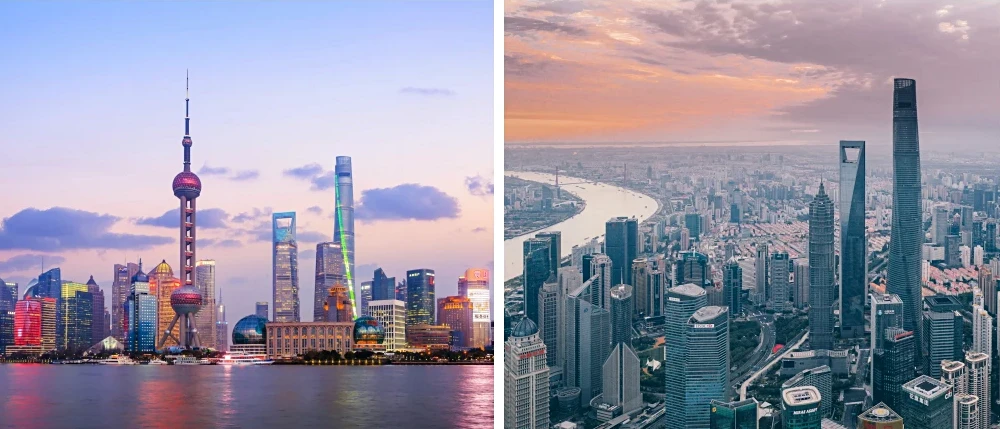 by Edward He | Road Trip with Raj
Best Time to Visit Shanghai
September–November is the best time to visit.
September can still be hot, while October and November are the most comfortable, with average temperatures of 15–24°C. Avoid the Golden Week holiday from October 1–7.
March–May is the next best option.
Average temperatures range from 5°C to 26°C. Expect some rain and chilly evenings, even when the days are warm. It’s a good time to see flowers in bloom. Avoid the May Day holiday from May 1–5.
June–August is less ideal.
The rainy season usually lasts from mid-June to early July. Expect hot, humid weather and frequent, sometimes prolonged rain. July and August are very hot, with temperatures often reaching 35°C or higher. This is also the school summer break, so popular attractions are crowded.
December–February is also less ideal.
Many trees are bare in winter, making the scenery less attractive. Average temperatures are 2–12°C. It rarely snows, but the damp weather makes it feel much colder than the actual temperature. However, there are fewer tourists, and hotel rates are lower. Avoid the Chinese New Year holiday: the official dates have not yet been announced, but the 2027 holiday is expected to run from February 5–13.
See public holidays in China for more information about holiday dates.
Where to Stay in Shanghai
Jing’an Temple Area
This is my top choice for where to stay in Shanghai. It’s central, with plenty of shops and restaurants nearby, without feeling as hectic as the People’s Square area. With Jing’an Temple Station and several shopping malls in the area, getting around, shopping, and finding places to eat are all easy.
- From Pudong International Airport: 55 km, about 1–1.5 hours by taxi or 1 hour by metro. Take Line 2 directly, with no transfers. The fare is ¥7.
- From Shanghai Hongqiao Railway Station: 16 km, about 25–50 minutes by taxi or 29 minutes by metro. Take Line 2 directly, with no transfers. The fare is ¥4.
- To the Bund: Take Line 2 to People’s Square Station (人民广场). The metro ride takes 8 minutes and costs ¥3.
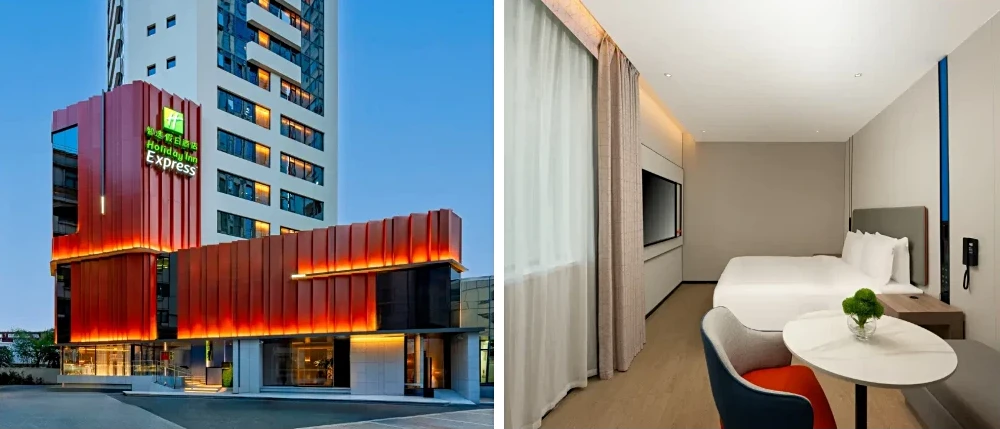
Holiday Inn Express Shanghai Jing’an Temple by IHG
4-star | Rated 9.7/10 | 3,900+ reviews
- FamilyMart and 7-Eleven convenience stores are a 2-minute walk away. Jing An Kerry Centre (静安嘉里中心), a mid-range to upscale shopping mall with shops and restaurants, is a 10-minute walk away.
- Exit 8 of Jing’an Temple Station (静安寺) is a 10-minute walk away. Jing’an Temple itself is a 15-minute walk away.
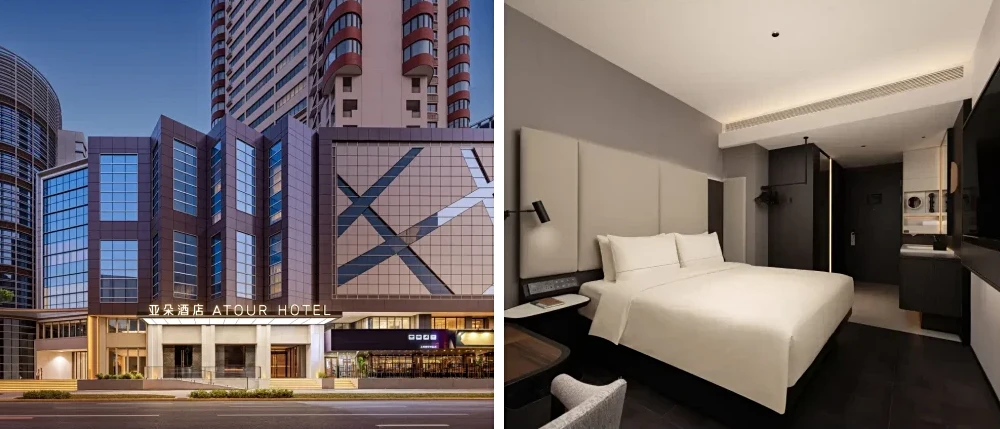
Atour Hotel, Yuyuan Road, Jing’an Temple, Shanghai
4-star | Rated 9.6/10 | 907+ reviews
- The hotel restaurant serves a free light supper every evening after 9 p.m., usually porridge with simple side dishes.
- A FamilyMart convenience store is a 3-minute walk away. CP Jing’an (CP静安), a mid-range shopping mall with shops and restaurants, is a 7-minute walk away.
- Exit 1 of Jing’an Temple Station (静安寺) is a 5-minute walk away. Jing’an Temple itself is a 7-minute walk away.
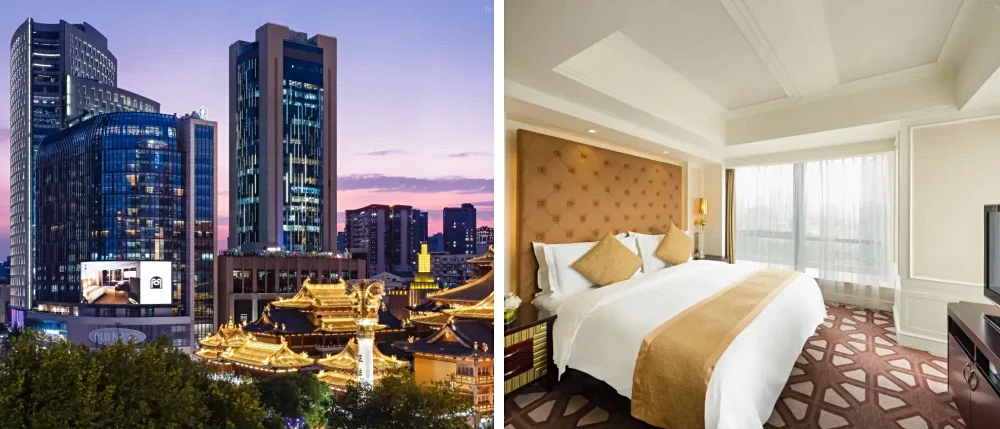
Paramount Gallery Hotel
4-star | Rated 9.5/10 | 1,800+ reviews
- Starbucks, McDonald’s, and a FamilyMart convenience store are a 3-minute walk away. CP Jing’an (CP静安), a mid-range shopping mall with shops and restaurants, is a 6-minute walk away.
- Exit 1 of Jing’an Temple Station (静安寺) is right across from the hotel, next to Jing’an Temple itself.
- The main drawback compared with the two hotels above is that the property is older and its facilities are more dated.
People’s Square Area (Nanjing Road Pedestrian Street)
This is the most popular area for tourists to stay in, near People’s Square Station (人民广场). You’ll be close to Nanjing Road Pedestrian Street and within walking distance of the Bund.
Transport connections:
- From Pudong International Airport: 53 km, about 1–1.5 hours by taxi or 1 hour by metro. Take Line 2 directly, with no transfers. The fare is ¥7.
- From Shanghai Hongqiao Railway Station: 20 km, about 30 minutes to 1 hour by taxi or 32 minutes by metro. Take Line 2 directly, with no transfers. The fare is ¥5.
Downside: People’s Square Station handles a huge number of passengers and gets very crowded.
JI Hotel (Shanghai People’s Square)
3-star | Rated 9.5/10 | 9,000+ reviews
- There’s a 7-Eleven convenience store downstairs, and the hotel is next to Shanghai No. 1 Department Store (第一百货商业中心).
- Nanjing Road Pedestrian Street is a 5-minute walk away. Exit 7 of People’s Square Station (人民广场) is a 7-minute walk away.
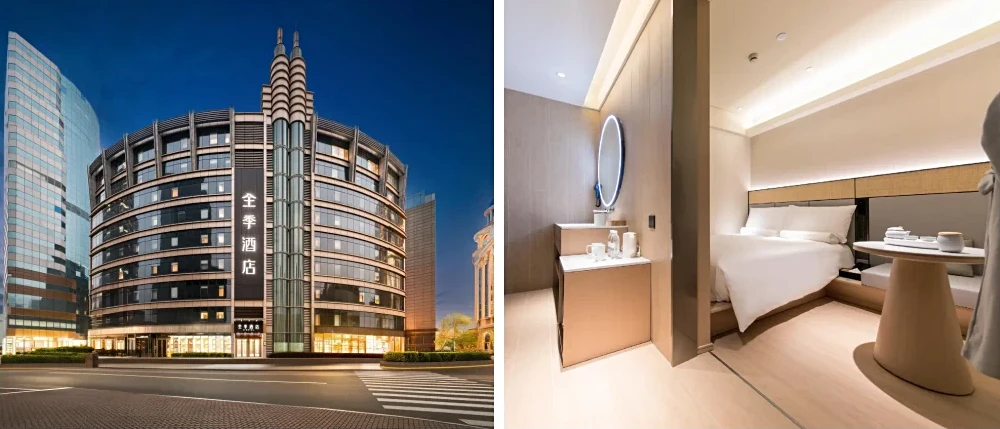
Hidden Hotel (Shanghai People’s Square Nanjing Road Pedestrian Street Branch)
4-star | Rated 9.7/10 | 2,000+ reviews
- The hotel is next to Shanghai Shimao Festival City (上海世茂广场), and a Lawson convenience store is a 3-minute walk away.
- Nanjing Road Pedestrian Street is a 2-minute walk away. Exit 20 of People’s Square Station (人民广场) is a 3-minute walk away.
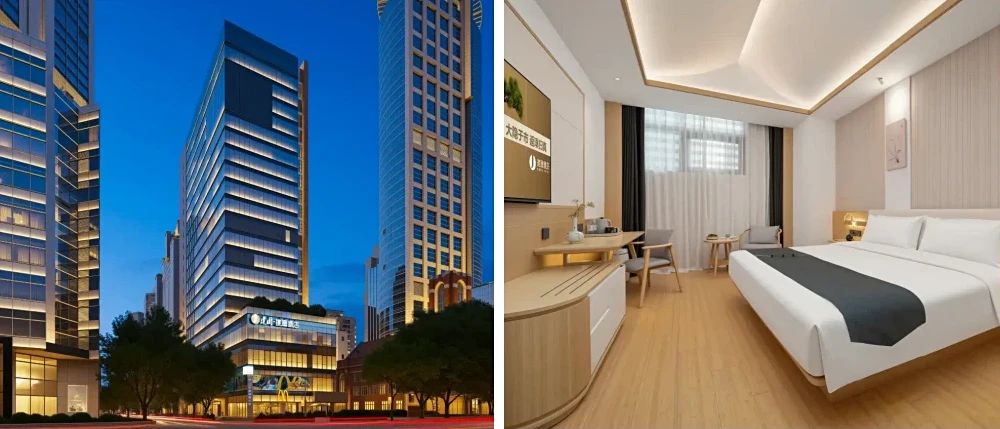
Radisson Blu Hotel Shanghai New World
5-star | Rated 9.5/10 | 6,000+ reviews
- The hotel is next to New World City (新世界城), and a FamilyMart convenience store is a 3-minute walk away.
- Nanjing Road Pedestrian Street is a 3-minute walk away. Exit 7 of People’s Square Station (人民广场) is a 2-minute walk away.
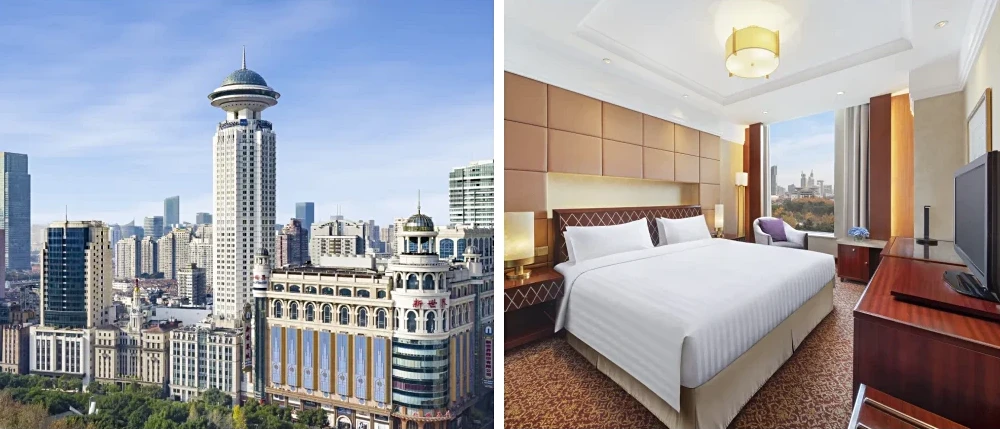
Getting from the Airport to the City
Shanghai has two international airports: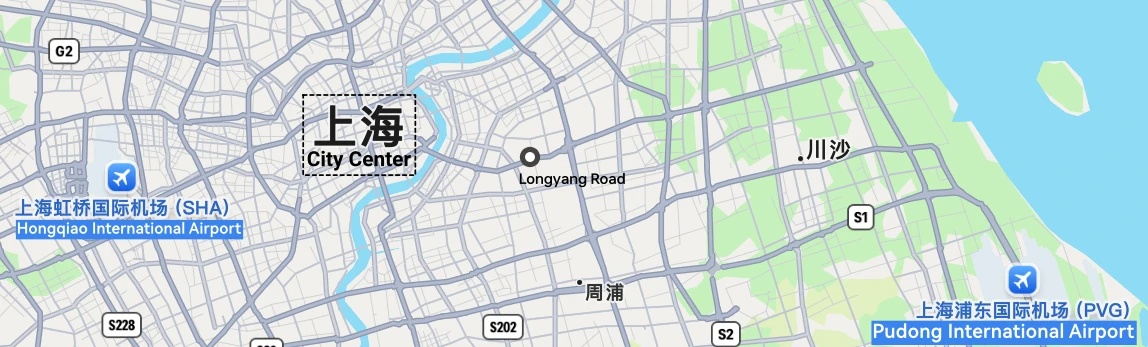
Pudong International Airport (PVG)
Located about 50 km from central Shanghai, this is where most international flights arrive. It has two terminals, T1 and T2, and two satellite concourses, S1 and S2.
How to get to the city center:
Metro Line 2: Takes about 1–1.5 hours to reach the city center. The first train leaves at 6 a.m., and the last train leaves at 10:30 p.m. The areas I recommend staying in, Jing’an Temple and People’s Square, are about 1 hour away. The fare is ¥7, making this the best-value option.
Maglev train: Take the Maglev to Longyang Road Station (龙阳路). The first train leaves at 7 a.m., and the last train leaves at 9:40 p.m. The journey takes 8 minutes and costs ¥50, or ¥40 with a same-day flight ticket. Compared with the metro, the Maglev is faster and more comfortable, with fewer passengers and more space. The downsides are the higher fare and that it only goes as far as Longyang Road. You’ll need to continue by taxi or metro to reach central Shanghai:
- To the Jing’an Temple area: Another 16 km, about 30–45 minutes by taxi or 23 minutes by metro.
- To the People’s Square area: Another 12 km, about 25–40 minutes by taxi or 19 minutes by metro.
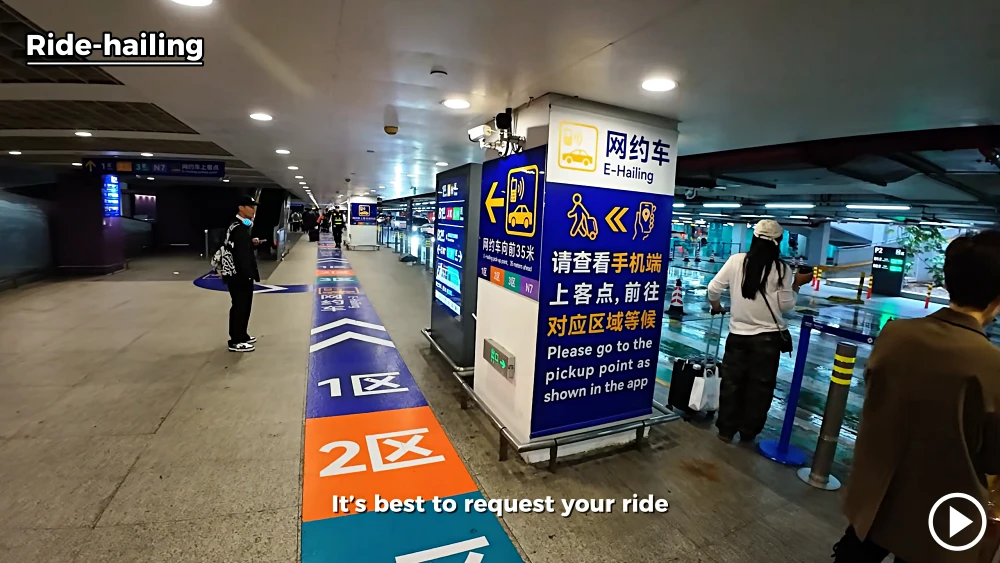
Taxi or ride-hailing car:
- The journey takes about 1–1.5 hours. Both are available 24 hours a day.
- Taxis are convenient: just join the queue and get in. The downside is the price, around ¥180–250, with much higher fares at night between 11 p.m. and 5 a.m.
- Show the driver the hotel’s Chinese name and address from your booking. The same hotel brand may have several branches in Shanghai, and English translations are often inaccurate.
- If you think the fare is unreasonable, there’s no need to argue with the driver. Keep the receipt and note the license plate number and drop-off time, then ask your hotel’s front desk to help you file a complaint. If the complaint is found to be valid, you’ll receive compensation. Drivers can lose their taxi license after repeated complaints, so you’re unlikely to encounter this problem.
- Ride-hailing is cheaper, at around ¥140–250. The downside is that many people are booking rides, so finding your driver can take time. Once the metro stops running, demand for cars rises and waits can be long.
- Do not book a ride while you’re still inside the terminal. Follow the instructions in the DiDi mini program in Alipay and the signs at the airport to the parking garage. Each pillar has a number. Once you arrive, book your ride and send the driver the pillar number. You can send a message in English and a photo.
- Vehicle quality varies. For short trips within the city, the cheapest option is usually fine. For longer rides, if your budget allows, I recommend the more expensive Premier option. The cars, service, and driving are noticeably better because the platform has strict requirements for these drivers.
- Notes:
- Ignore drivers who approach you offering a ride. They will charge far more than the usual price.
- Most standard taxis and ride-hailing cars can fit two 28-inch suitcases.
Other options:
You may see signs for the Airport Link Line, but this is only useful if you’re heading to Hongqiao Airport or Shanghai Hongqiao Railway Station that day. The one-way journey takes 40 minutes and costs ¥26. It doesn’t go to central Shanghai, so make sure you board the right service.
Pudong Airport also has an Airport Night Bus, operating from 11 p.m. to 5:30 a.m. Buses leave when full, with a maximum interval of 30 minutes.
- For hotels near Jing’an Temple: Get off at Yan’an Middle Road / Huashan Road (Jing’an Temple) — 延安中路华山路(静安寺).
- For hotels near People’s Square: Get off at Yan’an East Road / Zhejiang Middle Road (People’s Square) — 延安东路浙江中路(人民广场).
- Fares range from ¥18 to ¥34, depending on the distance. Self-service ticket machines are available at the airport. The bus is good value, but finding your hotel at night can be a challenge for international visitors. Use the AMap app beforehand to check how far your hotel is from the bus stop.
Watch: How to Get from Shanghai Pudong Airport (PVG) to the City
Hongqiao International Airport (SHA)
Located about 20 km from central Shanghai, Hongqiao mainly handles domestic flights.
- Taxi or ride-hailing car: 20–40 minutes, ¥40–80.
- Metro: About 30 minutes, ¥4.
Getting from Beijing to Shanghai
Beijing is about 1,300 km from Shanghai. You can travel between the two cities by high-speed train or plane.
High-Speed Train
Multiple trains run daily between Beijing and Shanghai.
Departure station: Beijingnan (Beijing South Station)
Arrival station: Shanghai Hongqiao Railway Station
Travel time: 4.5–6 hours
Booking tickets: You can check timetables and book tickets on Trip.com. Tickets go on sale 15 days in advance. With so many departures on this route, finding tickets is usually straightforward unless you’re traveling during the May Day, National Day, or Chinese New Year holidays.
Fares:
Second Class: Around ¥660. Five seats per row in a 3+2 layout, with around 90 passengers per carriage.
Watch: I took the World’s Fastest Bullet Train from Beijing to Shanghai!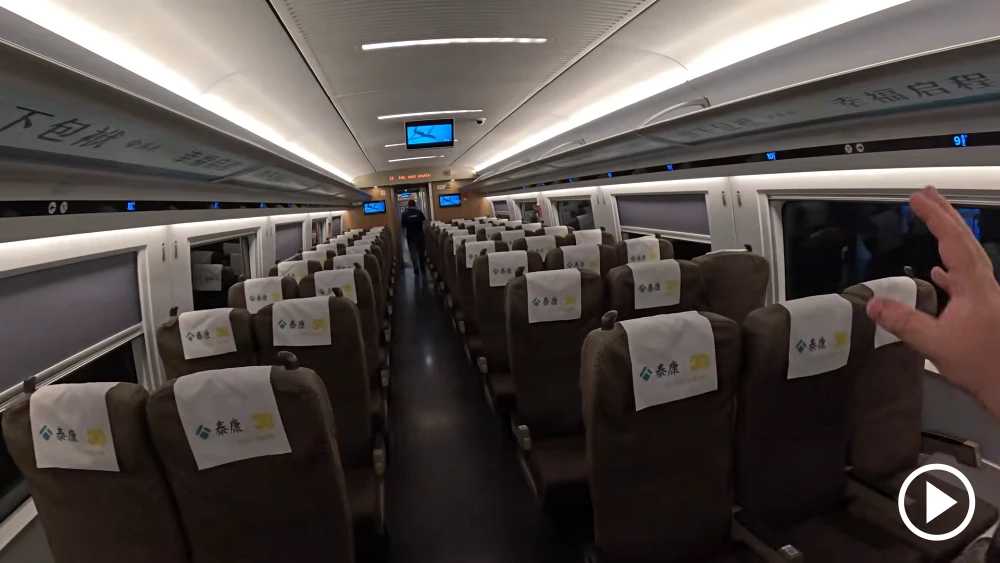
First Class: Around ¥1,100. Four seats per row in a 2+2 layout, with around 56 passengers per carriage.
Watch: What “1st Class” Looks Like on China’s Bullet Train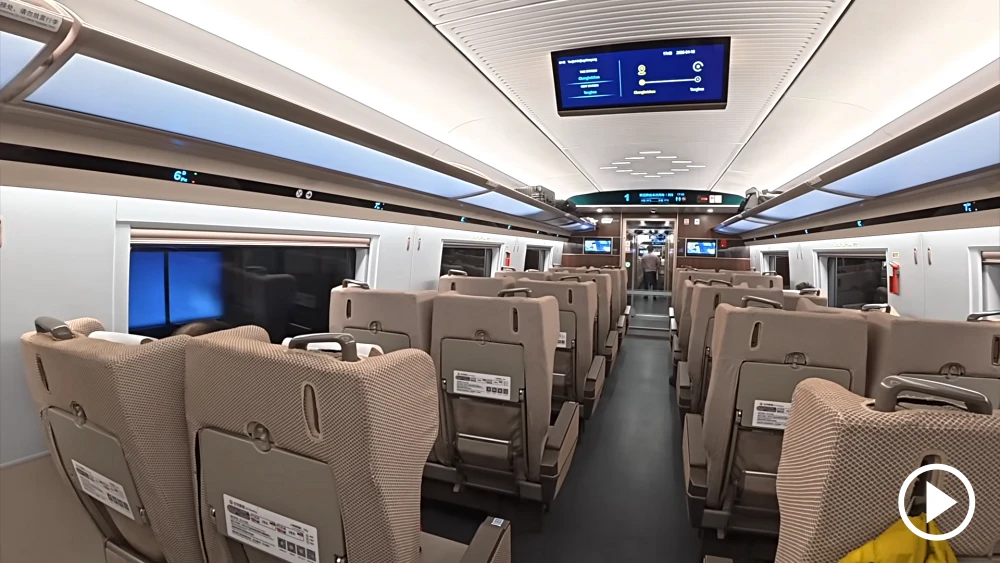
Business Class: Around ¥2,300. Three seats per row in a 2+1 layout, with around 22 passengers per carriage.
Watch: I travelled on a Chinese bullet train in BUSINESS CLASS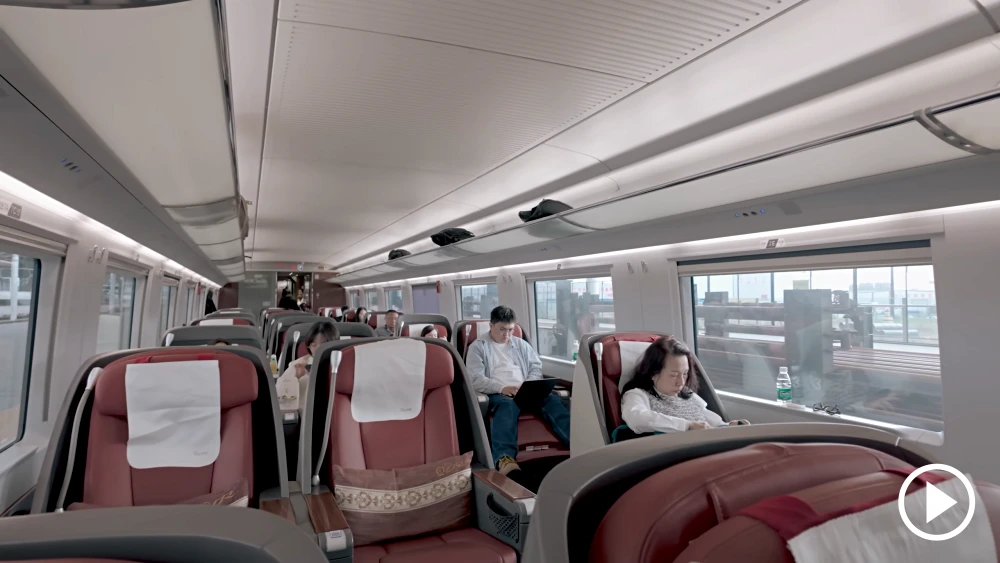
At the station:
- If you’re unfamiliar with Chinese train stations, aim to arrive 60 minutes before departure. The layout is straightforward, and signs are available in English.
- Boarding gates open only about 15 minutes before departure. Until then, you stay in the waiting hall rather than on the platform. Gates close 3–5 minutes before departure.
- Once you’ve booked, use the staffed lane at security and the boarding gates and show your passport. There’s no need to collect a paper ticket. There are usually several queues at each checkpoint, with the staffed lane at one end. Check before joining a queue.
Other tips:
- The official luggage size limit for Chinese high-speed trains is 130 cm in total when you add the suitcase’s length, width, and height. This is not strictly enforced, and you can generally bring a 28-inch suitcase.
- Pressurized aerosol sprays and folding knives are prohibited in your luggage.
- If you have a 28-inch suitcase, join the boarding queue early in the waiting hall so you have a better chance of finding space on the large luggage racks at the ends of the carriage. If those are full, check for space behind the last row of seats. If there’s still no room, keep your suitcase beside you temporarily. Once the train is moving, you can lay it flat in the passage near the toilets, provided it doesn’t obstruct anyone. Staff check that luggage is safely stored as the train departs, so ask for help—they can find a suitable spot where it will not get in the way. If your budget allows, First Class offers more space and makes storing large luggage easier. With CCTV and tickets linked to passengers’ identities, luggage theft is not something you need to worry about.
- Suitcases of 24 inches or smaller can go on the overhead luggage racks.
- Drinks and meals are sold on board. You can order by scanning the QR code on your seat’s armrest, rather than on the seat back or elsewhere. Besides the Chinese boxed meals stocked on the train, you can also order KFC or McDonald’s. The food is brought on board at stations along the route and delivered to your seat. You must order at least one hour before the train reaches the relevant station. You can also buy food directly from the catering carriage, usually Car 5 or Car 13. Think of it as a snack counter: there are no seats, so you take your food back to your own seat. Expect to spend around ¥40–60 per person, which is more than you would normally pay elsewhere. If you don’t mind your food cooling down, I recommend picking up something from Starbucks or a fast-food outlet at the station before boarding.
- If nearby passengers are being too noisy, you can also scan the QR code to report the issue, and train staff will come over to help.
Flight
The flight time is about 2 hours, with fares ranging from ¥500 to ¥1,000, depending on the airline and airport. However, once you include travel time to and from the airport, plus check-in and security, the total trip takes around 6 hours—so the high-speed train is usually the more convenient choice. You can check flights on Trip.com.
Itinerary & Map
Suggested 3-Day Shanghai Itinerary
Day 1: Arrive in Shanghai, then visit the Bund and the Yuyuan shopping district after dark.
Day 2: Take a walk around Wukang Road and Anfu Road, visit Jing’an Temple, then explore Tianzifang or Xintiandi in the afternoon.
Day 3: Take a day trip to Shanghai Disneyland or Zhujiajiao Water Town.
Central Shanghai Map
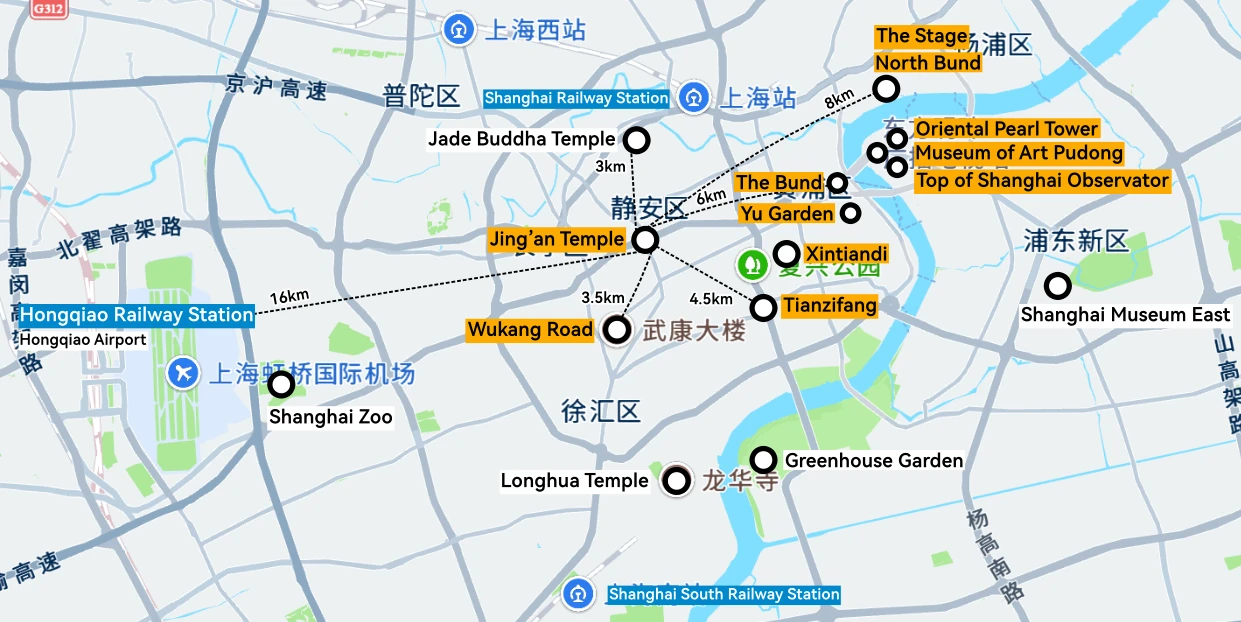
Greater Shanghai Map
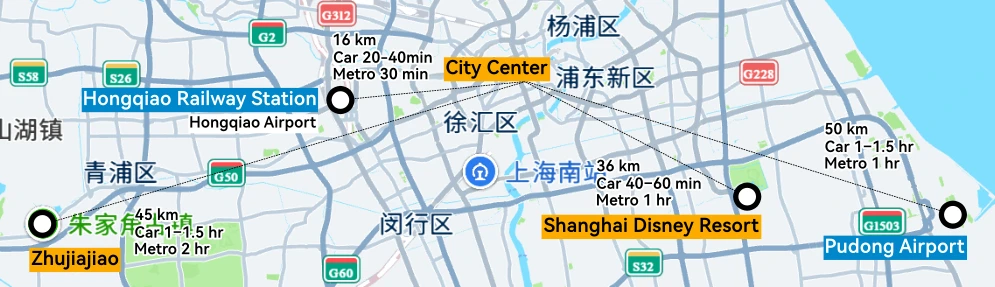
Note:
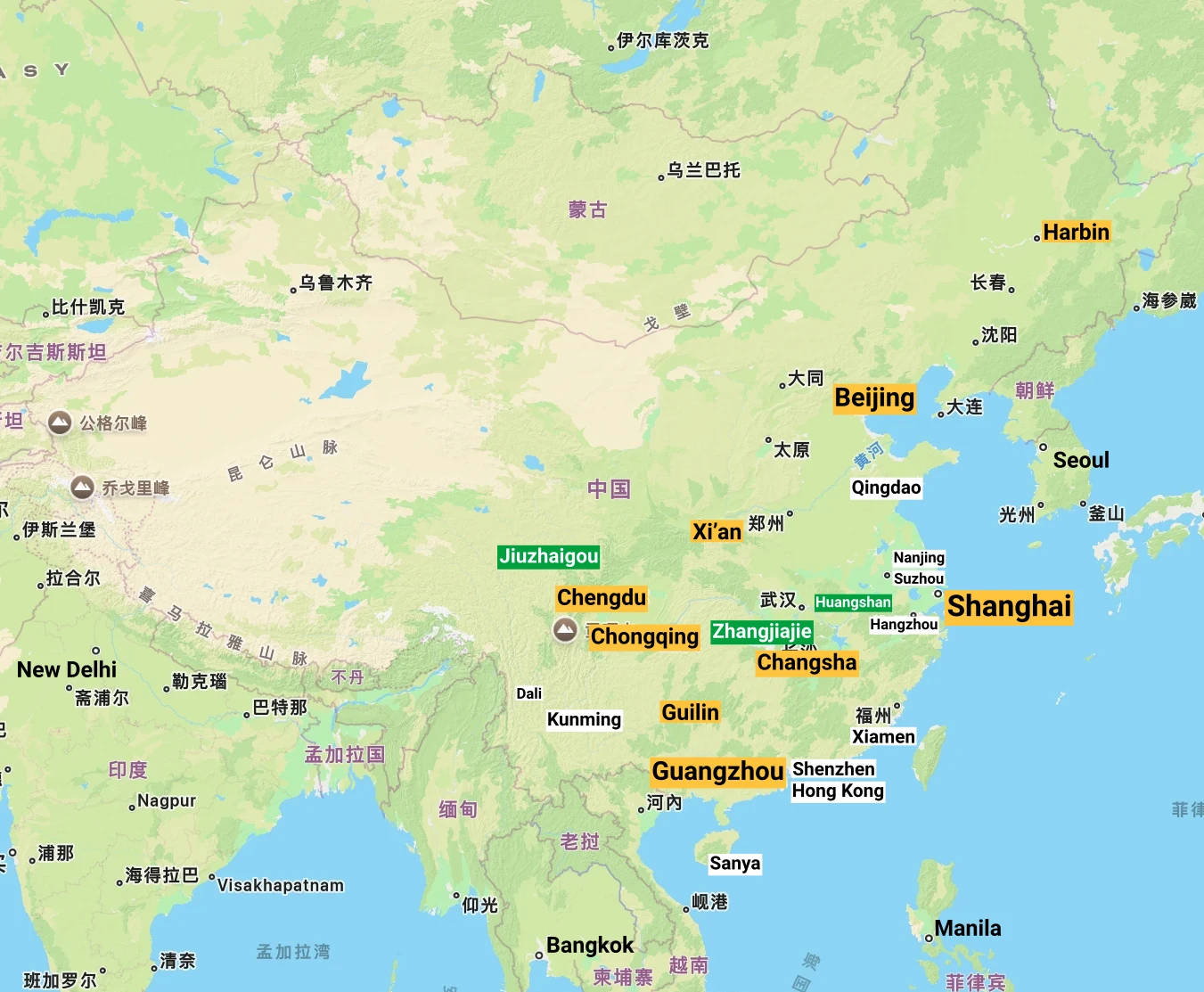
Three days is enough for a first look at Shanghai’s main sights. If you have more time, consider adding another city to see a different side of China. Nearby cities are easy to reach by high-speed train, and Beijing is an option if you’re planning a longer trip.
Getting Around Shanghai
Navigation Apps
Google Maps data in China is outdated. Use Apple Maps or download AMap, the English-language version of China’s most popular navigation app. You can search in English or your preferred language, but copying and pasting the Chinese address gives the most accurate results.
Ride-hailing
You can book a ride through DiDi within Alipay without a Chinese phone number.
If you can’t find your driver or change your mind, you can cancel, though a ¥3 cancellation fee may apply. Choose an easy-to-find pickup point, such as a bus stop or building entrance, to help your driver locate you.
Metro
Shanghai has around 21 metro lines covering about 906 km, making it the world’s second-longest metro system after Beijing. Use Apple Maps or AMap to plan your route.
- Operating hours: Around 6:00 a.m.–11:00 p.m., depending on the line
- Rush hours: 7:00–9:00 a.m. and 5:00–7:00 p.m.
- Fare: ¥3–10, depending on the distance
- Payment:
- Alipay’s transport QR code is the easiest and most reliable option.
- You can also try tapping your credit card directly at the gate. Visa, Mastercard, Amex, and JCB are accepted, but payments may fail if your card issuer blocks overseas contactless transactions that don’t require a PIN.
- You can buy a 1-Day Pass (¥18 / 24 hours) or 3-Day Pass (¥45 / 72 hours) at a staffed service counter.
- Things to know:
- Each passenger needs their own card, ticket, or Alipay transport QR code.
- You must pass through security before entering the metro. It’s similar to airport security but less strict, mainly checking bags for flammable items and knives.
- Most stations have elevators, but some exits on older lines, such as Line 1, may only have stairs.
Watch: The Complete Guide to Using the Shanghai Metro
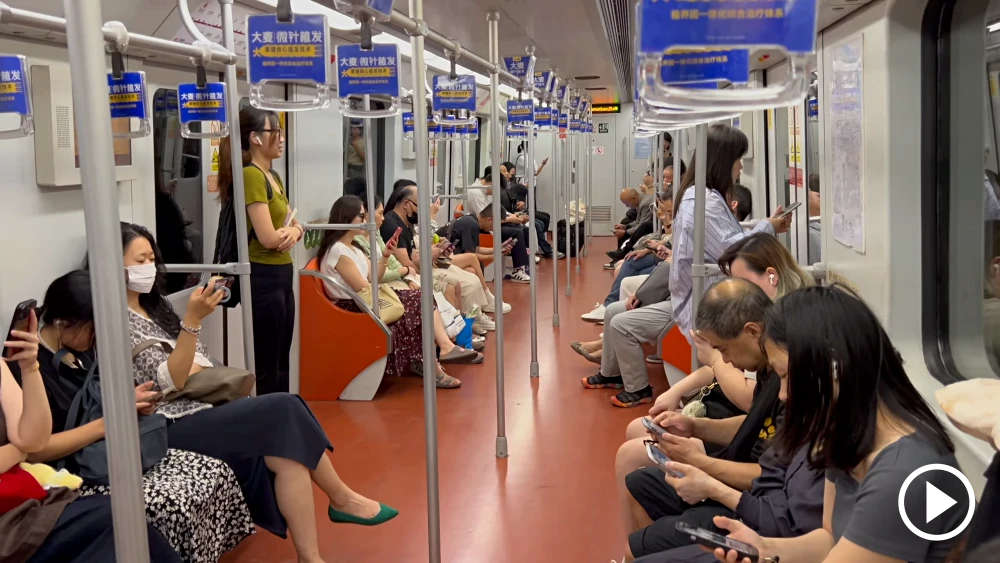
Walking
Walking is a great option for shorter distances. Shanghai is very safe, both day and night. Take extra care when crossing the street, though—watch out for electric scooters.
Attractions in Shanghai
The Bund
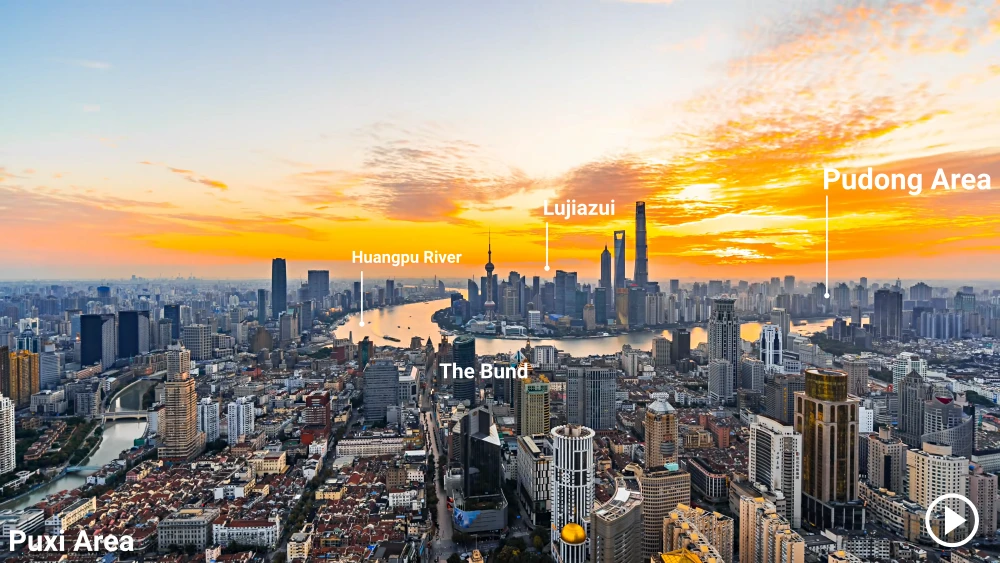
The Bund is Shanghai’s historic waterfront, lined with grand old buildings along the Huangpu River. It’s a must-see on a first visit to the city.
The Huangpu River runs for about 113 km and divides central Shanghai into Puxi and Pudong. The Bund is on the Puxi side, which you can think of as the older part of the city. Across the river is Pudong, the newer part of Shanghai. The cluster of skyscrapers around the Oriental Pearl Tower is called Lujiazui, a financial and commercial district.
Chinese name: 外滩
Watch: 航拍视角下带你-走近上海
Classic Walking Route
Nanjing Road Pedestrian Street → The Bund Promenade
Time needed: 1–3 hours, depending on how much shopping and eating you do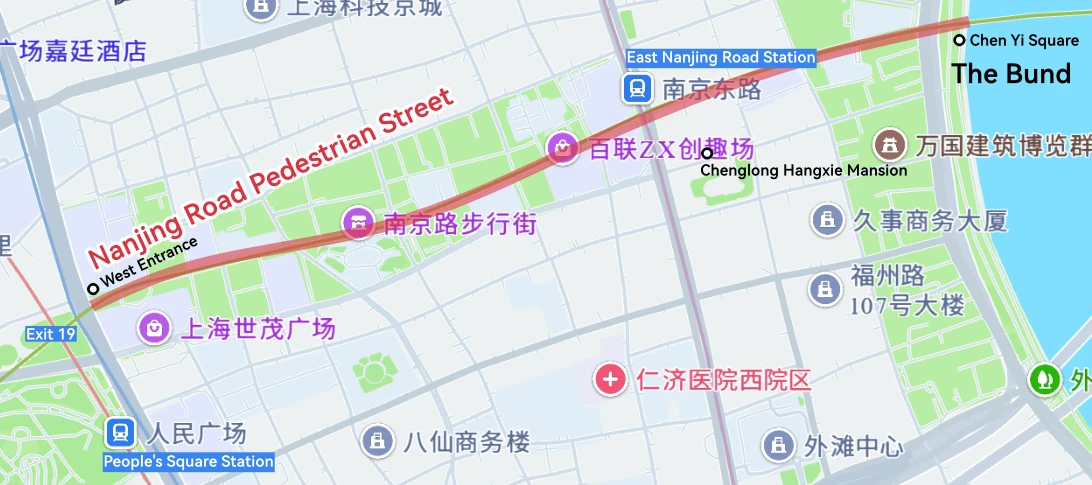
Getting there:
- By metro: Take Line 1, 2, or 8 to People’s Square Station (人民广场), use Exit 19, and follow the underground passage to the western end of Nanjing Road Pedestrian Street.
- By taxi or ride-hailing car: Use “南京路步行街(西口)” (Nanjing Road Pedestrian Street West Entrance) as your destination. Traffic restrictions on weekend and holiday evenings may mean your app assigns a nearby drop-off point, leaving you with a few hundred extra meters to walk. The metro can be crowded, but it’s the most reliable option.
- From here, walk along the pedestrian street to the riverside promenade. For walking directions, search for “外滩-陈毅广场” (The Bund–Chen Yi Square) in your map app. The 1.5 km walk takes about 25 minutes without stops.
- For a shorter walk: Take Line 2 or 10 to East Nanjing Road Station (南京东路) and use Exit 3. The Bund is then just a 10-minute walk away. This saves a lot of effort, though you miss the sense of anticipation that comes with walking the full street toward the river. For a taxi or ride-hailing car, use “成隆行蟹王府(九江路店)” (Chenglong Hangxie Mansion) as your destination. During China’s Golden Week holidays, other public holidays, or major events, East Nanjing Road Station may close after 4 p.m. to control crowds, with trains passing through without stopping. Taxis and ride-hailing cars may also be barred from the surrounding area. On ordinary weekdays and weekends, this is generally not an issue.
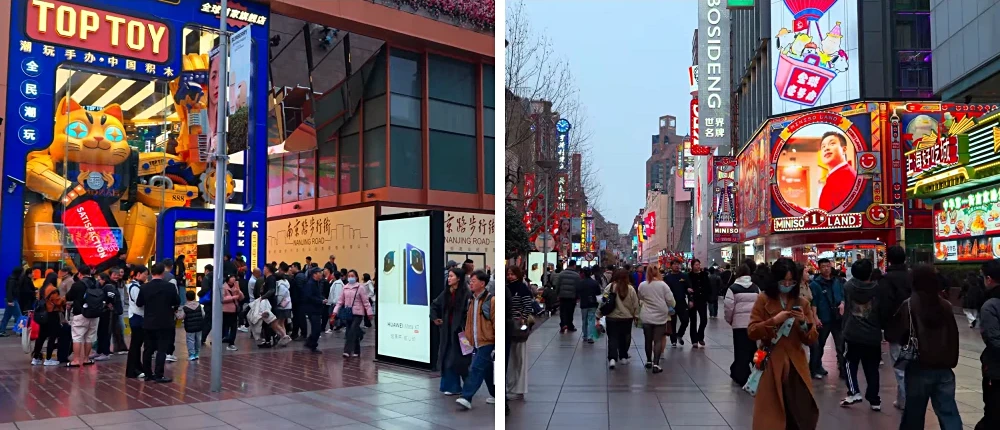
Nanjing Road Pedestrian Street
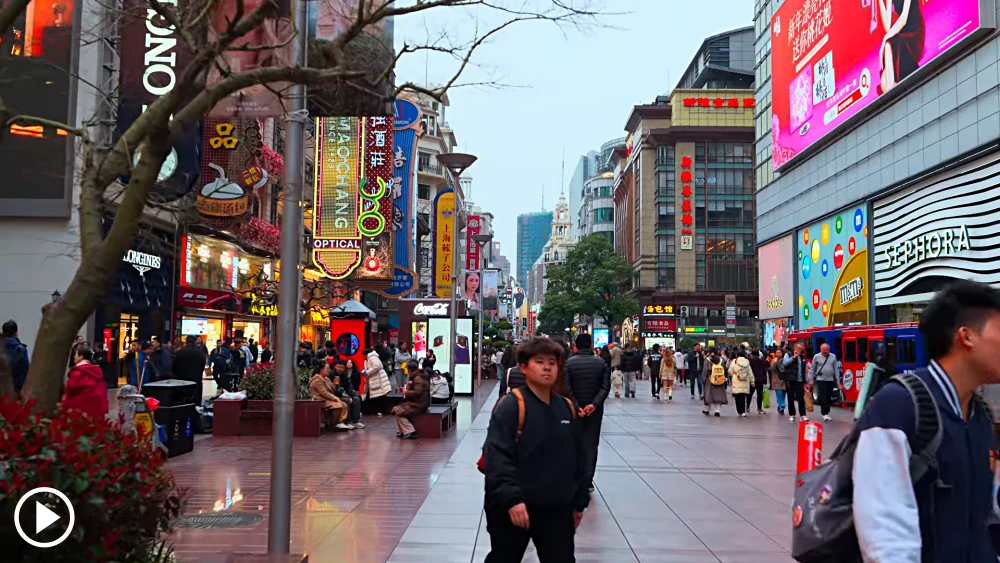
Nanjing Road is 5.5 km long, but “Nanjing Road Pedestrian Street” refers only to the roughly 1,528-meter traffic-free stretch of East Nanjing Road. It mainly caters to tourists, with shopping malls featuring mostly affordable and mid-range brands, local specialty shops, and familiar international chains. It gets crowded, and you’ll recognize many of the international brands, so don’t expect particularly unusual shopping. Still, it’s convenient if you’re short on time and want to shop or eat after visiting the Bund.
Hours: Most shops open from 10:00 a.m. to 10:00 p.m.; the street itself is accessible 24 hours a day
Food: For an easy meal, head into one of the shopping malls and check the directory: B2 usually has quick, casual food, while the upper floors have sit-down restaurants.
Some of the more distinctive malls and shops:
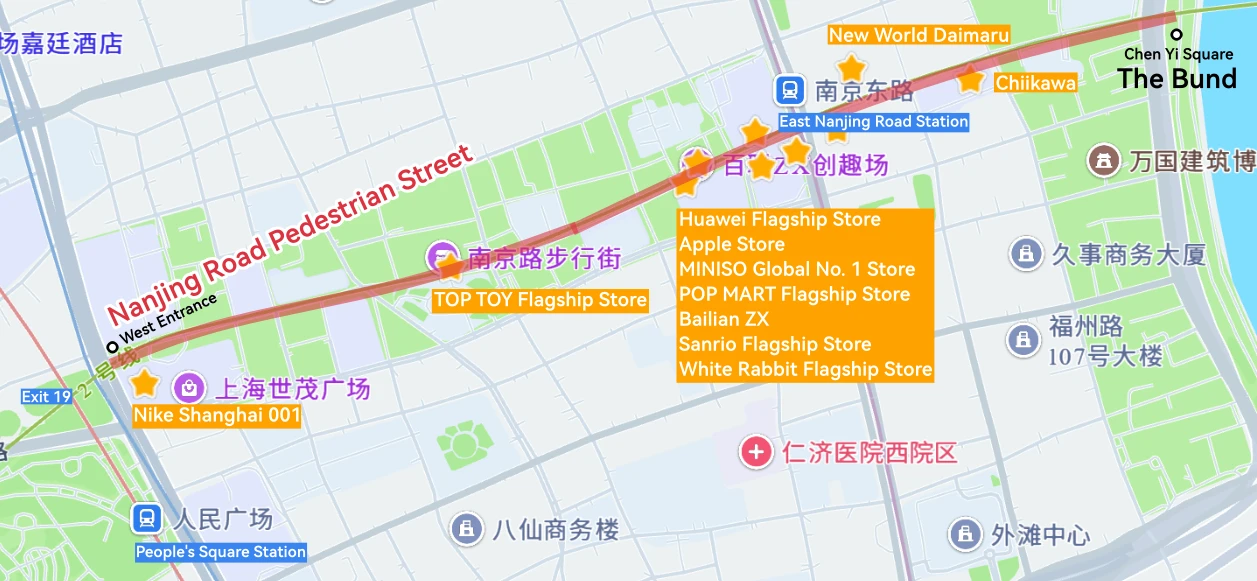
- Shanghai New World Daimaru (新世界大丸百货): An upscale department store famous for its spiral escalators. Restaurants worth trying include Su Xiaoliu (苏小柳点心; steamed buns and dumplings, B2, around ¥63 per person), Zhuang Shi Long Xing (庄氏隆兴; crab roe noodles, B2, around ¥91 per person), and Yuyan Mansion (御延公馆; Shanghainese food, 5F, around ¥120 per person).
- Huawei Flagship Store: Three floors covering around 5,000 m², with a comprehensive product range. Tax refunds are available for eligible overseas visitors.
- Apple Store: Two floors covering around 1,200 m². Tax refunds are also available for eligible overseas visitors.
- Nike Shanghai 001: Four floors covering around 3,800 m², with a wide selection. Everything is sold at full price, with no discounts or tourist tax refunds.
- MINISO Global No. 1 Store: Three floors covering around 2,000 m², with plenty of licensed character merchandise.
- POP MART Flagship Store: Two floors covering around 800 m², with plenty of exclusive blind-box releases.
- TOP TOY Flagship Store: Three floors covering around 1,000 m², mainly selling collectible toys, figures, and model kits.
- Bailian ZX (百联ZX创趣场): A six-floor mall dedicated to anime and pop culture, with plenty of Japanese anime merchandise.
- Sanrio Flagship Store: A small street-front shop with some Shanghai-exclusive merchandise.
- Chiikawa Flagship Store: A small street-front shop with some Shanghai-exclusive merchandise.
- White Rabbit Flagship Store (大白兔旗舰店): A small street-front shop selling Shanghai’s famous milk candy, as well as milk tea.
Watch: SHANGHAI Nanjing Road Walking Tour
the Bund Promenade
Best time to visit: The views from this stretch of the waterfront are much better around sunset and after dark. For daytime views, I prefer the North Bund.
Where to go: Search for “外滩-陈毅广场” (The Bund–Chen Yi Square). This is where you get the classic postcard view.
Skyline lighting hours: May–September, 7–11 p.m.; October–April, 6–10 p.m.
Sunset times: Check here
Crowds:
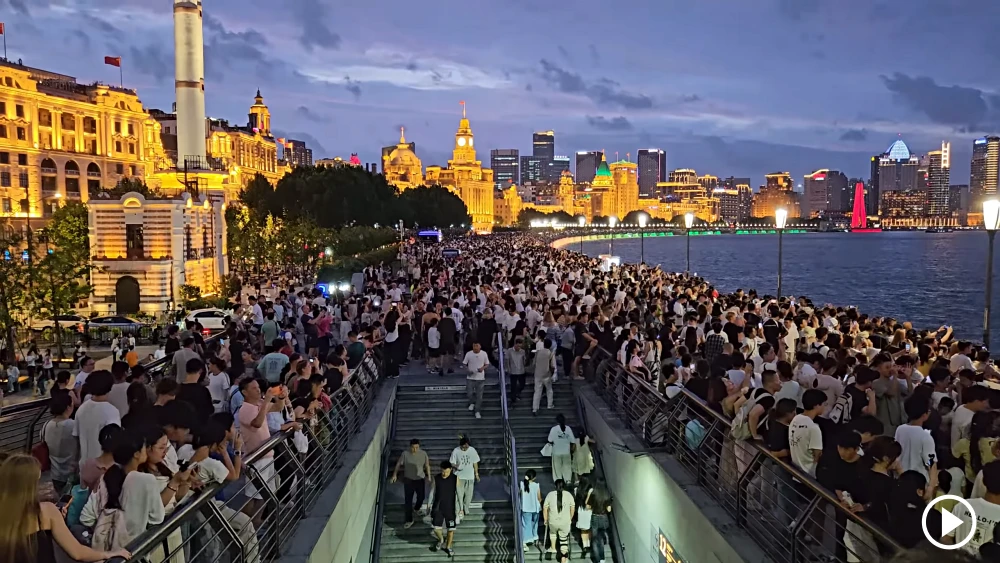
- Weekends, public holidays, and the summer school holidays are the busiest times. With everyone gathering around Chen Yi Square, calling this Shanghai’s most crowded spot would hardly be an exaggeration.
- Before 8 a.m. is the quietest time. The busiest period is 7–9:30 p.m., and the crowds only start thinning out after 9:30 p.m.
The promenade is about 1.5 km long. If you enjoy photography, continue north. If you want to escape the crowds, walk south toward Yu Garden.
Watch: 航拍上海外滩
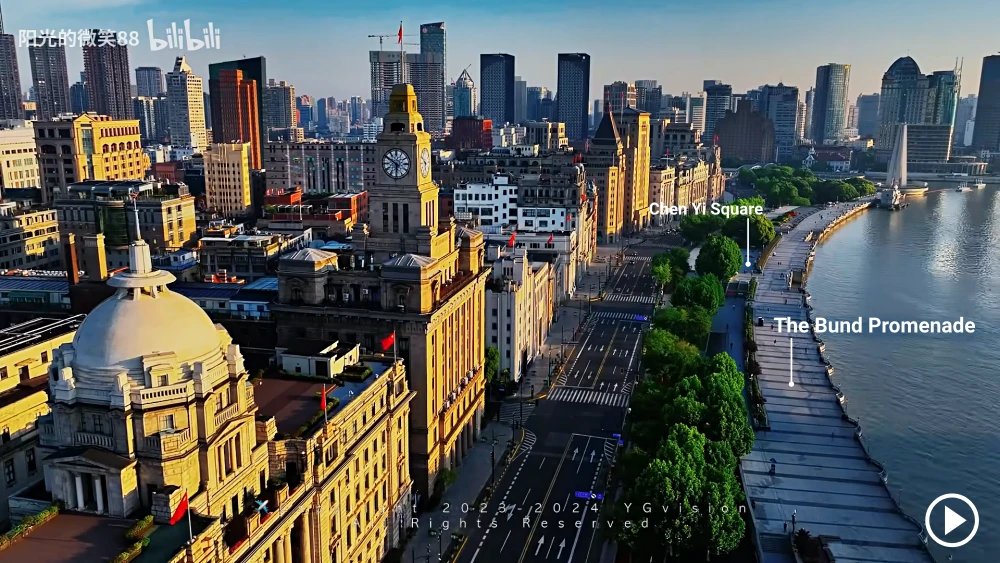
As the image below shows, Chen Yi Square is small, and the flood wall blocks the view from the square itself. Use it as a navigation landmark. The promenade runs along the top of the flood wall, with stairs beside the square leading up to it. During public holidays, some stairways may be designated for going up only or coming down only to keep people moving.
Watch: Nanjing Road, The Bund & Lujiazui at Blue Hour
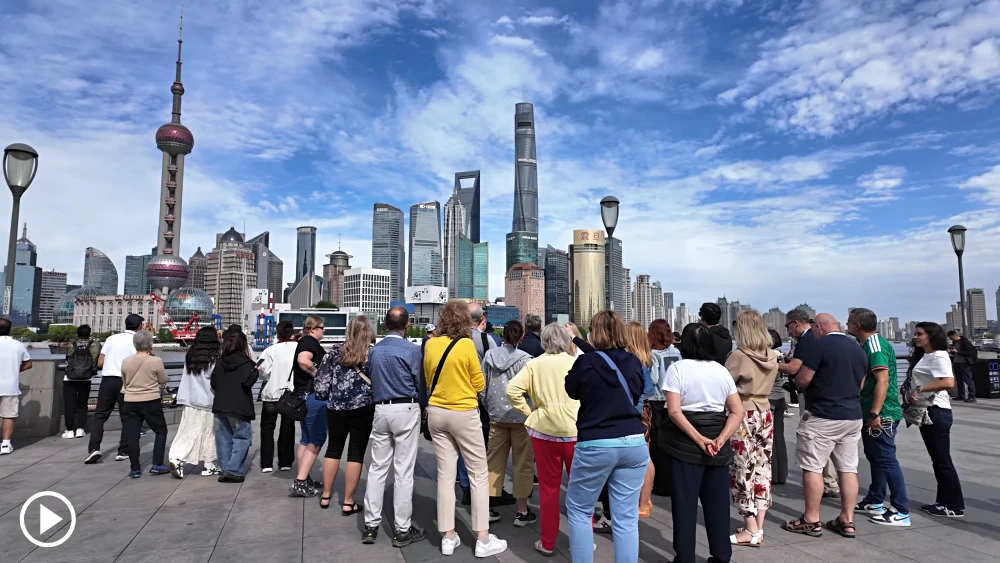
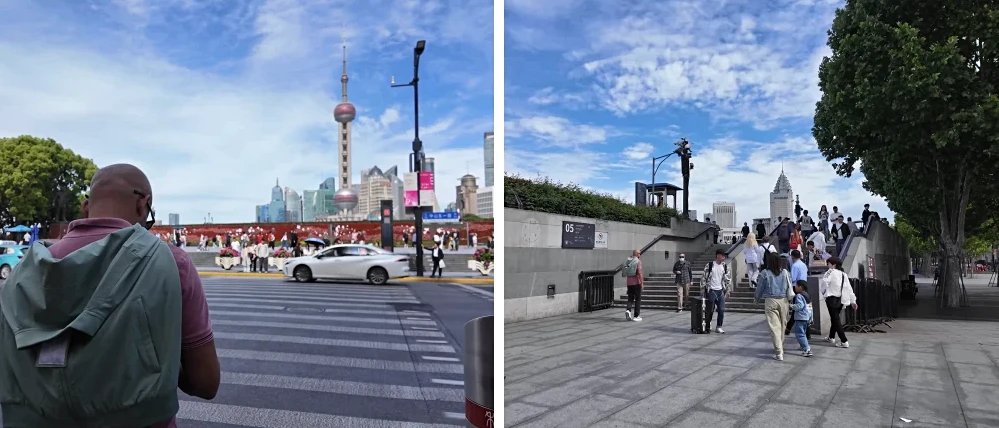
The classic postcard shots are taken from the promenade beside Chen Yi Square, but this is also the busiest and most crowded section.
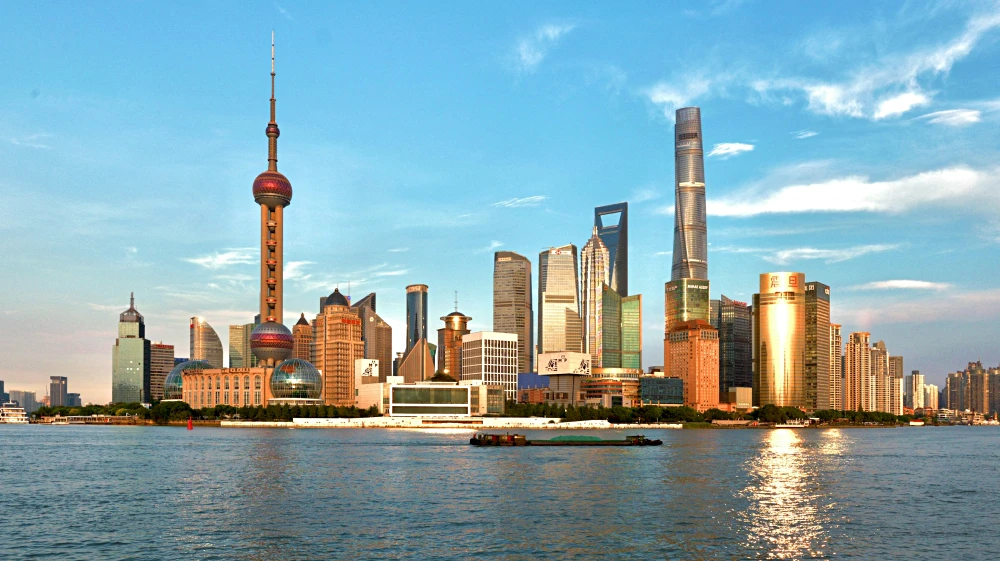 by Rich Xu
The video below was filmed on a summer evening. Public holidays can be just as crowded, but at other times, things are usually much less extreme.
Watch: The Eighth Wonder of the World~Shanghai Bund Crowds before Typhoon
Where to go next
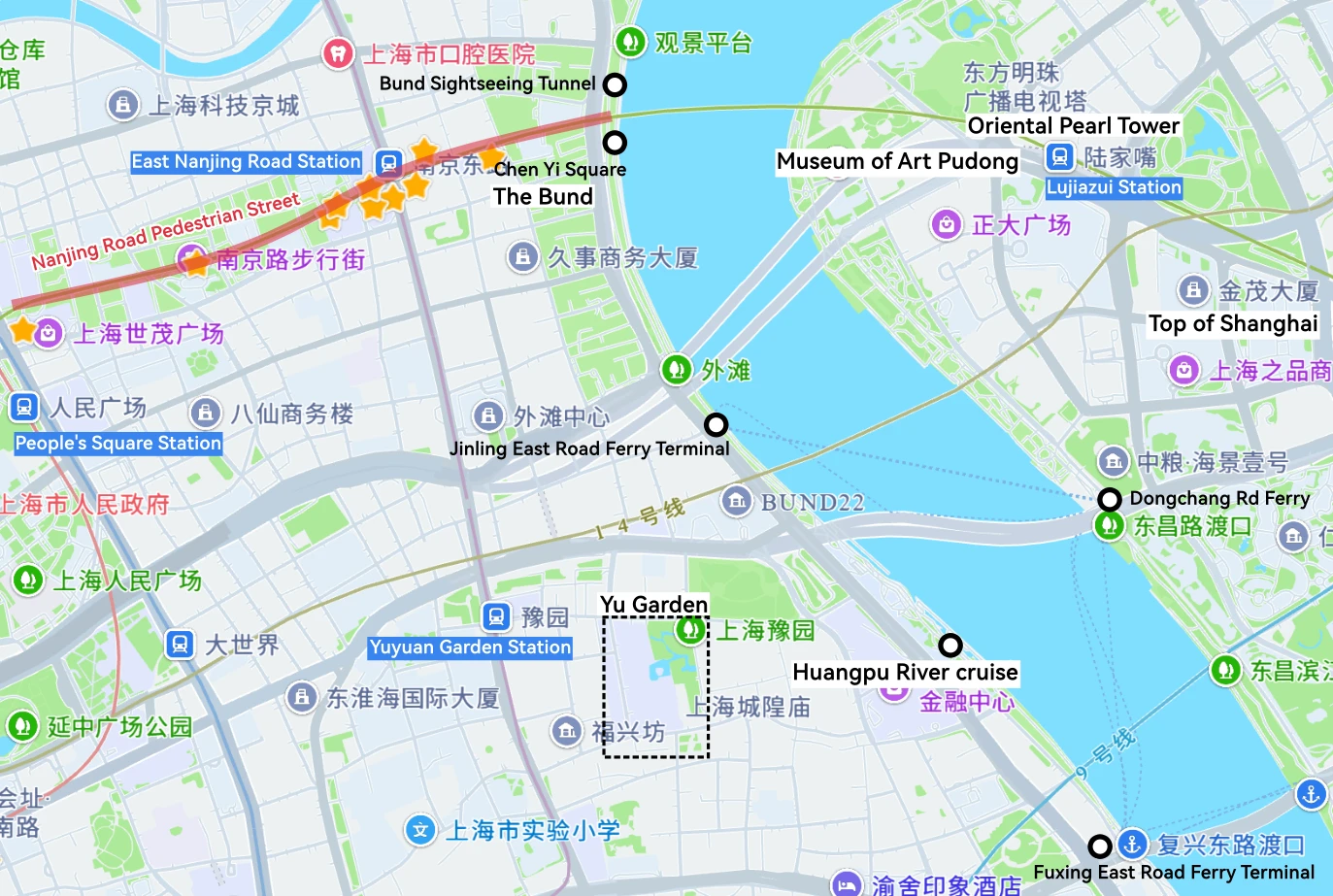
Option 1: Head back to your hotel
Retrace your steps and take the metro, a taxi, or a ride-hailing car back to your hotel.
Option 2: Walk south to Yuyuan Mall for the night views
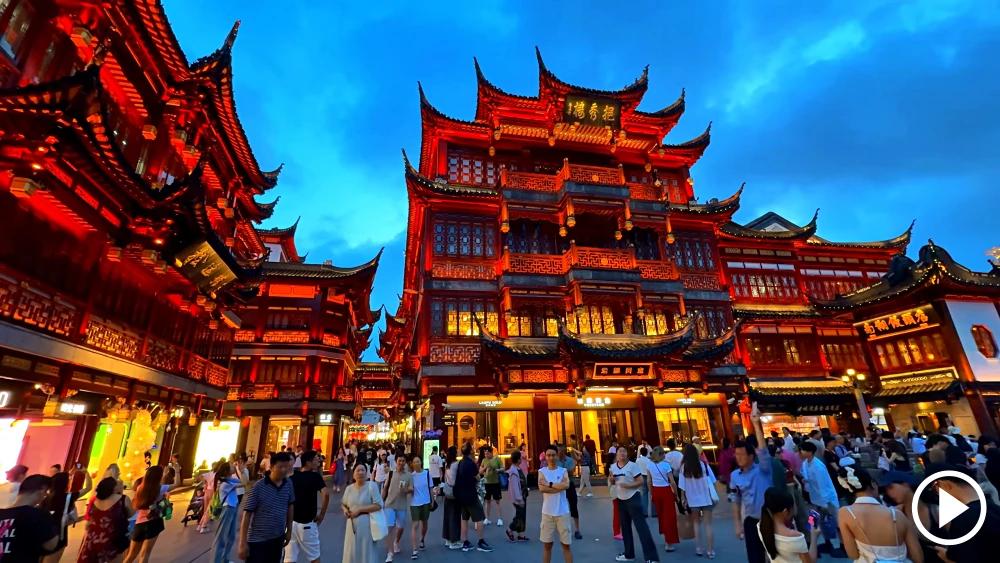
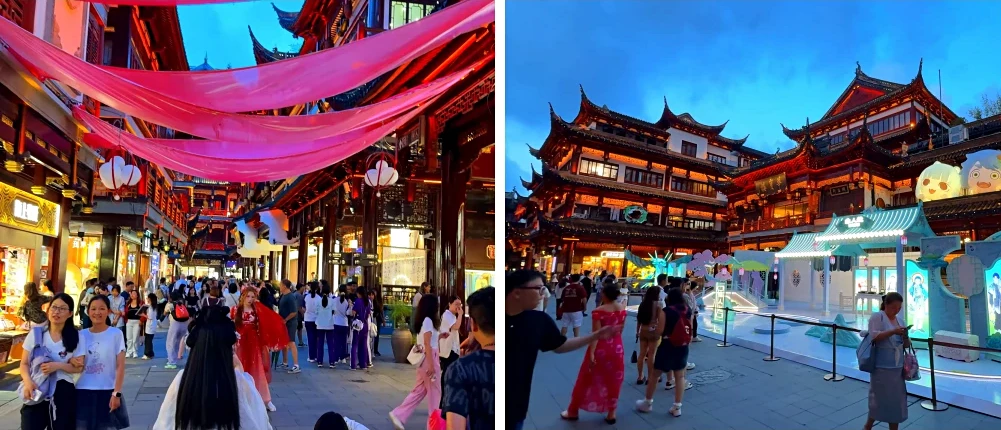
Despite its name, Yuyuan Mall is a shopping district rather than a single mall building. Its traditional-style buildings look beautiful after dark. It’s about 1.5 km south of here, roughly a 20-minute walk. For walking directions, search for “豫园商城(1号门)” in your map app. Traffic can be terrible along this route, and restrictions may be in place, so walking is a better option than taking a taxi.
- Shops start closing around 9 p.m., and the decorative lighting goes off at 10 p.m., so plan your visit accordingly.
- See below for more details.
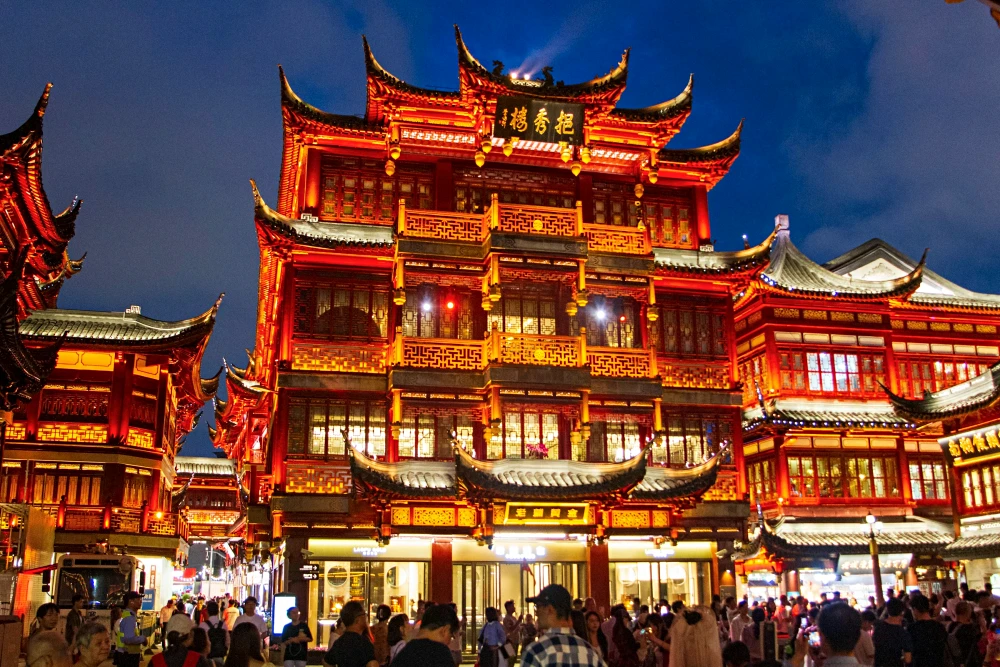 by Michael Myers
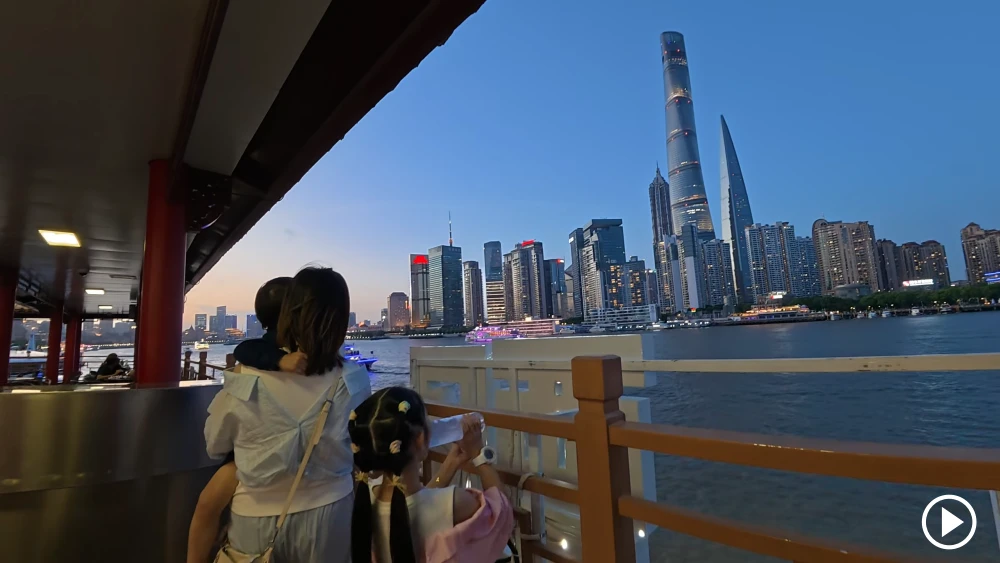
Option 3: Walk south for a Huangpu River cruise
The cruise piers are about 1.5 km south of here, roughly a 20-minute walk.
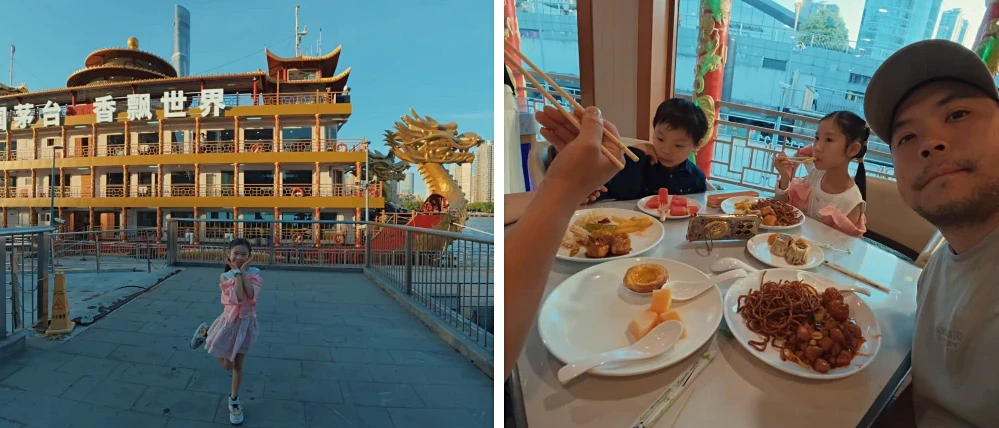
A Huangpu River cruise is the best way to see Shanghai’s skyline from the water at night. All cruises return to their departure pier. There are two main types:
- Sightseeing Cruise: ¥145 per person. Search for “十六铺游船码头二区” for the departure pier. Boats depart roughly every 30 minutes between 6 p.m. and 9:30 p.m., and the cruise lasts 45 minutes. This is good value, but it’s popular with tour groups, so boarding can be crowded and chaotic. The boats have three decks: the first is a public seating area, where seats can run out in peak season; the second has a VIP area costing an extra ¥80 per person, payable on board; and the third is an open-air deck with the best views, though you’ll need to stand. The small section at the bow with the best views is another seated VIP area, costing an extra ¥100 per person.
- Dinner Cruise:
- Happy Captain and Dragon Boat: These two boats have the same prices and differ only in their decor. Your boat is assigned at random after booking. Tickets cost ¥298 per adult. Search for “十六铺3号游船码头” for the departure pier. There are one or two sailings a day, usually around 7 p.m.; check your booking for the exact time. The cruise lasts 2 hours and follows a longer route. It’s more comfortable, with plenty of seating and a buffet dinner included. The downside is that the food is mediocre, and there are still VIP areas that cost extra.
- Crystal Princess: The most expensive option, at ¥398 per adult. Search for “十六铺3号游船码头” for the departure pier. There’s one sailing a day, usually around 7 p.m.; check your booking for the exact time. The cruise lasts two hours. It has the fewest passengers and slightly better food, but again, some VIP areas cost extra.
You can book all these cruises through Trip.com.
Watch: Dragon Boat & Stunning Night View
Option 4: Cross the river to explore Pudong
Head across the Huangpu River to visit the Oriental Pearl Tower, the Museum of Art Pudong, or the Top of Shanghai Observatory. There are 5 ways to cross:
1. Bund Sightseeing Tunnel
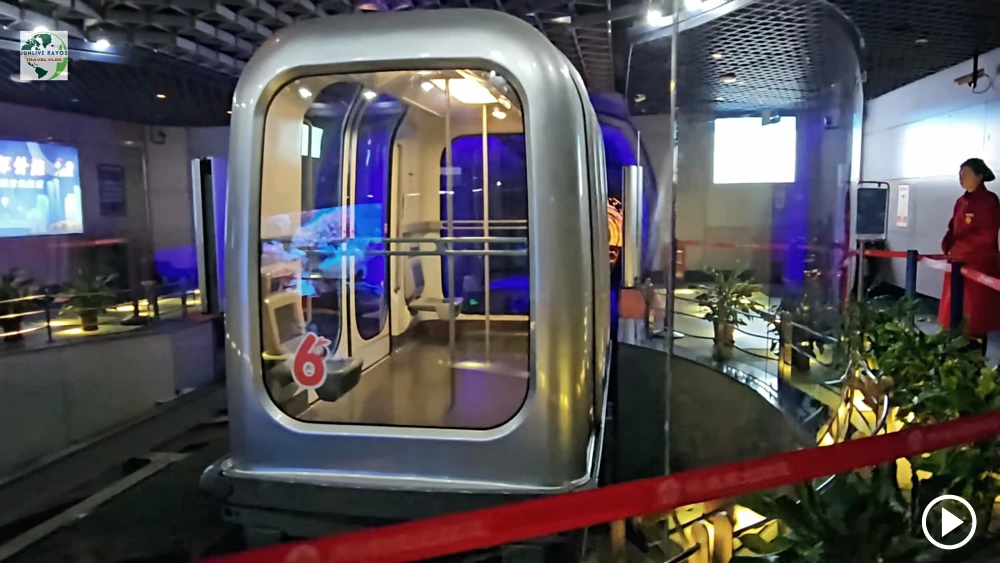
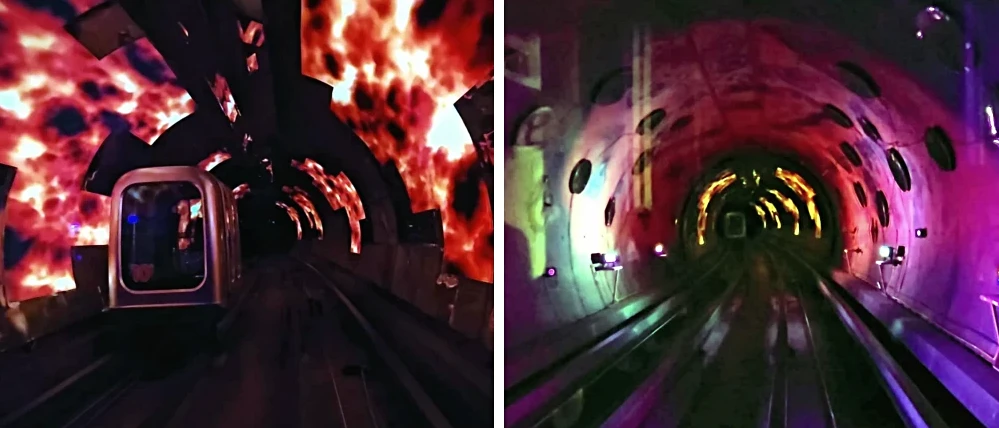
- Think of it as a miniature metro running through a tunnel beneath the Huangpu River. There are no river views, just a light show.
- The entrance is beside Chen Yi Square. Search for “外滩观光隧道” in your map app. The exit is at the foot of the Oriental Pearl Tower on the other side.
- Built in 2000, the tunnel is 647 meters long, and the ride takes about 5 minutes each way. It operates from 9 a.m. to 10:30 p.m.
- Tickets cost ¥50 one way or ¥70 return. Buy them at the entrance or book through Trip.com.
- It’s poor value, so few people use it—which, ironically, makes it the quickest way across.
- Watch: Shanghai’s Secret Sightseeing Tunnel: Most Colorful Underground Ride
2. Metro
- Walk about 10 minutes from the Bund Promenade to East Nanjing Road Station (南京东路), then take Line 2 one stop to Lujiazui Station (陆家嘴). The fare is ¥3, and the ride takes 3 minutes.
- Practical, but not particularly exciting.
- Note: During the May Day holiday (May 1–5) and National Day holiday (October 1–7), East Nanjing Road Station closes after 4 p.m. to control crowds.
3. Dongjin Line Ferry (东金线)
- The crossing takes 5–10 minutes and costs just ¥2, payable using Alipay’s public transport QR code. Ferries run every 15–20 minutes.
- Board at Jinling East Road Ferry Terminal (金陵东路渡口), about a 10-minute walk south of Chen Yi Square. Search for “金陵东路渡口(轮渡站)” in your map app.
- Get off at Dongchang Road Ferry Terminal (东昌路渡口), close to the Top of Shanghai Observatory.
- The main drawback is that it only runs from 7 a.m. to 6:30 p.m., so you can’t use it for the night views. It also gets busy in the afternoon, especially before sunset, when queues can take 20–30 minutes.
- Claims online that this ¥2 ferry can replace a Huangpu River sightseeing cruise are quite a stretch.
- Watch: Shanghai Ferry Ride 4K | Boat Trip Across the Huangpu River
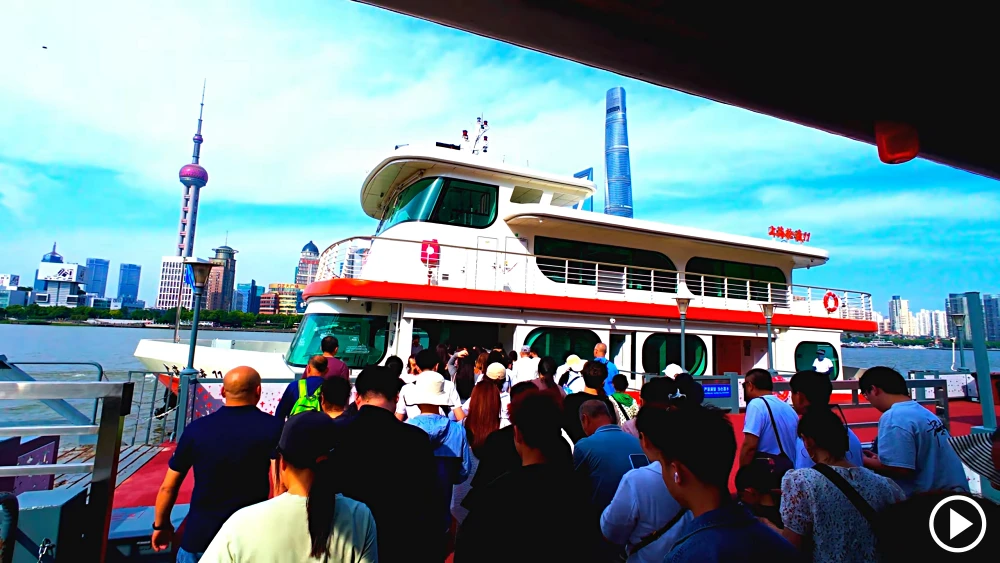
4. Dongfu Line Ferry (东复线)
- This service runs from 7 a.m. to 9 p.m., so you can catch the night views. The crossing takes 6–10 minutes and costs ¥2. Ferries run every 15–20 minutes.
- Board at Fuxing East Road Ferry Terminal (复兴东路渡口), a 30-minute walk from Chen Yi Square. Search for “复兴东路渡口(轮渡站)” in your map app.
- This ferry also arrives at Dongchang Road Ferry Terminal (东昌路渡口).
- The departure pier is a long walk away, the night views around it are less impressive, and the ferry still attracts plenty of tourists. See this video for an idea of the crowds.
5. Taxi or ride-hailing car The drive involves a detour across a bridge, making it about 5 km, or 15 minutes without traffic. But traffic around the Bund is terrible at night, and public holidays bring additional restrictions. Ride-hailing drivers are often reluctant to pick up passengers here. This is one of the most frustrating places in Shanghai to arrange a pickup, so I recommend choosing another way across.
Tourist Scams
In the past, young men and women posing as university students would approach tourists by asking for help taking a photo, then invite them to a nearby student art exhibition or a Chinese tea ceremony. A hefty bill would follow. These scams are much less common now, but keep two things in mind:
- Be wary if someone approaches you in a tourist area and quickly invites you to a tea ceremony or art exhibition.
- If you suspect a tourist scam or feel unsafe, call 110 for the police. Shanghai’s police emergency line supports English, Korean, Russian, German, French, Arabic, Spanish, Italian, and Japanese. The operator will first identify your language, then bring in an officer who speaks it for a three-way call with live interpretation. This service operates 24 hours a day. Police in China’s major cities have a reputation for being friendly and efficient, and you can confidently turn to them for help. You can also call 110 for medical or fire emergencies, as these services share access to language support.
North Bund
If you don’t want to browse shopping streets or deal with large crowds but still want to enjoy the Bund views, head to the North Bund, about 1.5 km north of the Bund.
Chinese name: 北外滩
Getting there:
- By taxi or ride-hailing car: Use “北外滩航海公园” as your destination.
- By metro: Take Line 12 to International Cruise Terminal Station (国际客运中心), then use Exit 3. For walking directions, search for “北外滩滨江绿地小巨蛋” in your map app. It takes about 8–10 minutes to reach the Huangpu River waterfront.
Notes:
- The views are good both during the day and at night.
- Two years ago, mostly locals came here. There are more tourists now, but it’s still less crowded than the Bund.
- There are cafés with river views, such as ‘M Stand 上海国客滨江店’, with coffee priced at ¥25–40, and ‘Manner Coffee 国客滨江店’, with coffee priced at ¥15–20. However, they get crowded, and finding a seat can be difficult.
- If you want a meal, head to Shanghai Magnolia Plaza (上海白玉兰广场), next to the metro station. Recommended restaurants include:
- Non-spicy Chinese food: 点都德 — Cantonese food, around ¥103 per person, L2; 舟山海鲜小馆 — seafood, around ¥113 per person, L3; 逸品淮扬 — Huaiyang food, around ¥160 per person, L2.
- International and Western-style food: BAKER & SPICE — around ¥75 per person; AZUL Italiano — Italian food, around ¥126 per person, L3; Tapa Tapa — Spanish food, around ¥183 per person, L2.
- If the air is clear and your budget allows, The Stage observation deck at the top of Magnolia Plaza is well worth a visit. See the section below for details.
Watch: Shanghai North Bund Walking Tour 4K
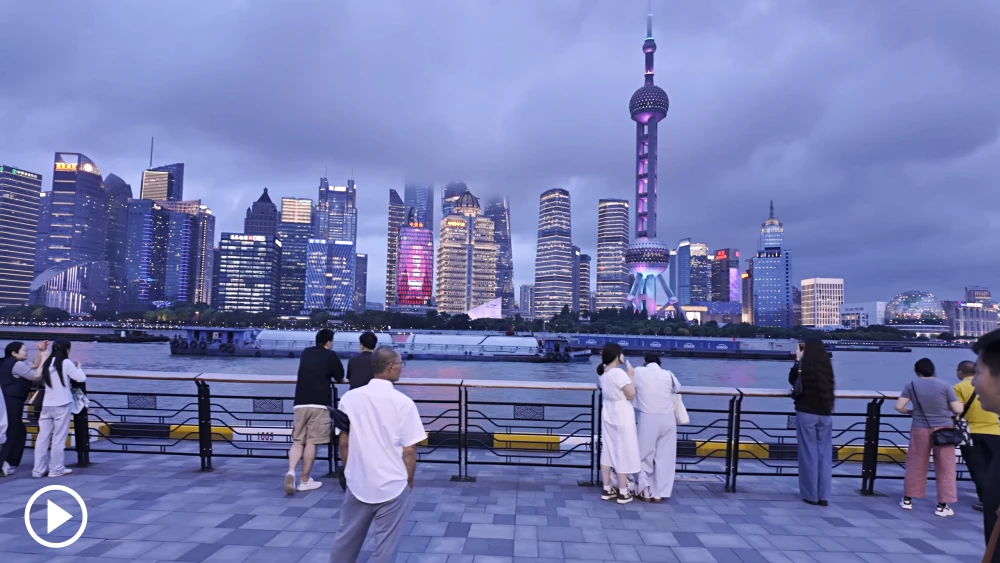
Watch: North Bund in March | Shanghai Spring Views Just Hit Different
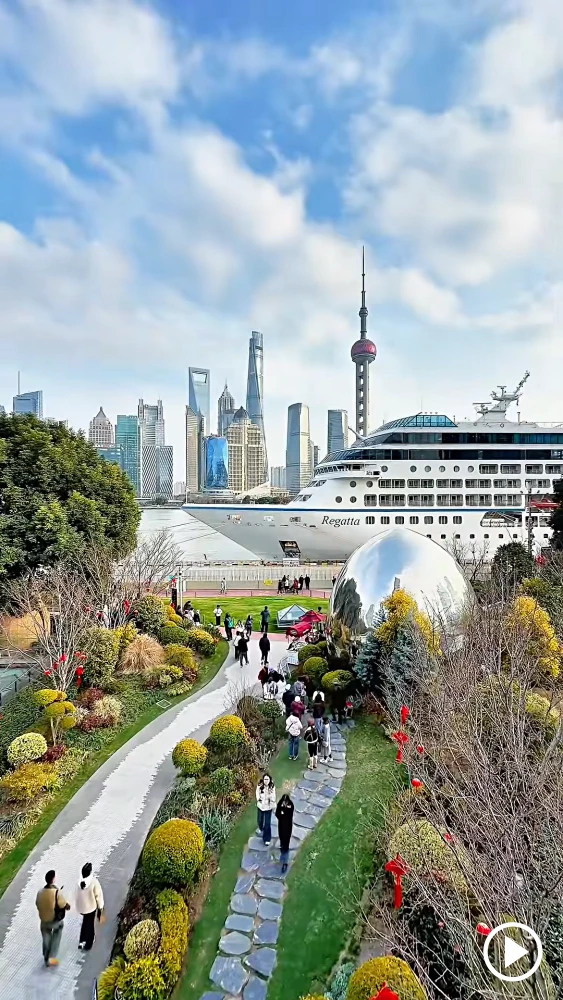
Yu Garden
There are three places to distinguish here: the garden itself, the surrounding shopping district, and the City God Temple.
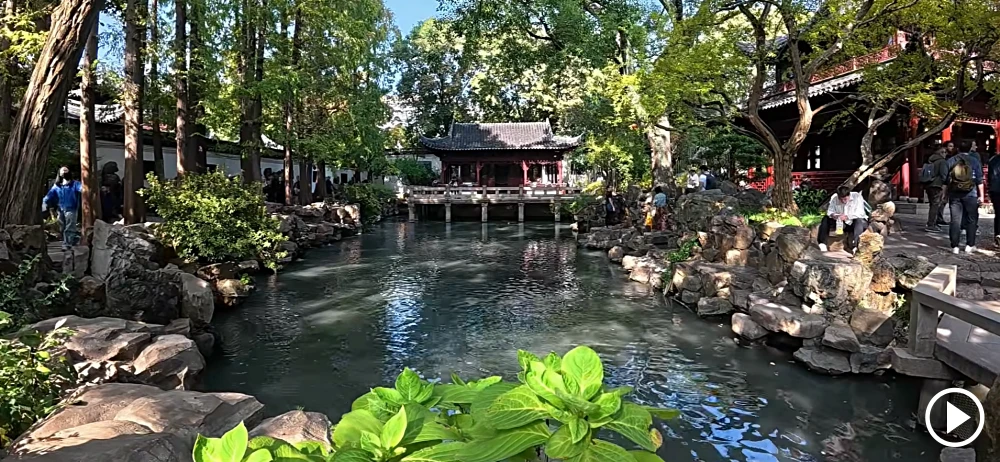
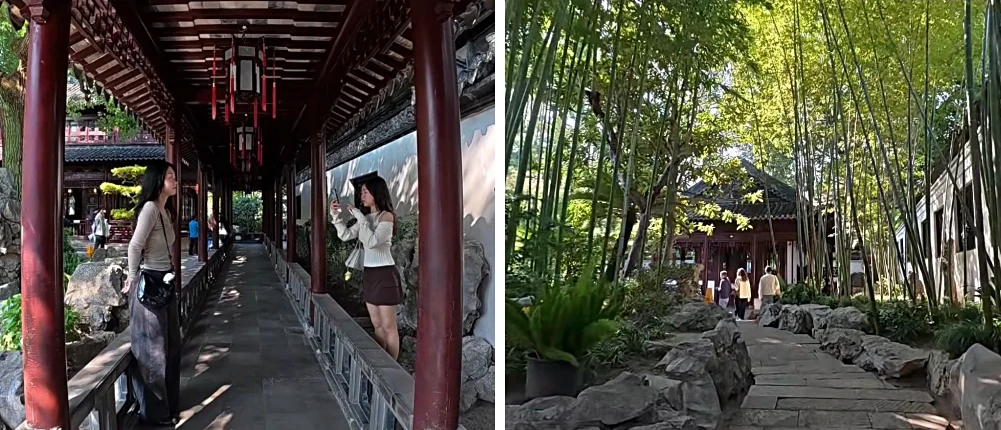
Yu Garden 豫园
This traditional garden has a history of more than 460 years. Although it’s small, it has the main features of gardens in China’s Jiangnan region, such as rockeries, ponds, covered walkways, and pavilions. It’s beautiful, with a different view at every turn. However, it gets very crowded, and the walkways are narrow, so keep your expectations in check.
Hours: 9:00 a.m.–4:30 p.m., closed on Mondays
Admission: ¥40 in April–June and September–November; ¥30 in July–August and December–March. Shanghai’s summers are very hot, and winters are cold and damp. The garden is also less scenic during these months.
Time needed: Around 30 minutes
Watch: Yu Garden Walking Tour
Yuyuan Mall 豫园商城
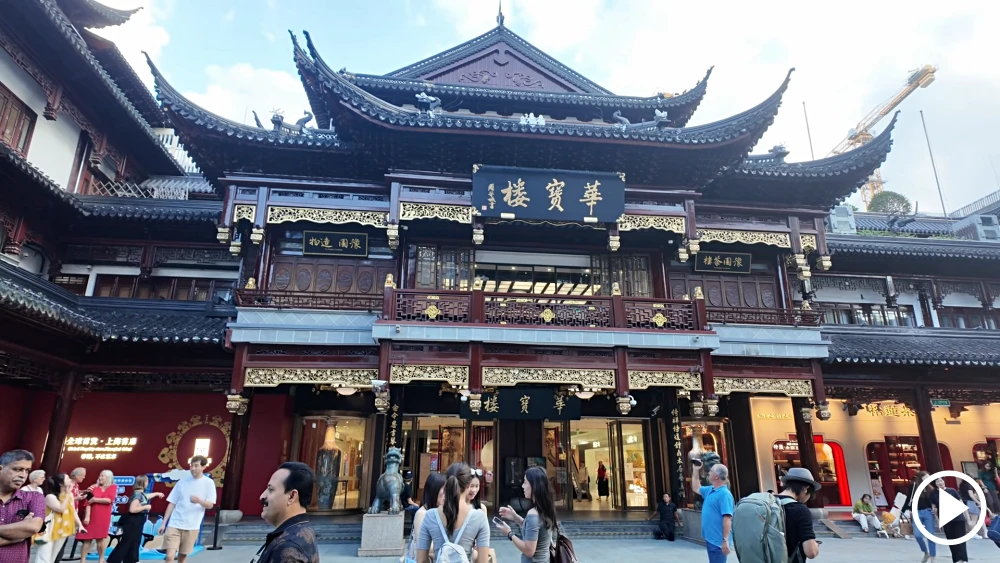
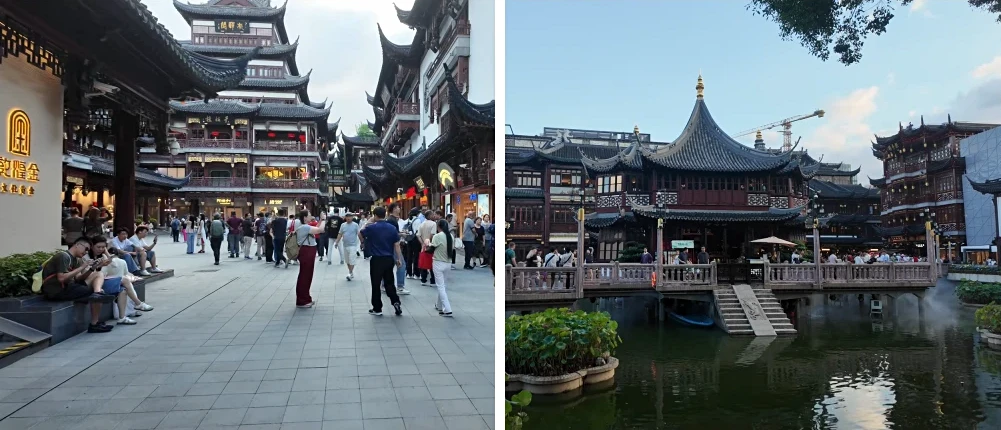
Yuyuan Mall is a shopping area covering about 50,000 square meters, with traditional-style buildings and nearly 100 shops. It’s a good place to explore and take photos after sunset, when the lights come on. Although the buildings are new, this has been a well-known shopping area in Shanghai for around 400 years, so there are many long-established restaurants.
Hours: 10:00 a.m.–10:00 p.m.
Admission: Free
Time needed: 30 minutes to 1 hour
Recommended long-established restaurants:
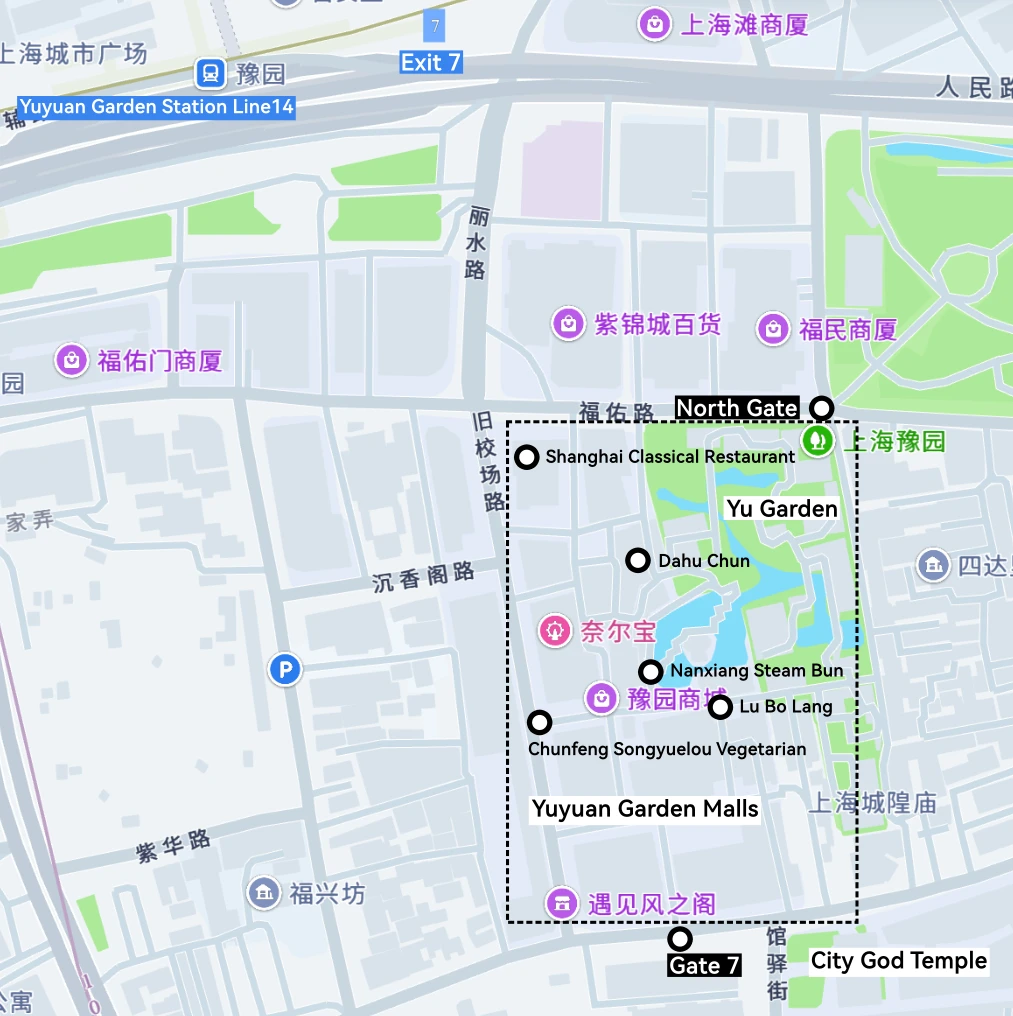
- 上海老饭店(豫园店) Shanghai Classical Restaurant: A well-known restaurant serving Shanghainese food. Signature dishes include eight-treasure duck and fried shrimp. The flavors tend to be sweet. Around ¥150–250 per person.
- 绿波廊酒楼(豫园总店) Lu Bo Lang Restaurant: Also serves Shanghainese food, with signature dishes such as squirrel-shaped fried mandarin fish and crab meat xiaolongbao. However, it’s better known for its dim sum and pastries, such as osmanthus glutinous rice cake and flaky crab roe pastries. Around ¥150–300 per person.
- 南翔馒头店(城隍庙店) Nanxiang Steam Bun Restaurant: Shanghai’s most famous xiaolongbao brand. Expect long queues for both dining in and takeaway. Around ¥50–100 per person.
- 大壶春(豫园店) Dahu Chun: Another well-known restaurant. Its specialty is pork shengjianbao: small pork-filled buns with crisp, pan-fried bottoms. Around ¥40 per person. There’s seating inside and a takeaway window.
- 春风松月楼(豫园商城店) Chunfeng Songyuelou Vegetarian Restaurant: A vegetarian restaurant known for its vegetable-filled steamed buns. Around ¥40 per person. There’s seating inside and a takeaway window.
Note: Yuyuan Mall holds a lantern festival each year, usually from late January to mid-February, though the dates vary. During the festival, you need a ticket to enter the main area and see the lantern displays. Tickets cost around ¥80. Reviews are mixed because the festival is fairly small and the ticket price is high.
Watch: Shanghai Yuyuan Garden
Watch: The Famous Yu Garden Shanghai
City God Temple 城隍庙
This Taoist temple is dedicated to three historical figures worshipped after their deaths as Shanghai’s guardian gods. Locals used to come mainly to pray for safety, but I get the feeling that more people now come to pray for a partner or a promotion.
Hours: 9:00 a.m.–5:00 p.m.
Admission: Free
Time needed: Around 5 minutes
Notes:
- The temple is very small and not particularly grand, so consider it an optional stop.
- In Taoism, the Tao is the underlying source and order of the universe. Everything comes from the Tao and will eventually return to it.
Getting there:
- By taxi or ride-hailing car:
- If you arrive during the day, before 4 p.m., and want to visit Yu Garden, use “豫园(北门)” as your destination.
- If you arrive in the late afternoon or evening, or only want to visit Yuyuan Mall, use “豫园商城(7号门)” as your destination.
- By metro:
- Take Line 10 or 14 to Yuyuan Garden Station (豫园), Exit 7.
- For Yu Garden, search for “豫园(北门)” (North Gate) in your map app for walking directions. It’s about a 7-minute walk.
- For Yuyuan Mall, search for “豫园商城(7号门)” (Gate 7) in your map app for walking directions. It’s about an 11-minute walk.
- On weekends and public holidays, getting a taxi in the evening can be difficult. I recommend taking the metro two or three stops away from the traffic before booking a ride.
Shanghai’s Observation Decks
Shanghai’s three most popular observation decks are:
| Observation deck | Price | Pros | Cons |
|---|---|---|---|
| The Stage | Daytime ¥188; sunset ¥288; evening ¥230 | Open-air views, the best views, and the fewest crowds | Expensive; relatively small platform |
| Oriental Pearl Tower | From ¥199 | Glass-floored skywalk; a good choice for families | The most crowded; you can’t see the tower itself |
| Top of Shanghai | From ¥180 | Shanghai’s highest observation deck | Other buildings look tiny |
The Stage
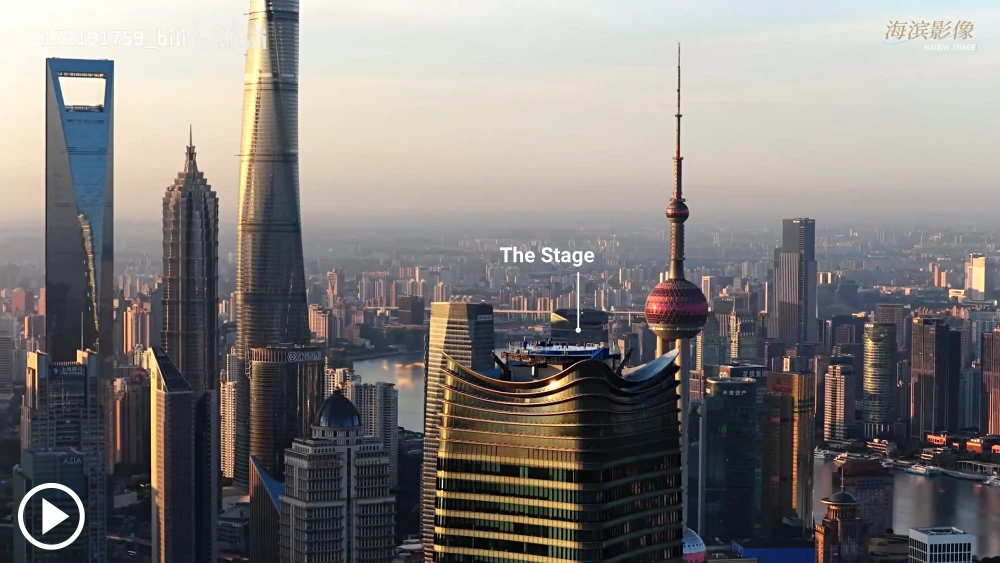
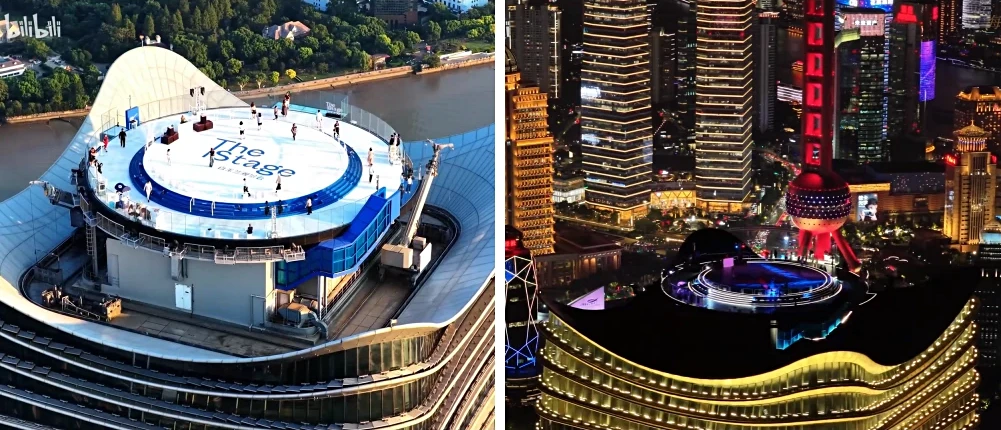
Shanghai’s largest outdoor observation deck sits atop Shanghai Magnolia Plaza (also known as Sinar Mas Plaza), about 320 meters above the ground. Converted from a helipad, it offers 360-degree views of the Bund and the Lujiazui skyline.
Chinese name: 上海白玉兰广场观景台
Hours: 10:00 a.m.–10:00 p.m.; last admission at 9:15 p.m.
Admission: Daytime tickets ¥188 (10:00 a.m.–4:00 p.m.); sunset tickets ¥288 (4:30–11:00 p.m.); evening tickets ¥230 (7:30–11:00 p.m.). Book through Trip.com.
Time needed: 30 minutes to 1 hour
Pros: An open-air platform with 360-degree views. It offers the most distinctive experience and the best views. The highest ticket prices keep crowds down, so there’s usually no queue.
Cons: Expensive tickets and a relatively small viewing area.
Getting there:
- By taxi or ride-hailing car: Use “上海白玉兰广场(南门)” as your destination. The entrance is on level LG1.
- By metro: Take Line 12 to International Cruise Terminal Station (国际客运中心), use Exit 3, and walk for about 2 minutes.
Watch: 白玉兰观景台 看上海外滩两岸的最佳点
Oriental Pearl Tower
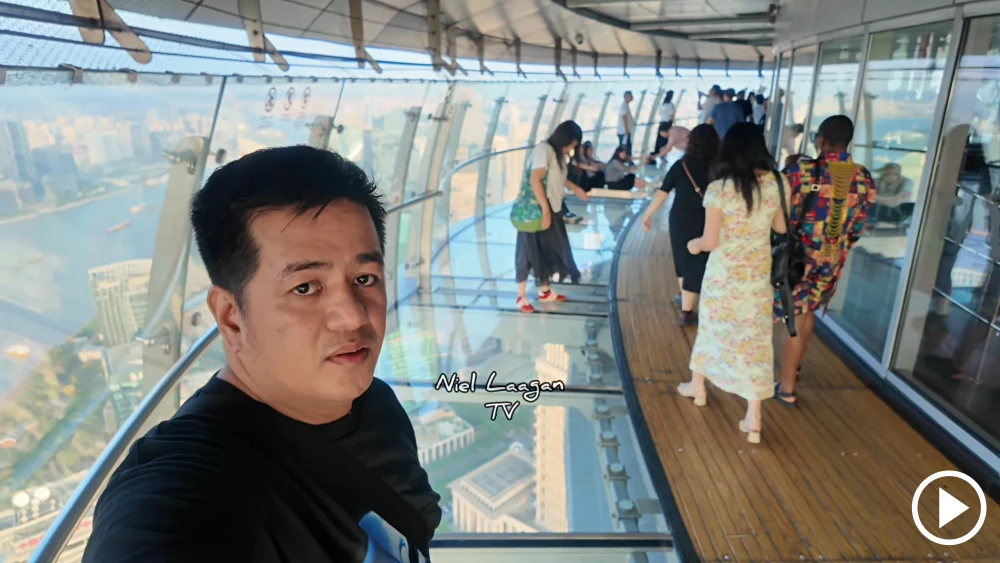
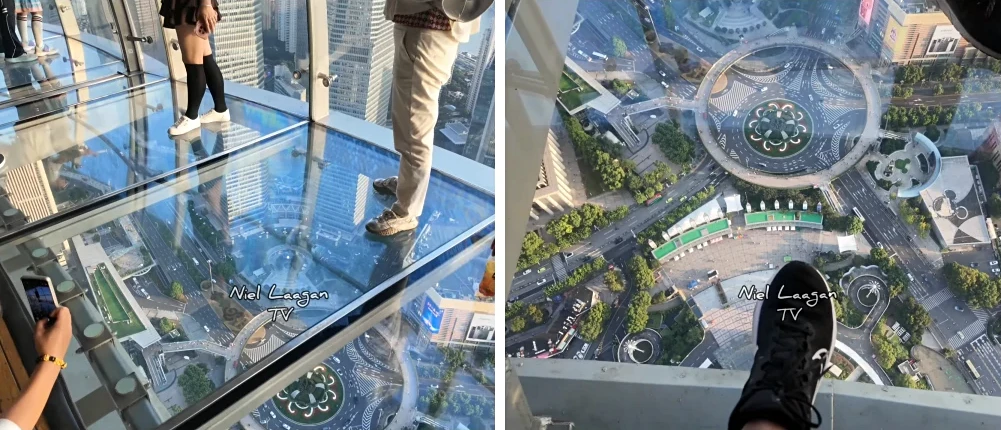
Completed in 1994, this Shanghai landmark stands about 468 meters tall. It has three sightseeing levels, each housed within one of its spheres. Its standout feature is a 150-meter-long circular glass-floored skywalk around the outside of a sphere, about 259 meters above the ground.
Chinese name: 东方明珠电视塔
Hours: 9:00 a.m.–9:00 p.m.; last admission at 8:30 p.m.
Admission:
- Book through Trip.com.
- Two-Sphere Ticket: ¥199. Includes two spheres and the glass-floored skywalk. This is the most popular option.
- Two-Sphere Ticket + Revolving Restaurant Buffet: ¥468. The food is nothing special, but a separate elevator queue means a slightly shorter wait.
- Three-Sphere Ticket: ¥299. The highest sphere has very little room inside and tiny viewing windows. Most visitors don’t think it’s worth the extra money.
Time needed: 1–2 hours, though queues can be long
Pros: The glass-floored skywalk, 259 meters above the ground, makes this a popular choice for families with children.
Cons: It’s popular with tour groups and attracts the biggest crowds. I recommend visiting after 4:30 p.m.
Getting there:
- By taxi or ride-hailing car: Use “东方明珠广播电视塔(1号门)” as your destination.
- By metro: Take Line 2 or 14 to Lujiazui Station (陆家嘴), use Exit 2, and walk for about 5 minutes.
Watch: Shanghai’s ORIENTAL PEARL TOWER | All Three Spheres & City Views
Watch: Inside the Icon of Shanghai | Exploring the Oriental Pearl Tower
Top of Shanghai Observatory
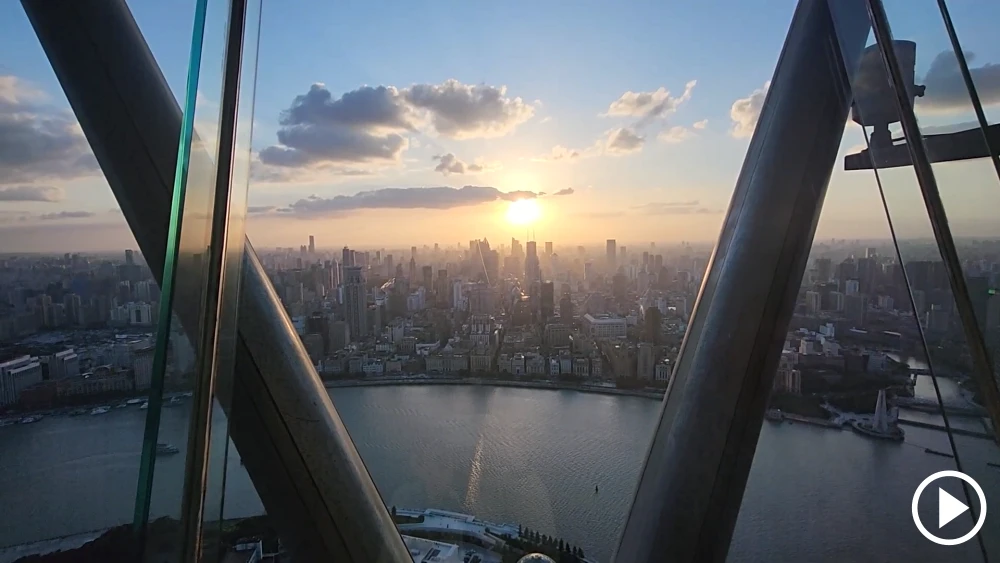
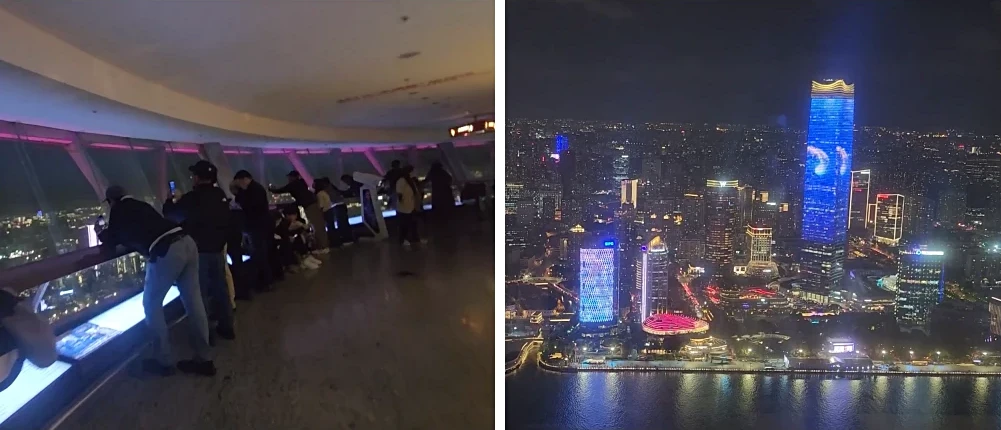
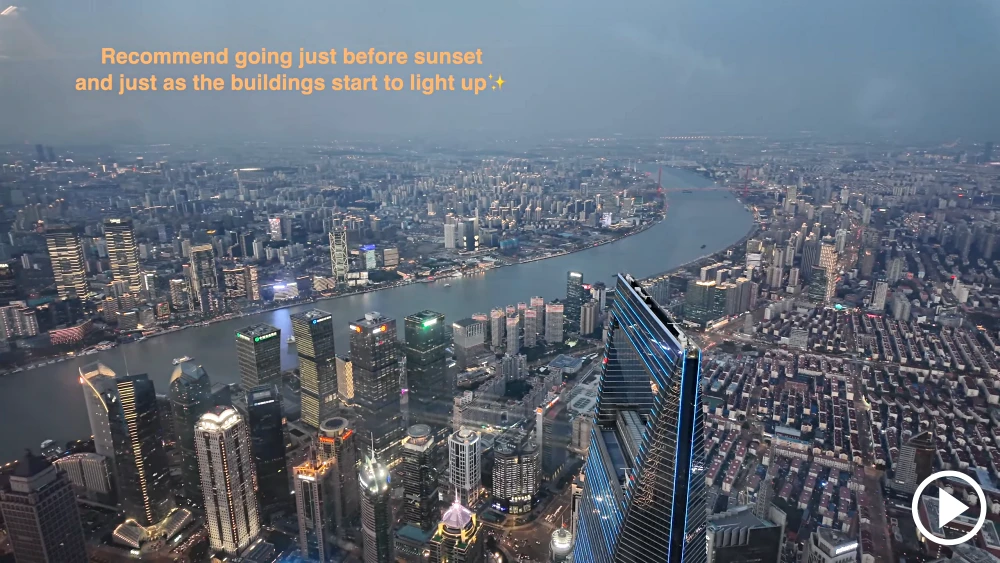
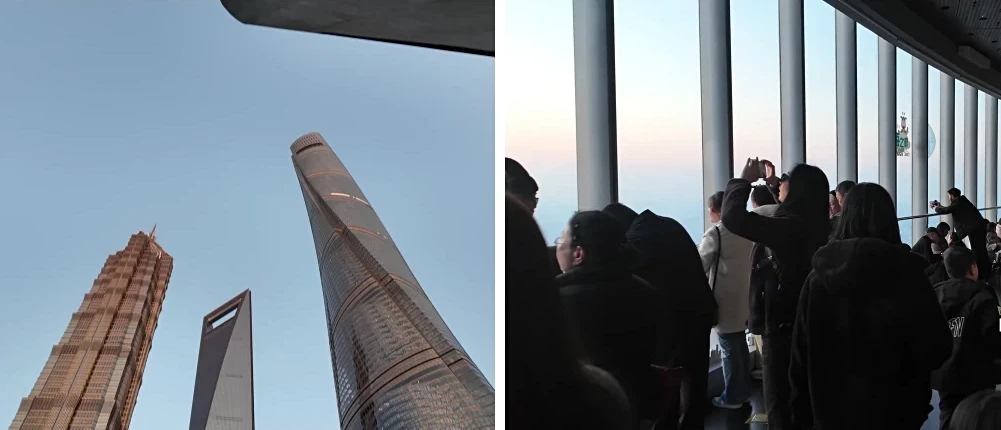
Located on the 118th floor of Shanghai Tower, this is Shanghai’s highest observation deck, at 546 meters. The tower itself stands 632 meters tall, making it China’s tallest building and the third-tallest in the world.
Chinese name: 上海之巅观景台
Hours: 8:30 a.m.–10:00 p.m.; last admission at 9:30 p.m.
Admission:
- Standard Adult Ticket: ¥180. Includes floors 118 and 119. Book through Trip.com.
- Combo Ticket: ¥268. Includes floors 118 and 119, plus access to the 126th floor to see the tower’s 1,000-metric-ton tuned mass damper, which helps reduce swaying. No commentary is provided.
Time needed: 30 minutes to 1 hour, plus any time spent queuing
Pros: Shanghai’s highest viewpoint, with 360-degree views overlooking the Bund, the Oriental Pearl Tower, and other famous landmarks.
Cons:
- You’re so high up that the surrounding buildings look tiny, so the view can feel less dramatic than you might expect.
- There’s no outdoor viewing area, and reflections in the glass can make nighttime photography difficult.
Getting there:
- By taxi or ride-hailing car: Use “上海中心大厦(西门)” as your destination.
- By metro: Take Line 2 or 14 to Lujiazui Station (陆家嘴), use Exit 8, and walk for about 5–10 minutes. For walking directions, search for “上海之巅观光厅(入口)” in your map app.
- The observatory entrance is on B1 of Shanghai Tower. Enter the building at ground level and take the escalator down to B1. After the ticket check, continue down to B2, where a dedicated high-speed elevator takes you to the observation deck. Traveling at 18 meters per second, it reaches the 118th floor in 55 seconds—the fastest elevator ride open to visitors anywhere in the world.
Watch: MOST INSANE VIEWS IN SHANGHAI | Shanghai Tower Observation Deck
Jing’an Temple
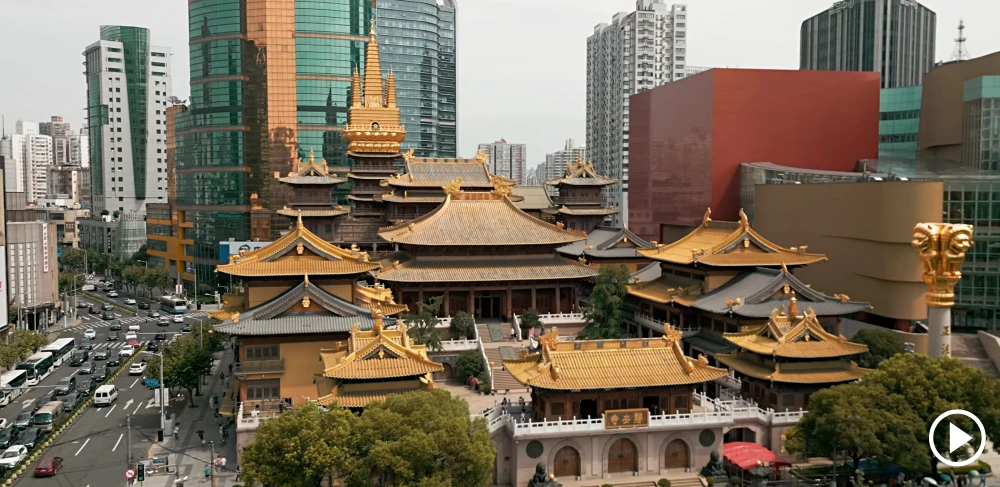
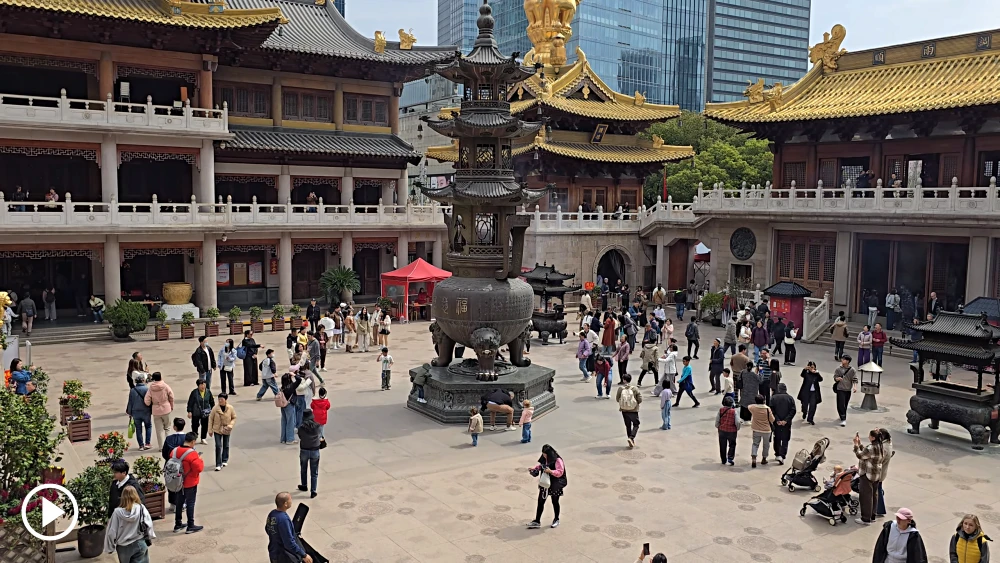
Jing’an Temple was originally built in the 3rd century and has been rebuilt several times following fires and wars. It stands in one of Shanghai’s major shopping districts, surrounded by modern malls and office towers. The contrast between the traditional temple and the surrounding skyline is striking.
Chinese name: 静安寺
Highlights:
- The main hall houses a statue of Shakyamuni Buddha made from 15 metric tons of pure silver.
- At the center of the temple courtyard stands a 10.23-meter-tall incense burner made from 15 metric tons of cupronickel, a copper–nickel alloy. It’s said to be the tallest of its kind in the world.
- One of the most eye-catching features is an 18-meter-tall granite pillar topped with four lions facing different directions. The front bears the inscription “正法久住,” expressing the wish that the Buddha’s true teachings endure. The full text of the Diamond Sutra is carved on the back. This famous Buddhist scripture teaches that everything is temporary and constantly changing, like a dream or an illusion, and encourages people to let go of attachment to the self, wealth, fame, relationships, the body, and the idea of permanence.
Hours: 7:30 a.m.–5:00 p.m.
Admission: ¥50 for adults; free for children 1.3 meters tall or shorter
Time needed: 30 minutes to 1 hour
Getting there:
- By taxi or ride-hailing car: Use “静安寺售票处” (Jing’an Temple Ticket Office) as your destination.
- By metro: Take Line 2, 7, or 14 to Jing’an Temple Station (静安寺). Use Exit 1, then walk for about 3 minutes to the main entrance.
Tips:
- You can photograph the temple grounds and buildings, but photography of Buddha statues is not allowed. Rules vary between temples; Jade Buddha Temple, for example, allows photos of its statues.
- Visitors are welcome to offer incense and make a wish. Incense costs ¥10. If you’re unsure what to do, simply follow the locals’ example. In Chinese Buddhism, what matters most is respect, a calm and sincere mind, remorse for past wrongs, and gratitude. You are not being marked on your gymnastics routine.
Watch: The Past & The Present | Shanghai Jing’An Temple
Watch: JING’AN TEMPLE SHANGHAI | DISCOVER 1700 YEAR-OLD BUDDHIST LANDMARK
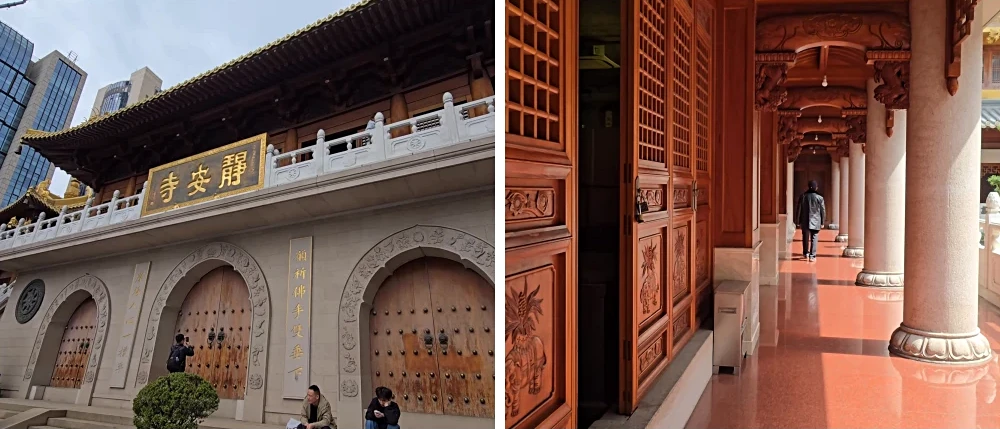
Interested in Buddhism? Which other temples should you visit?
Shanghai’s three best-known Buddhist temples are:
Jing’an Temple (静安寺) — The most ornate of the three, with the most convenient location for combining a visit with other attractions. The main drawback is the relatively high admission fee. I think it’s the best choice for first-time visitors with limited time in Shanghai.
Jade Buddha Temple (玉佛寺) — Famous for two Buddha statues carved from white jade from Myanmar. Admission is free, and you can also try vegetarian noodle soup inside the temple. It’s open from 8:00 a.m. to 4:30 p.m. For a taxi or ride-hailing car, use “玉佛禅寺(东南门)” (Jade Buddha Temple Southeast Gate). Alternatively, take Line 13 to Jiangning Road Station (江宁路), use Exit 3, and walk for about 10 minutes. The drawbacks are its relatively small size and the large number of international tour groups you may encounter.
Watch: Jade Buddha Temple Shanghai: Inside the Most Sacred Temple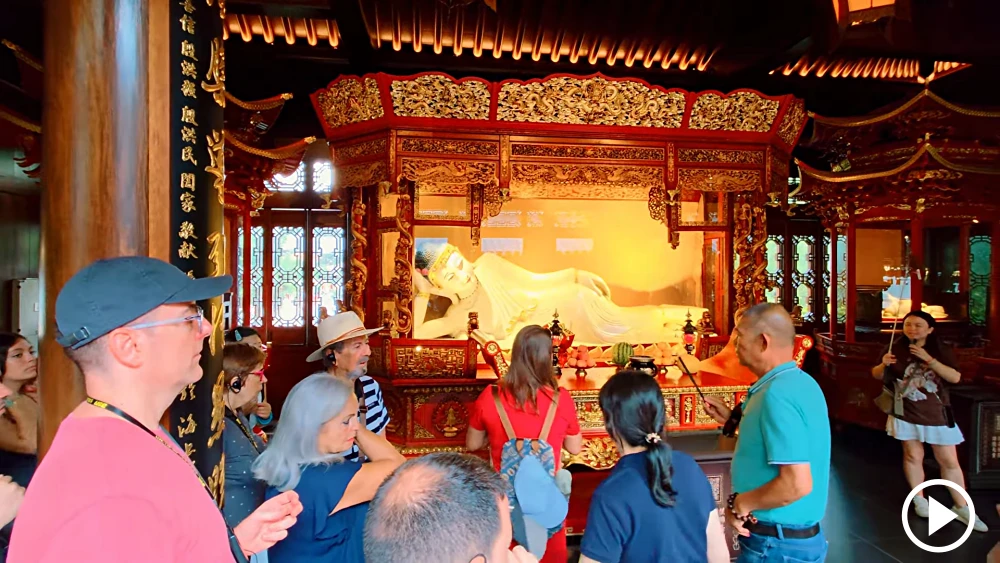
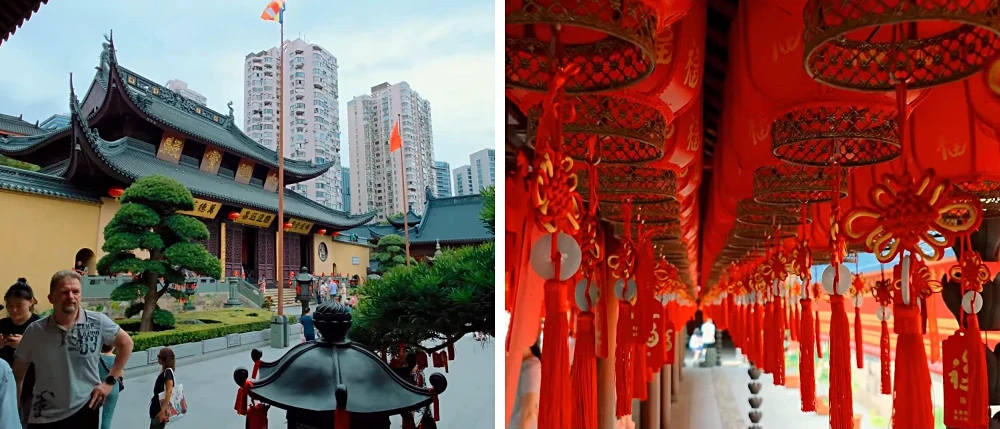
Longhua Temple (龙华寺) — Shanghai’s oldest temple and a favorite among local residents. Its landmark is a seven-story octagonal pagoda. Admission is free, and vegetarian noodle soup is also available. It’s open from 7:00 a.m. to 4:30 p.m. For a taxi or ride-hailing car, use “龙华寺(南门)” (Longhua Temple South Gate). Alternatively, take Line 11 or 12 to Longhua Station (龙华), use Exit 5, and walk for about 5 minutes. The main drawback is that it’s a little farther from central Shanghai.
Watch: Shanghai’s Hidden Gem - Longhua Temple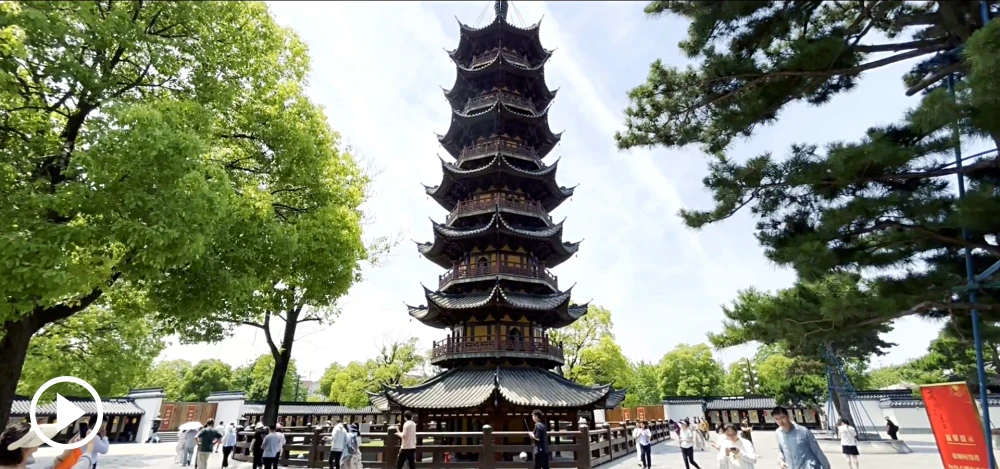
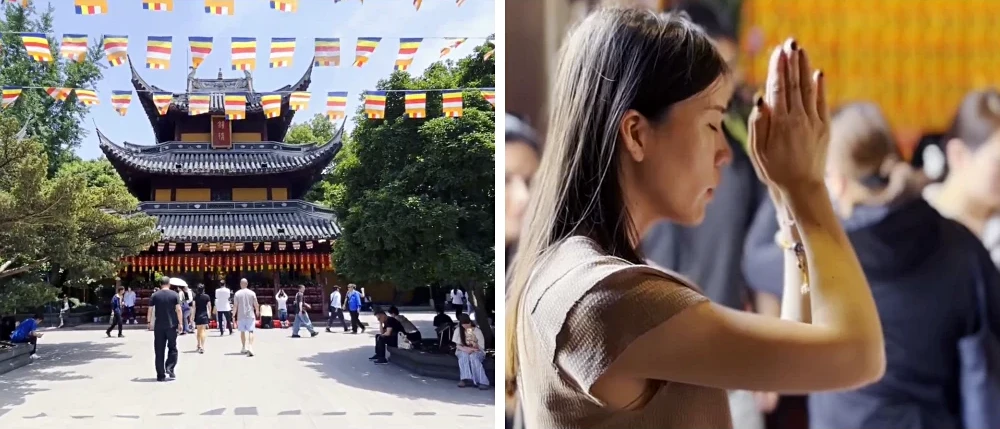
Shopping and Dining Around Jing’an Temple
There are four shopping malls around Jing’an Temple. I’ll focus on two: the closest to the temple and the most popular. If you’re here around lunch or dinner, either is a convenient place to eat.
Copy and paste the Chinese restaurant names below into AMap for directions.
At the coffee and milk tea shops listed here, you’ll need to scan a QR code to order. You can also find them in WeChat and order ahead, but it’s easy to select the wrong branch if you can’t read Chinese. They don’t take orders at the counter, as the small teams are busy preparing drinks. Starbucks is everywhere, but I’ve chosen Chinese brands that offer better value.
I’ve picked well-reviewed places where you can expect a good meal, so these aren’t the cheapest options. Prices are approximate costs per person. Floor labels follow those used by each mall; B1 and B2 are basement levels.
Jiuguang Department Store (久光百货)
A traditional Japanese-style department store right next to Jing’an Temple.
Recommended places to eat and drink:
Coffee: M Stand — 2F.
Buns and dumplings: 春风松月楼 — B1, around ¥30 per person. A vegetarian restaurant.
Non-spicy Chinese food: 文兴酒店 — 8F, around ¥170 per person.
Sour and spicy dishes: 贵Guui — 8F, around ¥100 per person.
International and Western-style food: bluefrog — 2F, around ¥120 per person.
CP Jing’an (CP静安)
The most popular mall in the area, with brands aimed at a younger crowd. It’s about a 6-minute walk from Jing’an Temple.
Recommended places to eat and drink:
Coffee and milk tea: Luckin Coffee (瑞幸咖啡) and CHAGEE (霸王茶姬) — both on LG1. CHAGEE has no seating.
Buns and dumplings: 苏小柳手作点心 — LG1, around ¥60 per person.
Non-spicy Chinese food: 御延公馆上海菜 — L4, around ¥120 per person. Serves Shanghainese food.
Spicy Chinese food: 费大厨辣椒炒肉 — L5, around ¥80 per person.
International and Western-style food: pickchill — Unit L105, around ¥110 per person.
Explore Nearby
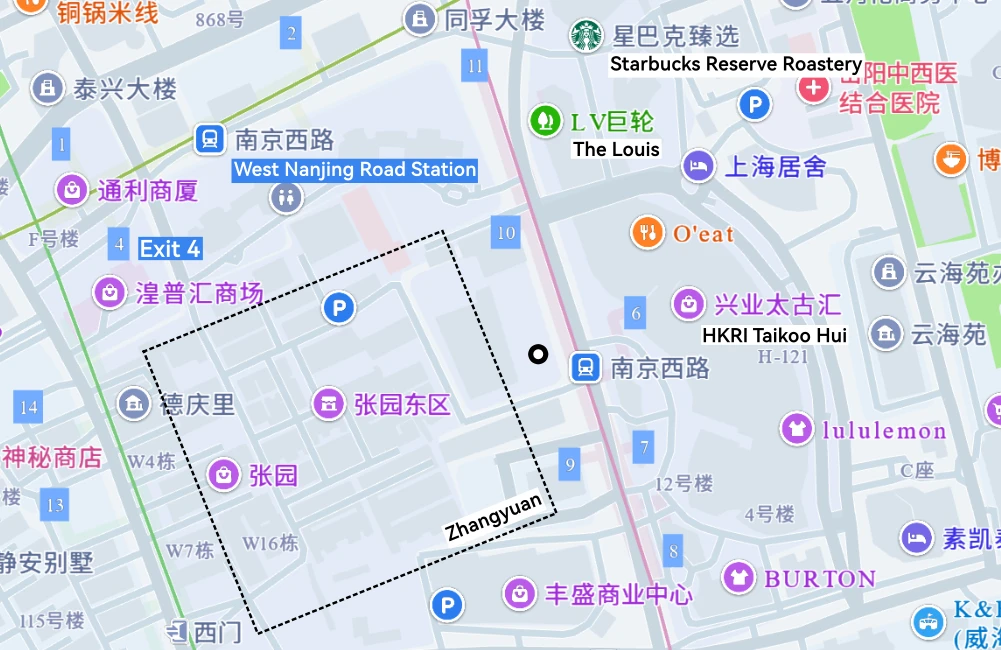
You can take a taxi or the metro to nearby Zhangyuan (张园):
- By taxi or ride-hailing car: Use “张园(西门)” as your destination. It’s 2 km from Jing’an Temple.
- By metro: Take Line 2 to West Nanjing Road Station (南京西路), just one stop from Jing’an Temple. Zhangyuan is right outside Exit 4.
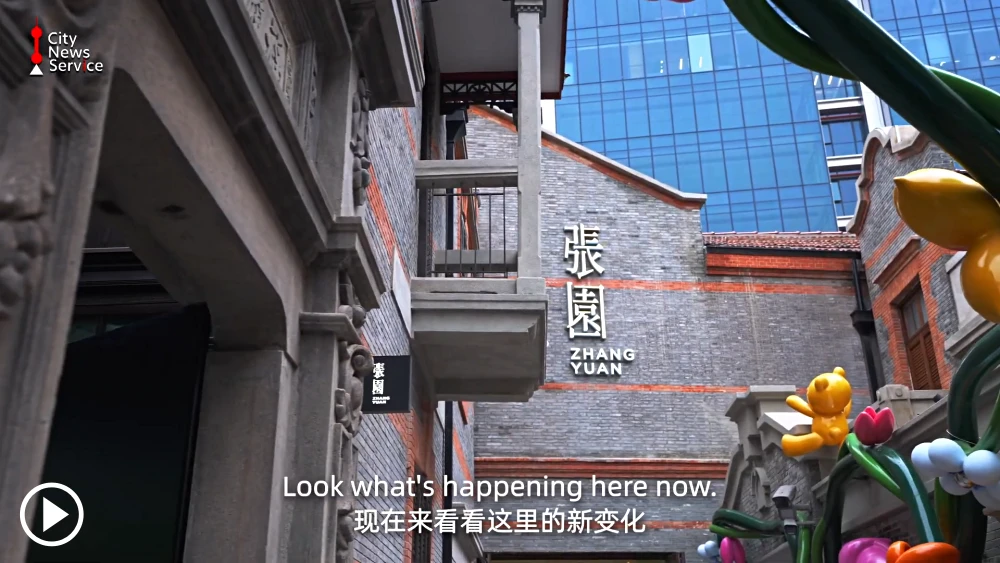
- Zhangyuan is an open-air shopping area converted from a historic shikumen neighborhood. It mainly has luxury and streetwear brands and is a good place for photos.
Watch: Explore ZHANGYUAN’s new East Zone with international vlogger Basma
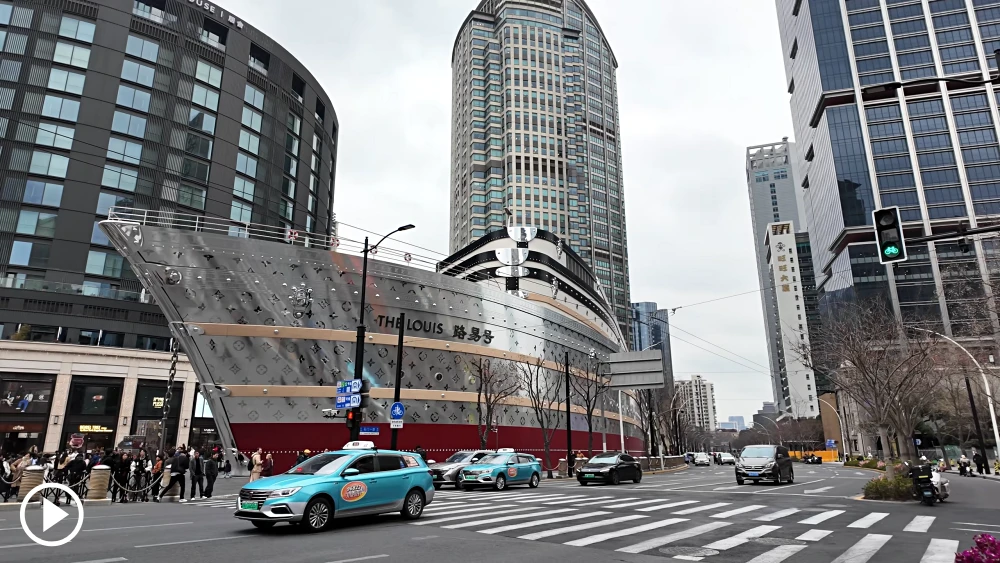
After exploring Zhangyuan, search for “LV巨轮” in your map app for walking directions. It takes about 10–15 minutes to reach this ship-shaped Louis Vuitton concept space. Entry is free, but you need to scan a QR code on-site to book a visit. Same-day slots may be available on weekdays. You can also book ahead through the WeChat mini program “我的专属LV”.
Watch: Inside the Louis Vuitton Ship Building in Shanghai
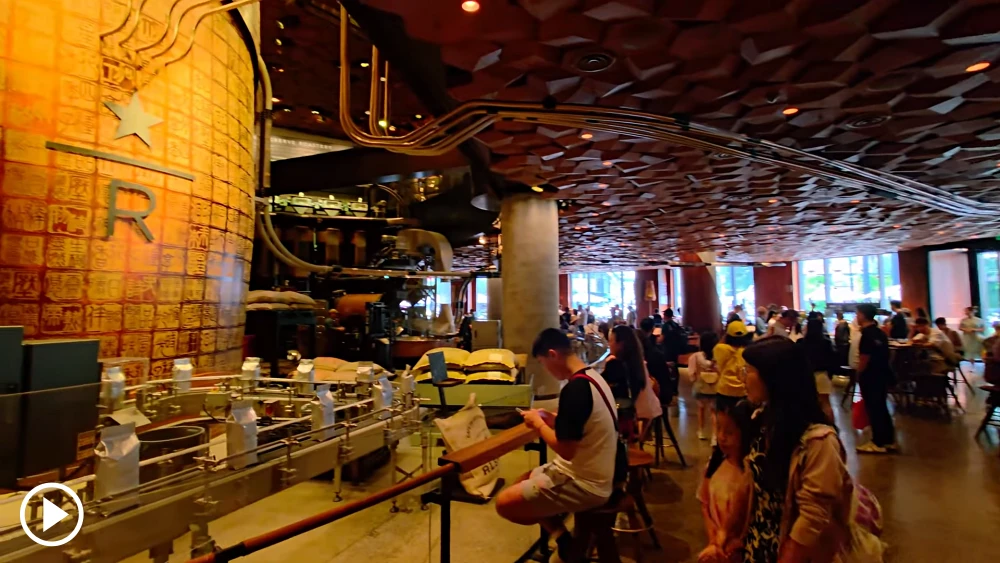
Next to the Louis Vuitton ship is Starbucks Reserve Roastery Shanghai (星巴克臻选上海烘焙工坊), the largest Starbucks roastery in Asia and the second largest in the world. The first floor sells coffee and bread, while the second floor offers specialty coffee, tea, and cocktails. It’s worth a look, but it gets crowded with tourists even on weekdays.
Watch: Inside the Massive Starbucks Reserve Roastery Shanghai
Note: There are plenty of restaurants nearby, including inside HKRI Taikoo Hui (兴业太古汇), so finding somewhere to eat is easy. In shopping malls, cheaper fast food is usually on B2, while the upper floors have more formal sit-down restaurants.
Wukang Road & Anfu Road
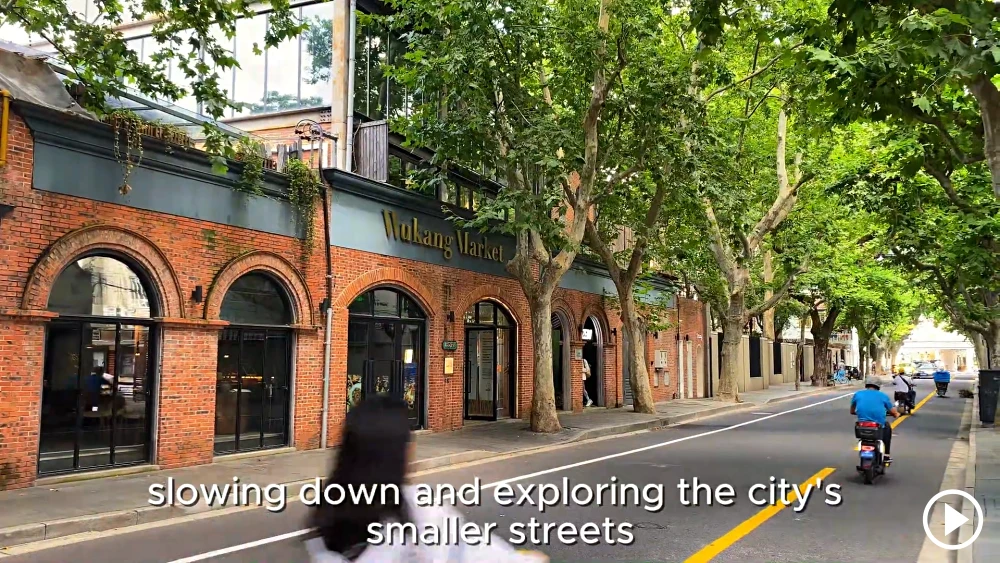
Wukang Road and Anfu Road sit within Shanghai’s Hengfu Historic District, part of Shanghai’s former French Concession. Often considered among Shanghai’s most European-looking old streets, they’re lined with plane trees, historic European-style houses, cafés, bakeries, and trendy boutiques. This is one of Shanghai’s most popular areas among younger visitors.
Chinese name: 武康路与安福路
Best seasons:
- Both streets are lined with London plane trees, commonly called “French plane trees” in Chinese. They were planted extensively during the French Concession era, particularly between the 1910s and 1930s.
- Mid-November to early December is the prettiest time, when the leaves turn golden. The light between 2:00 and 5:00 p.m. gives the streets a cinematic feel.
- May to September brings a thick canopy of green leaves, which is also beautiful, though the experience depends on the day’s temperature and light.
- In winter, from December to March, the trees lose their leaves. The streets look surprisingly ordinary, as if someone has switched off the filter—which leaves some winter visitors wondering why these two roads are tourist attractions at all.
When to visit for a quieter walk:
- This is a popular area, so expect crowds, especially on weekends and public holidays.
- If you want to stroll without the crowds, you need to arrive before 8:00 a.m. on weekdays or 7:00 a.m. on weekends.
Time needed: Around 2 hours
Getting there:
- By taxi or ride-hailing car: Use “武康大楼” as your destination. With so many visitors taking photos outside the building, drivers usually drop you off nearby.
- By metro: Take Line 10 or 11 to Jiao Tong University Station (交通大学), use Exit 7, and walk for about 6 minutes to Wukang Mansion. For walking directions, search for “武康大楼” in your map app.
Suggested route:
Jiao Tong University Station → Wukang Mansion → Wukang Road → Anfu Road → Changshu Road Station.
The route is about 2.5 km, taking roughly 35 minutes without stopping at any shops.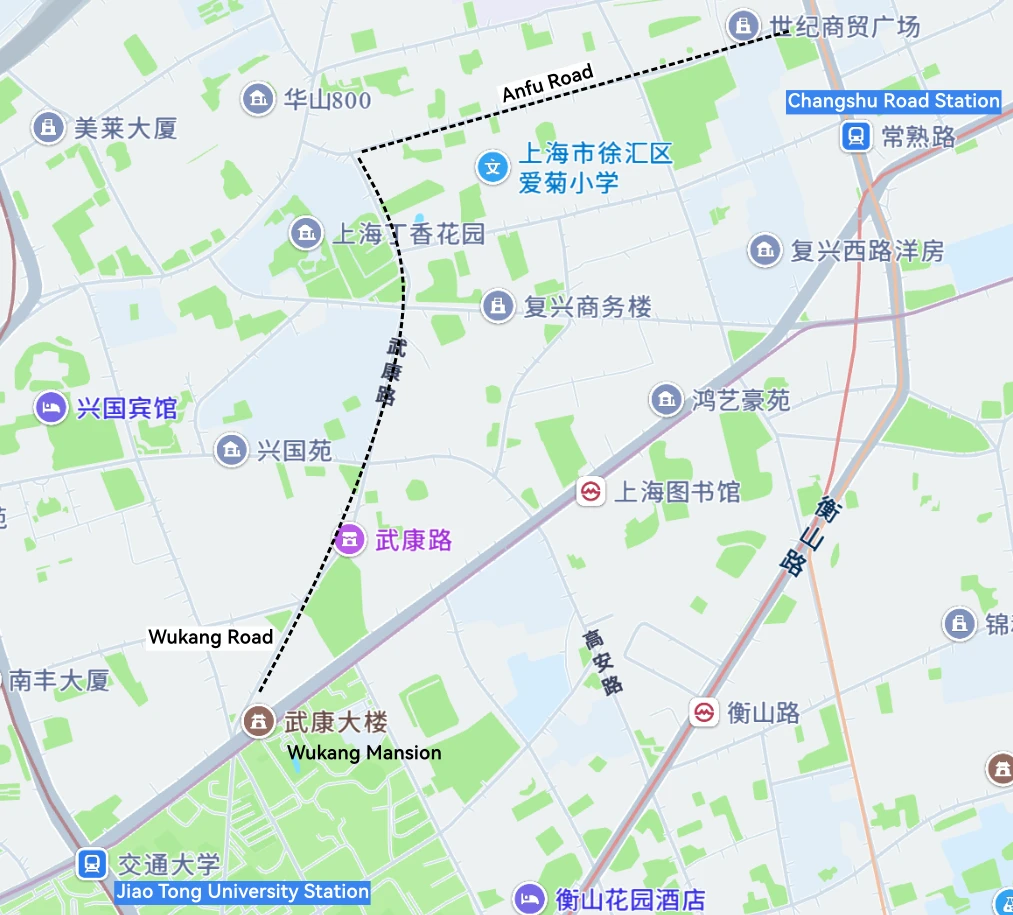
Wukang Road
Start at Wukang Mansion, a Renaissance-style apartment building designed by a Hungarian architect in 1924. Its shape resembles New York’s Flatiron Building. It’s still a residential building—albeit one where apartments cost around ¥130,000 per square meter—and visitors can’t go inside. On the ground floor, you’ll find a bookstore that also sells souvenirs, along with cafés.
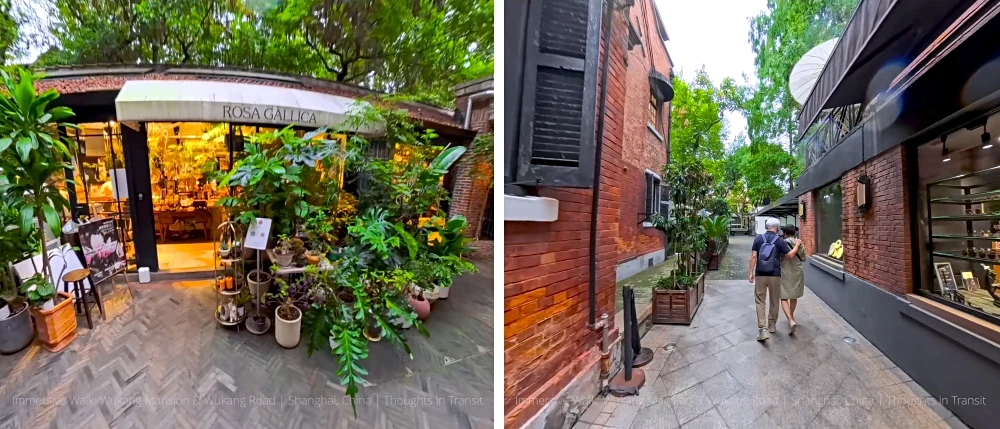
Wukang Road was laid out in 1907 and runs for about 1.2 km. Along the way are the former homes of several notable figures in Chinese history, as well as clothing boutiques, flower shops, and furniture stores.
Watch: 3 Shanghai Streets You Should Explore Slowly
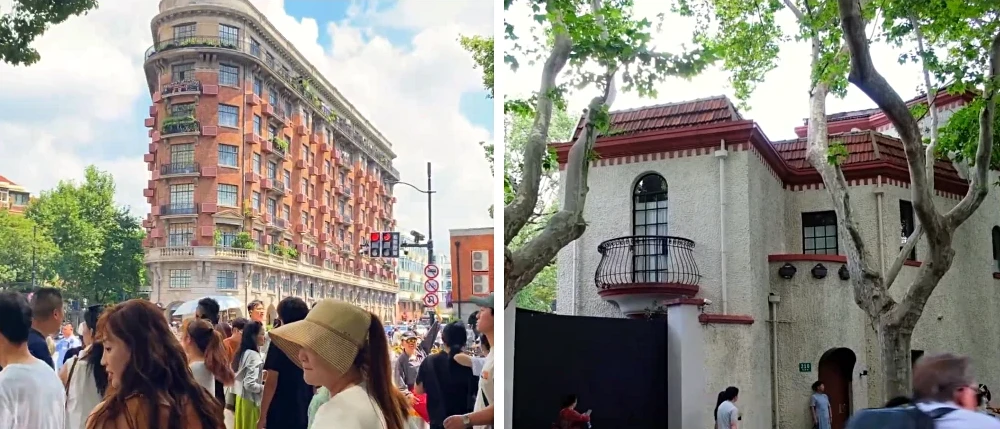
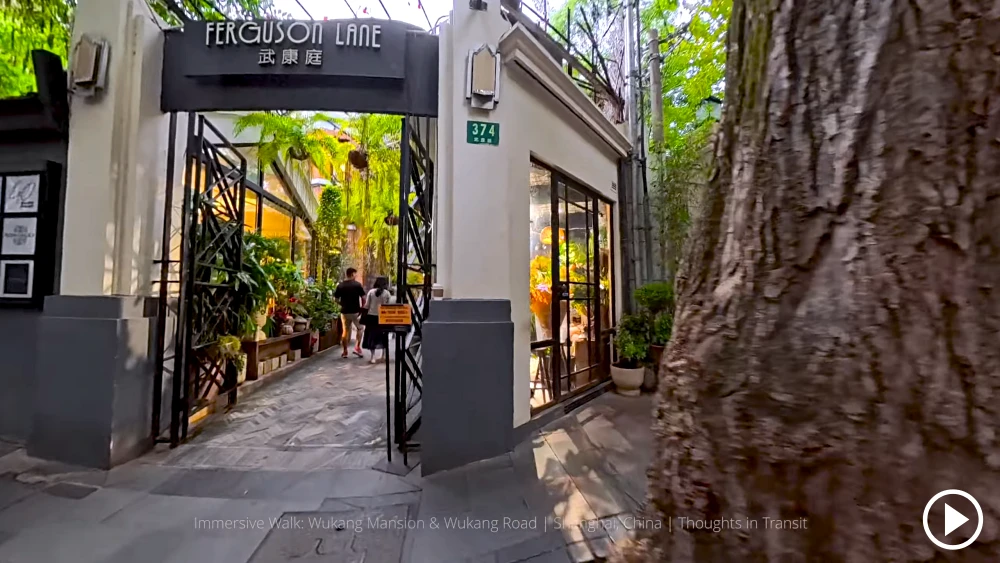
One place you might enjoy but could easily miss is Ferguson Lane (武康庭), a courtyard enclosed by several buildings. It has a dozen or so shops, mostly expensive designer boutiques, plus a few cafés and restaurants.
Watch: A Walk Through China’s French Past: Wukang Road & the Normandie Mansion
Anfu Road
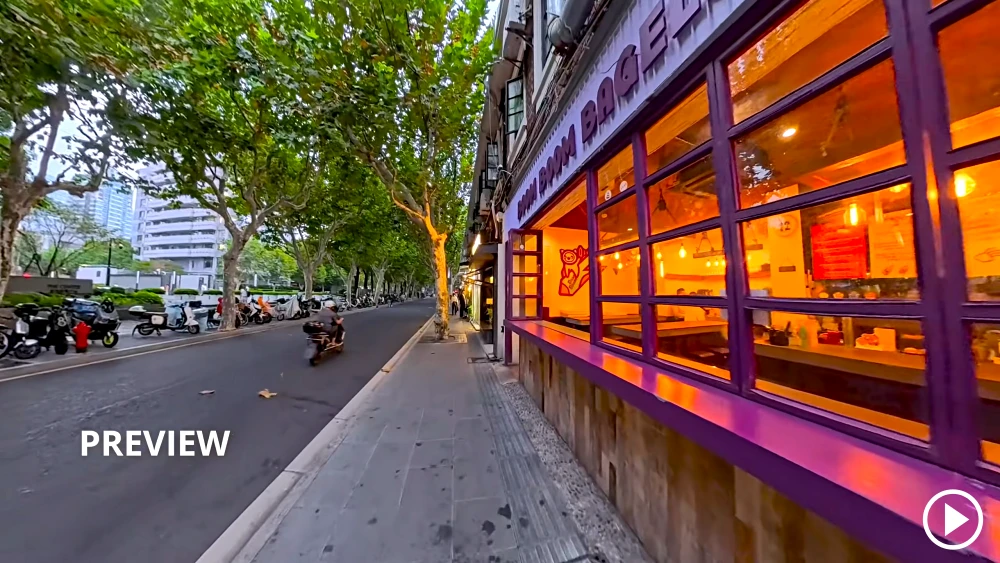
Anfu Road is about 860 meters long, with more restaurants and cafés, as well as curated fashion boutiques, beauty stores, and shops selling creative gifts and stationery.
Watch: Trendy Shanghai: Walking Where the “Cool Kids” Hang Out (Anfu Road)
Restroom tips:
- Public restrooms along the route are scarce and often have queues.
- Larger cafés and restaurants usually have restrooms, but you need to make a purchase to get the access code.
- It’s best to use the restroom at the metro station before leaving. Even if you’re not taking the metro, you can still use the station’s facilities. Shanghai Metro allows you to enter and exit the same station within 10 minutes at no charge. Alternatively, explain to the staff that you need the restroom, and they can let you through a dedicated gate. The 10-minute rule is specific to Shanghai Metro, so don’t assume it applies elsewhere in China. However, in almost any Chinese city, you can ask station staff to let you in to use the restroom for free.
Tianzifang
Tianzifang is a shopping district created from Shanghai’s shikumen lane neighborhoods dating from the 1920s and 1930s, along with disused factory buildings.
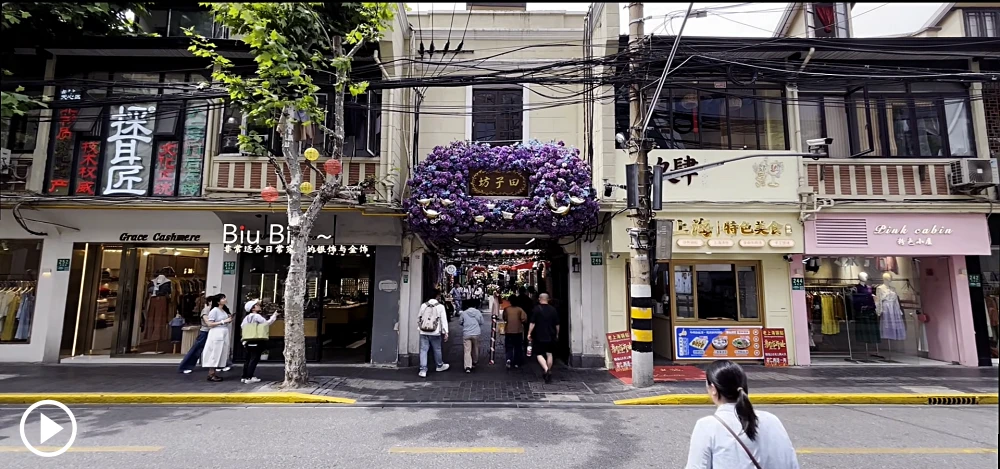
Shikumen are traditional Shanghai homes that combine Chinese and Western architectural styles: Western-style terraced housing layouts, stone doorframes (some with Baroque or Chinese relief carvings), red-brick facades, black entrance doors, and traditional Chinese courtyards.
The area open to visitors covers around 20,000 square meters, with about 150 old buildings and 300 small shops. Most sell gifts, crafts, and souvenirs, though there are also galleries, cafés, and bars.
Many visitors love the atmosphere: old red-brick houses, all sorts of little shops, narrow lanes, tangled electrical wires, and laundry poles overhead.
Chinese name: 田子坊
Hours: Most shops open from 10:00 a.m. to 10:00 p.m.
Admission: Free
Time needed: 1 hour
Getting there:
- By taxi or ride-hailing car: Use “上海田子坊(1号门)” (Tianzifang, Gate 1) as your destination.
- By metro: Take Line 9 to Dapuqiao Station (打浦桥), use Exit 1, then walk for about 3 minutes.
Watch: Tianzifang - The most charming area of Shanghai you need to see
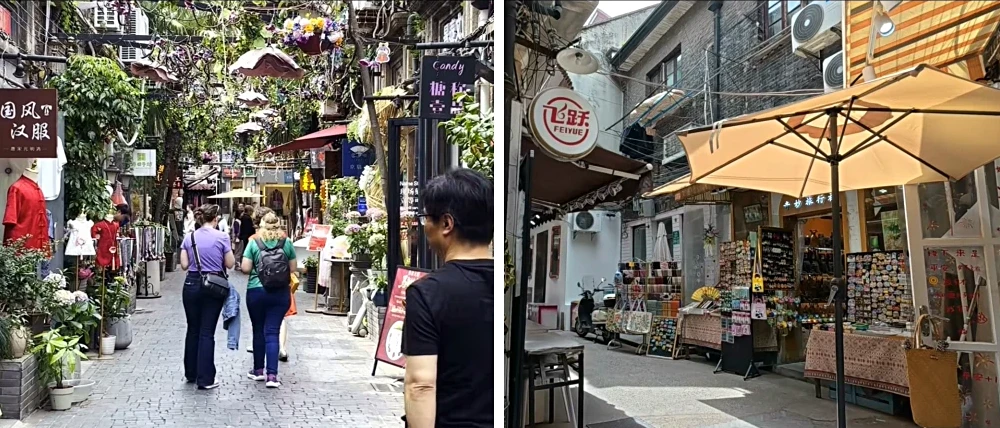
Watch: 4K Shanghai Walk🇨🇳 Tianzifang and Xintiandi District Walking Tour
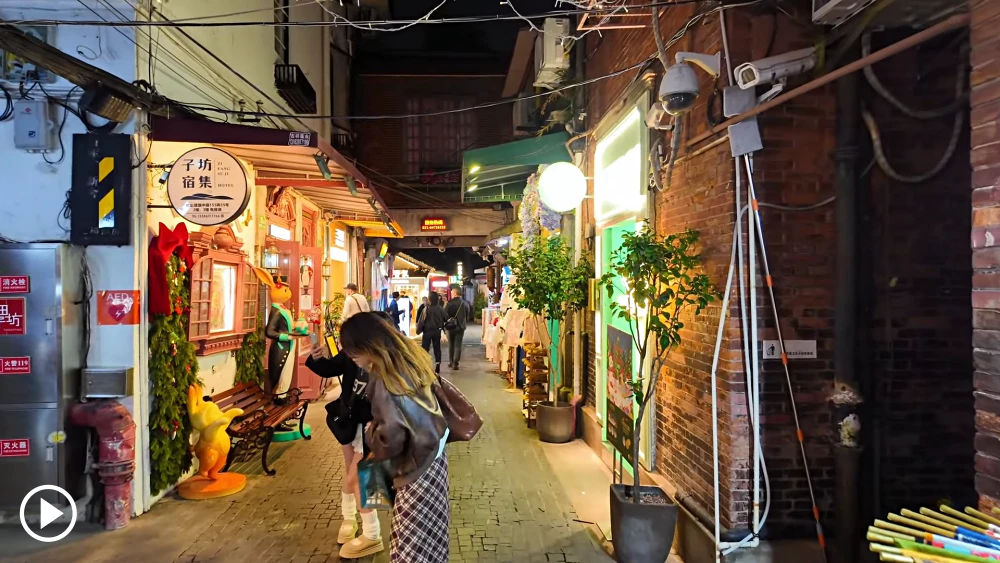
Note:
If you’re here around lunch or dinner, consider eating at SML Center (日月光中心), the mall across the street from Tianzifang. It has more choice, better value, and tastier food. My recommendations are listed below; prices are approximate costs per person.
Coffee and milk tea: M Stand — coffee, 1F; HEYTEA (喜茶) — milk tea, 1F.
Buns and dumplings: 苏小柳手作小笼包 — handmade soup dumplings, B2, around ¥60 per person; Yang’s Dumplings (小杨生煎) — pan-fried pork buns, B2, around ¥35 per person.
Noodles: 裕兴记 — crab roe noodles, 2F, around ¥35 per person; 马记永 — Lanzhou beef noodles, B2, around ¥35 per person.
Non-spicy Chinese food: 粤来记啫啫煲 — Cantonese sizzling clay-pot dishes, 4F, around ¥100 per person; N318本帮菜 — Shanghainese food, 2F, around ¥180 per person.
Spicy Chinese food: 探鱼鲜青椒爽麻烤鱼 — grilled fish with fresh green chilies and a numbing Sichuan pepper kick, 4F, around ¥100 per person.
International and Western-style food: BAKER & SPICE — 1F, around ¥70 per person.
Xintiandi
Xintiandi is a well-known shopping and dining area in Shanghai, with plazas, office buildings, and shopping malls.
For visitors, the two areas most worth exploring are:
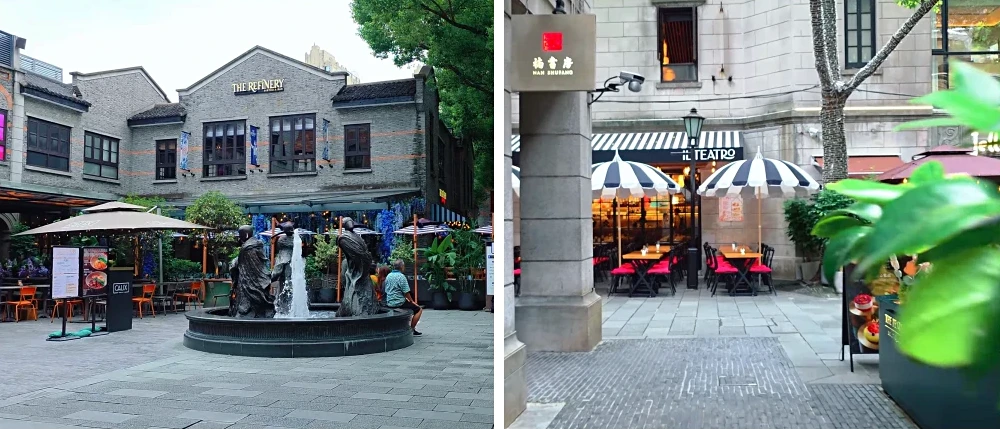
- Xintiandi North Block (新天地北里): An open-air dining area converted from old shikumen houses. Most of the Xintiandi scenes in travel videos are filmed here.
- Xintiandi Style (新天地时尚): A large shopping mall and a small area of shikumen buildings.
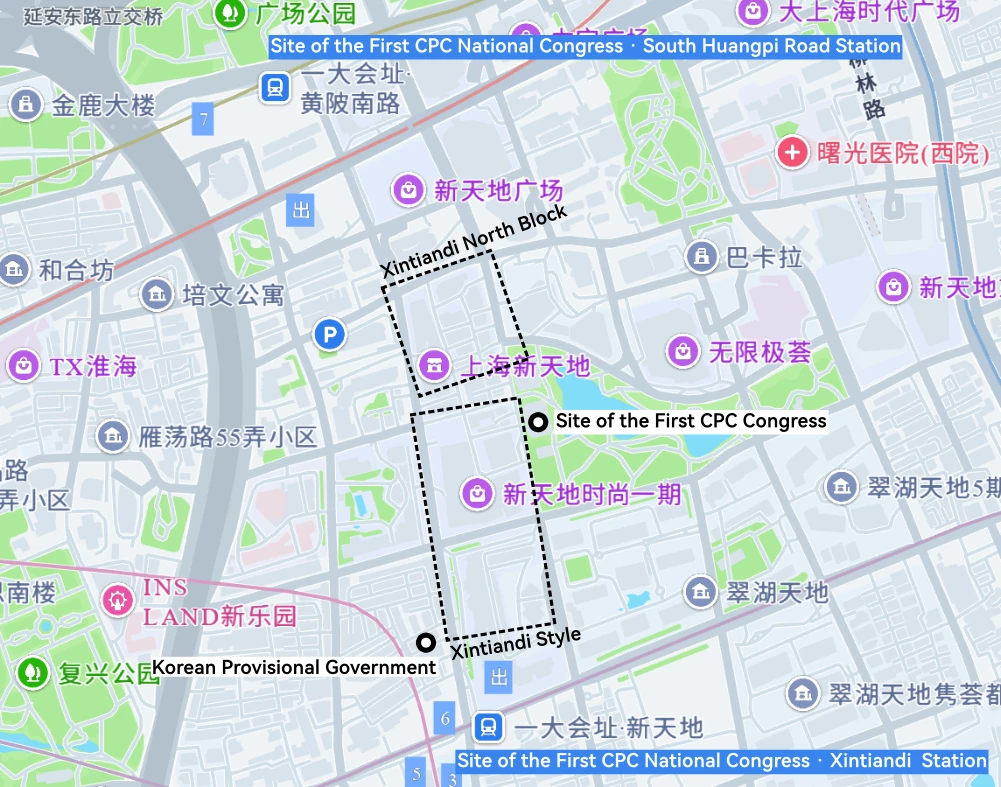
Chinese name: 上海新天地
Time needed: Around 2 hours
Getting there:
- By taxi or ride-hailing car: Use “一大会址·黄陂南路(地铁站)” or “一大会址·新天地(地铁站)” as your destination.
- By metro: Take Line 1 to Site of the First CPC National Congress · South Huangpi Road Station (一大会址·黄陂南路) and use Exit 2. Alternatively, take Line 10 or 13 to Site of the First CPC National Congress · Xintiandi Station (一大会址·新天地) and use Exit 1.
What to expect:
- Although it was converted from traditional shikumen houses, the area has a very Western feel. It looks more like Europe than Shanghai.
- It looks good at night and has plenty of restaurants with outdoor seating. Most serve Western food, making this a good place for dinner if you feel like a break from Chinese food.
- Prices are noticeably higher than in other parts of Shanghai.
- Around Christmas, this may be the most festive area in all of China.
Recommended restaurants:
- Non-spicy Chinese food: 陶陶居酒家(新天地店) — Cantonese food, around ¥134 per person; 海滩餐厅 — Shanghainese food, around ¥296 per person; 庆春朴门 — vegetarian food, around ¥108 per person; 蔡澜点心 — Cantonese dim sum, around ¥97 per person.
- International and Western-style food: Polux by Paul Pairet — French food, around ¥261 per person; EP Estado Puro by David Guzman — Spanish food, around ¥252 per person.
Watch: Shanghai Xintiandi: Where Old Meets New
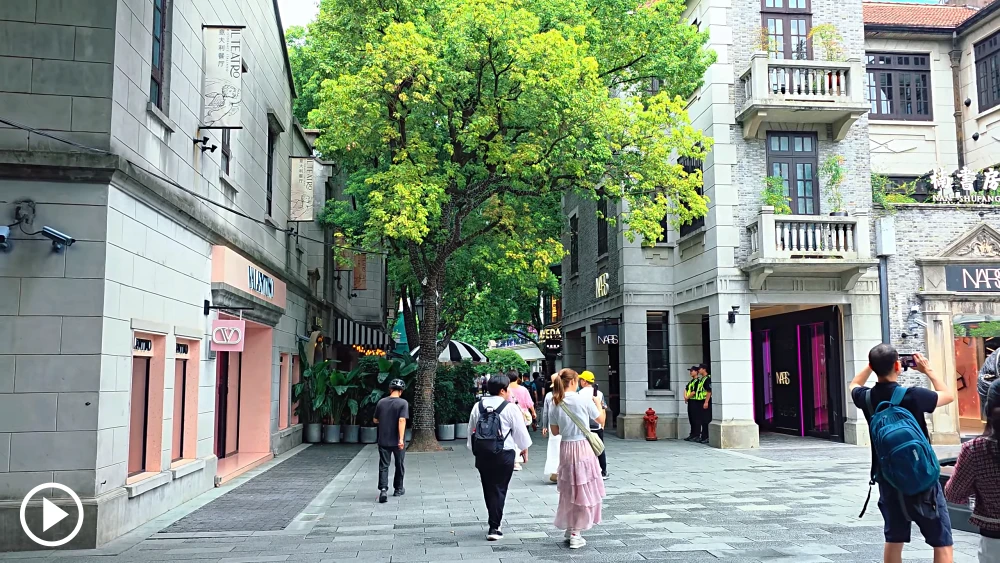
There’s more here than shopping and dining:
- The Site and Memorial of the First National Congress of the Communist Party of China (中共一大会址及纪念馆) are next to the busy shopping and dining area. The congress site and museum are free to enter, with no reservation needed, but you must bring your original passport. They are closed on Mondays and open Tuesday–Sunday, 9 a.m.–5 p.m., with information panels in English. The Communist Party of China held its first national congress here in 1921. At the time, the party had just over 50 members across China. Thirteen attended as delegates, along with two representatives of the Communist International from the Netherlands and Russia.
- The Former Site of the Provisional Government of the Republic of Korea (大韩民国临时政府旧址) is a 5-minute walk from the congress site. It opens daily: 9 a.m.–5 p.m. on weekends, and 9–11:30 a.m. and 1:30–5 p.m. on weekdays. Admission is ¥20, with no reservation needed, but you must bring your original passport. In 1919, when the Korean Peninsula was under Japanese colonial rule, Korean independence activists established a provisional government in Shanghai. The former Korean provisional government headquarters is now an important memorial to Korea’s independence movement.
Museum of Art Pudong
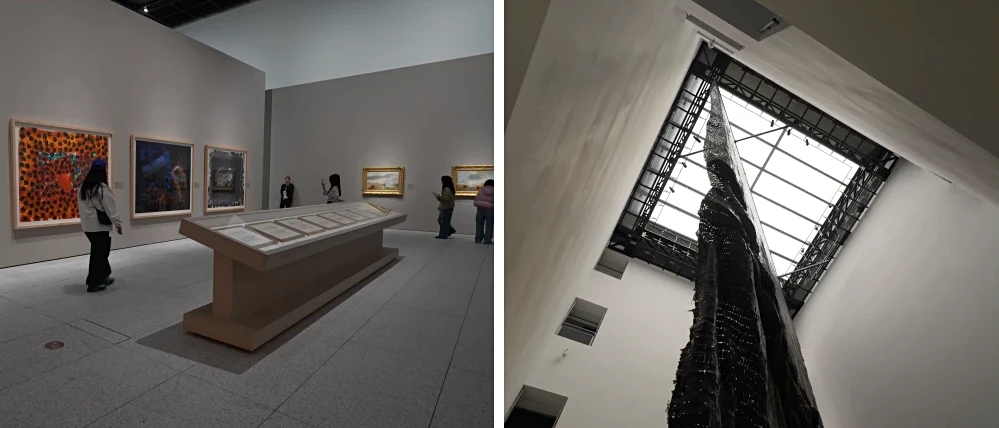
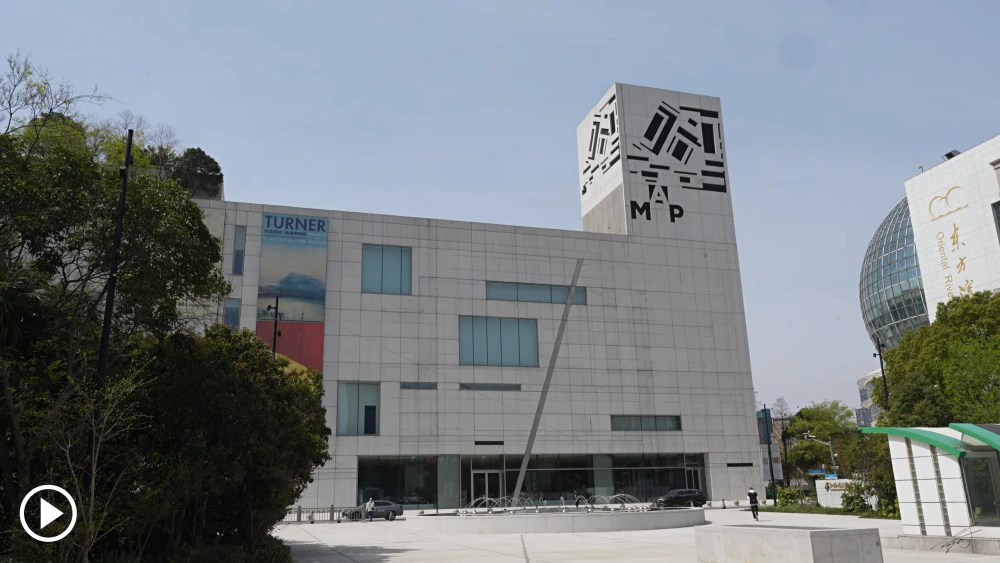
Right next to the Oriental Pearl Tower, the Museum of Art Pudong was designed by French architect and Pritzker Prize winner Jean Nouvel. It has around 10,000 square meters of exhibition space, with 13 galleries across four floors above ground and two below. It’s a manageable size for a two-hour visit and gets consistently enthusiastic reviews.
The museum regularly collaborates with some of the world’s leading art museums on special exhibitions.
On the west side of the third floor, the Mirror Hall combines mirrors with a glass facade measuring 55 meters long and 12 meters high, creating a striking interplay between the views outside and their reflections. It looks its best at sunset. On the east side of the same floor, a small floor-to-ceiling window perfectly frames the Oriental Pearl Tower—a great photo spot.
The rooftop garden offers views of the Bund and the Lujiazui skyline.
Across the road from the museum’s west entrance, a promenade facing the Bund is a particularly good spot for nighttime views.
Chinese name: 浦东美术馆
Hours: 10:00 a.m.–9:00 p.m.; last admission at 8:00 p.m.
Admission:
- Day tickets: ¥100 on weekdays; ¥150 on weekends and public holidays.
- Evening tickets (entry after 5:00 p.m.): ¥80 on weekdays; ¥120 on weekends and public holidays.
- Two adults can bring one child under 18 for free.
- Discounts are available for students and seniors. Children aged 6 or younger, or under 1.2 meters tall, enter free.
- You can book through Trip.com.
Time needed: Around 2 hours
Getting there:
- By taxi or ride-hailing car: Use “浦东美术馆(东门)” (Museum of Art Pudong, East Entrance) as your destination.
- By metro: Take Line 2 or 14 to Lujiazui Station (陆家嘴), use Exit 2, and walk for about 10 minutes.
Watch: A Museum Made for Shanghai: Revisiting Jean Nouvel’s Vision Five Years On
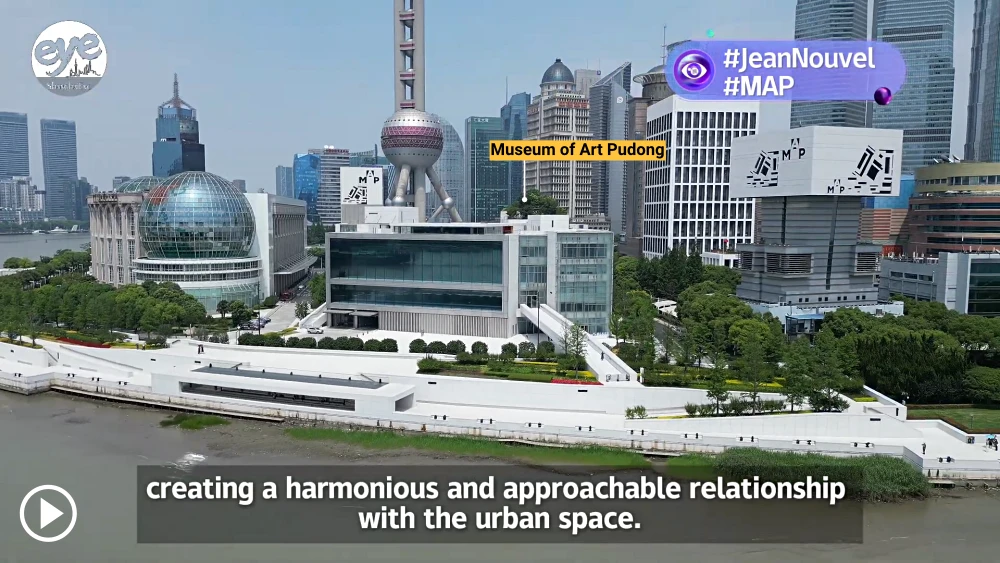
Watch: The best museum with a view of the Oriental Pearl Tower
Shanghai Disneyland
Opened in 2016, Shanghai Disneyland is larger than the Disneyland parks in Hong Kong, Paris, and California, but slightly smaller than Tokyo Disneyland.
Chinese name: 上海迪士尼乐园
Hours: Vary by date; usually 8:00 or 9:00 a.m.–9:00 p.m.
Admission: Adults from ¥475; children from ¥356. Tickets can be booked on the official website or Trip.com. Booking 10–15 days ahead is usually cheaper.
Where to Stay Nearby
If your budget allows, the official Disney hotels are the most convenient options:
Shanghai Disneyland Hotel: 5 stars; rated 9.2/10 from 7,000+ reviews.
Toy Story Hotel: 4 stars; rated 9.2/10 from 13,000+ reviews.
Guests at both hotels can enter the park one hour early and use free shuttle buses to and from the park.For a more affordable stay, consider the hotels below. Both are about a 10-minute drive from Disneyland and close to Kangxin Highway Station (康新公路), just one metro stop from Disney Resort Station. Having the metro as a backup is especially useful at night, when getting a taxi or ride-hailing car can be difficult.
The G Shanghai: 5 stars; rated 9.5/10 from 5,000+ reviews. A 3-minute walk from the metro station, with a free shuttle to Disneyland.
Novotel Shanghai Clover: 5 stars; rated 9.5/10 from 10,000+ reviews. An 8-minute walk from the metro station, also with a free shuttle to Disneyland.
Getting there:
- By metro: Take Line 11 to Disney Resort Station (迪士尼), about 1 hour from central Shanghai. Use Exit 1, then follow the signs for a 10-minute walk to the park.
- By taxi or ride-hailing car: Around 40–60 minutes from central Shanghai, costing ¥70–125 depending on traffic. Use “迪士尼地铁站3号口” (Disney Resort Station, Exit 3) as your destination. From the drop-off point, it’s about a 10-minute walk.
- Leaving at night: This is peak departure time, and ride-hailing cars can be very difficult to get. I recommend taking the metro out of the area. You can travel just one stop, then get off and call a car. The metro queue may look intimidating, but it keeps moving.
Watch: Shanghai Disneyland RIDES & ATTRACTIONS - 2026
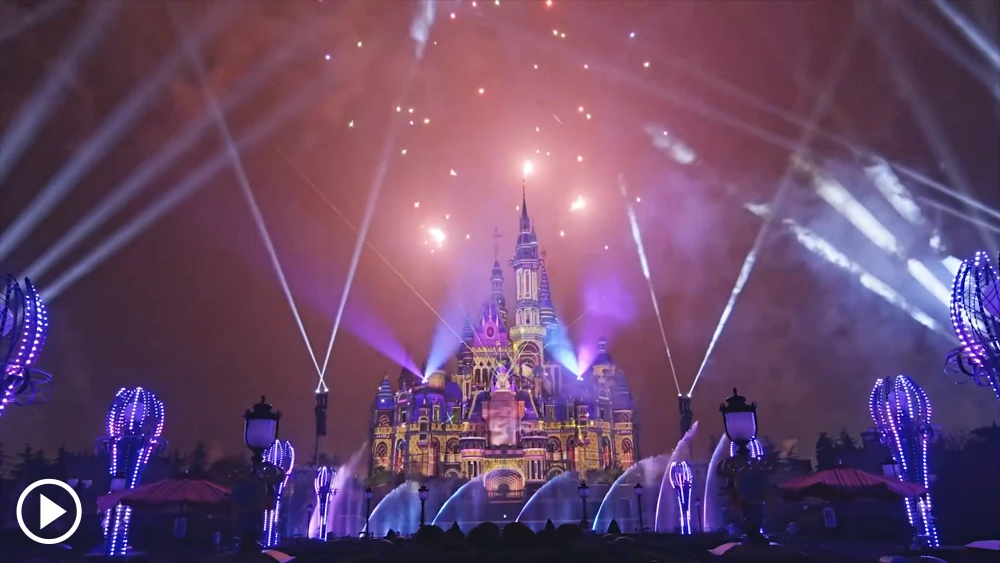
What to Expect
- Expect long queues and plenty of walking.
- You may occasionally encounter queue-jumping. I’ve visited four times and seen it once: children without an adult pushing their way forward. One cultural difference is worth knowing, though: people in China tend to stand quite close together in queues. If you leave a large gap, those behind you may assume you’re distracted by your phone and holding everyone up, so they may simply walk around you. This also happens in supermarket queues and elsewhere.
How to Spend Less Time Queuing
- Buy Disney Premier Access (DPA) to use the priority entrance:
- Single-attraction Disney Premier Access: Available only through the app after you enter the park that day. Prices vary, typically around ¥150–250, and each purchase allows one person to use it once.
- Disney Premier Access Sets: Packages cover 3–15 attractions and can be purchased in advance through the official website or Trip.com. Prices vary considerably.
- Buy an Early Park Entry Pass to enter one hour before regular opening. It usually costs ¥179 per person. If you move quickly, you may fit in two popular rides, but you still need to arrive very early and queue for entry.
- Use single-rider queues when available. Only Zootopia: Hot Pursuit and Seven Dwarfs Mine Train have them, and they’re not always open.
- At Zootopia: Hot Pursuit, using DPA or the single-rider queue means missing the police station and jail-cell scenes in the regular queue, which is a bit of a shame.
Before You Go
- Download the Shanghai Disney Resort app.
- Handheld gimbals, extendable selfie sticks, tripods, and glass items are not allowed inside the park. Storage near security costs ¥10.
The Attractions Most Worth Your Time
Pirates of the Caribbean: Battle for the Sunken Treasure
A one-of-a-kind attraction that blows its American namesakes out of the water.
Watch: Pirates of the Caribbean at Shanghai Disneyland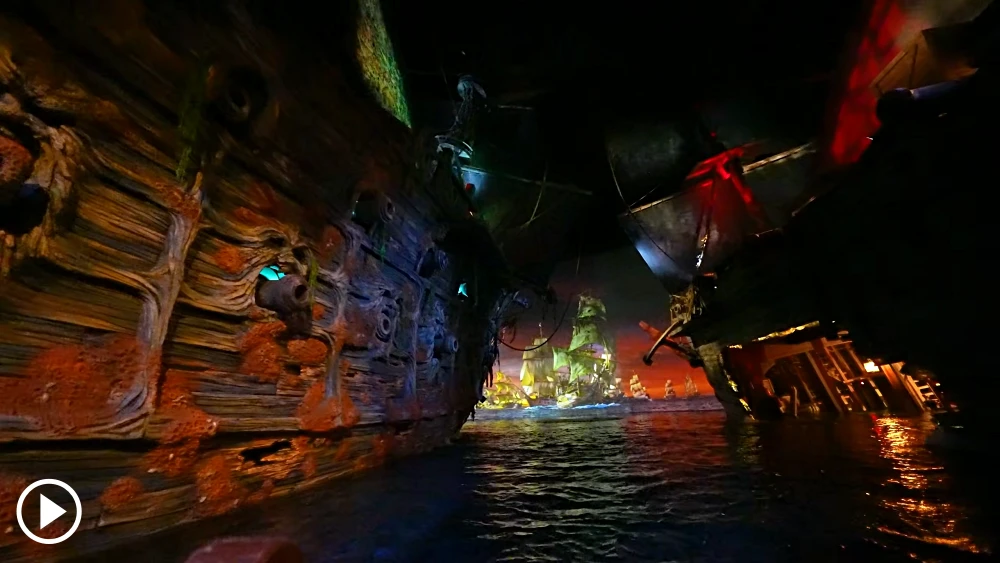
TRON Lightcycle Power Run
There’s also a version in the US, but Shanghai’s has better visual effects.
Watch: 4K Extreme Low Light TRON Lightcycle Power Run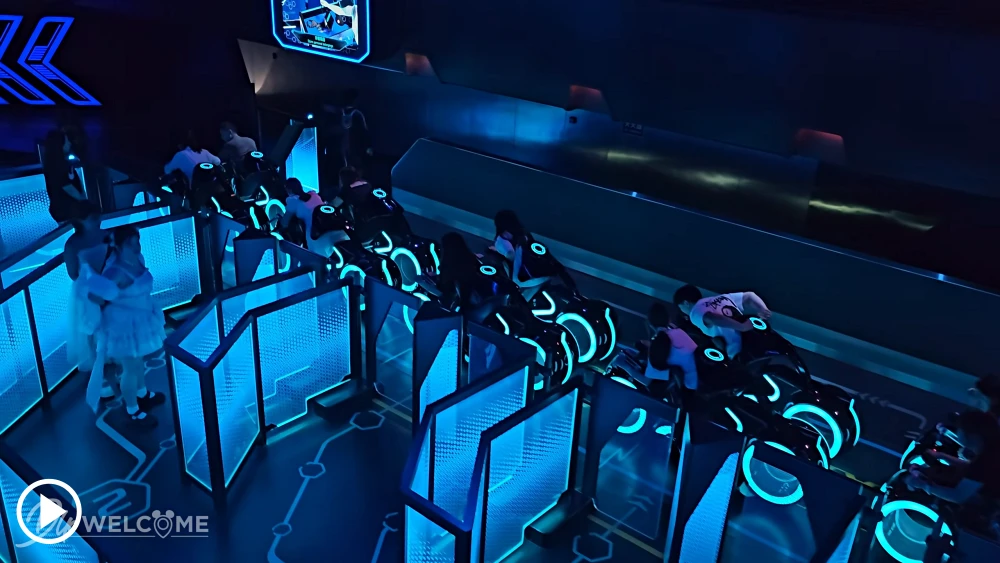
Zootopia: Hot Pursuit
Exclusive to Shanghai.
Watch: Zootopia Ride at Shanghai Disneyland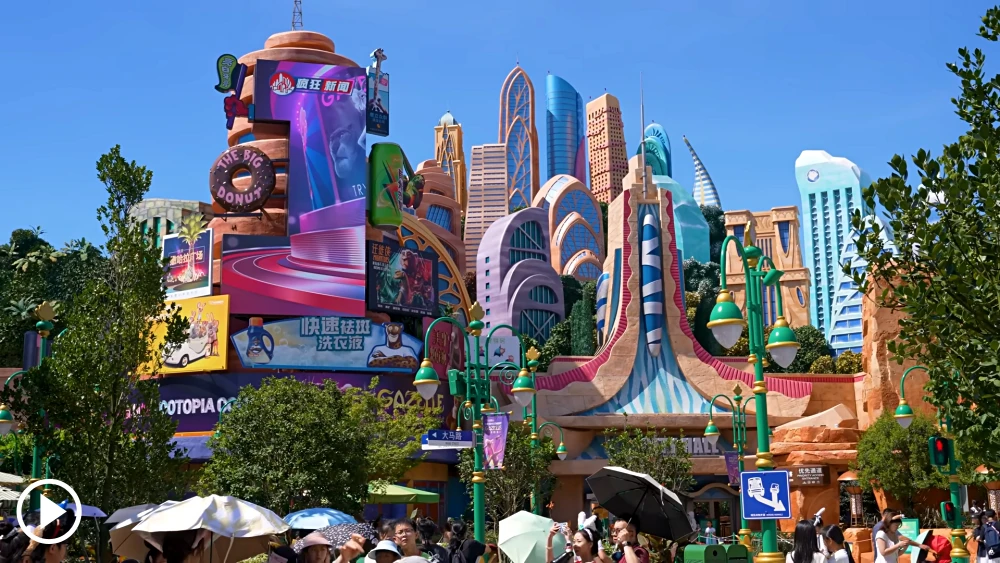
Challenge Trails at Camp Discovery
Exclusive to Shanghai and more interesting than a standard treetop ropes course. There are three routes, and both children and adults can have a great time.
Watch: Camp Discovery Challenge Trails of Adventure Isle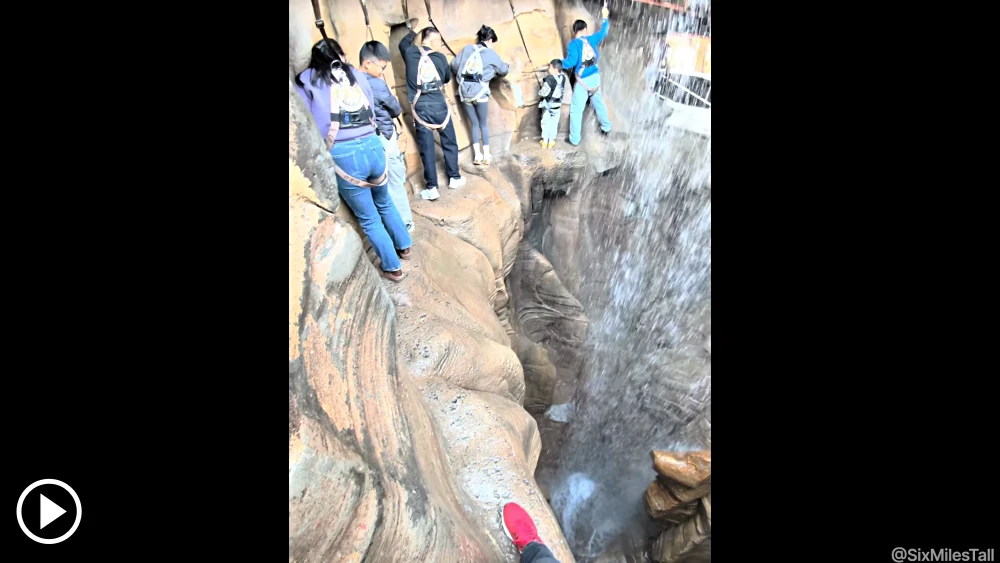
A Spider-Man-themed area is also set to open in 2027.
Attractions I Would Skip
- Marvel Universe: Basically a merchandise shop.
- Frozen: A Sing-Along Celebration: Without understanding Chinese, you’ll struggle to follow it or get much enjoyment out of it.
- Soaring Over the Horizon: Extremely long queues for what is essentially a flight simulator with a giant screen, with almost the same content as versions elsewhere.
- Voyage to the Crystal Grotto, The Many Adventures of Winnie the Pooh, and similar rides are mainly for younger children. Peter Pan’s Flight does have some nice sets, though.
Worth Trying If You Have Time
- Eye of the Storm: Captain Jack’s Stunt Spectacular: You don’t need to understand Chinese to enjoy this one. The stunts and fight scenes are the main draw.
Height Requirements
- Visitors who are at least 122 cm tall meet the height requirements for all rides.
Food and Drink
- There are several restaurants inside the park. Budget around ¥120–200 per person.
- Disney fans may want to try Royal Banquet Hall. Mickey, Minnie, Donald, and Daisy make rounds of the tables for photos during the meal, and there’s also a short dance performance. It costs ¥428 per adult and ¥298 per child, plus a 15% service charge. Reservations must be made through the Disney app, although walk-ins may be possible during quieter periods.
- Outside food is allowed. Many visitors buy sandwiches, drinks, and other supplies at the FamilyMart convenience store at the Line 11 metro station. Self-heating food is not allowed, and individual drink bottles must be no larger than 650 ml.
- Re-entry is allowed, so you can leave for lunch in Disneytown, where the choice is wider and prices are more reasonable, around ¥40–150 per person. You can also send one person from your group to buy coffee or food and bring it back into the park; this is allowed. There’s a separate entrance connecting the park with Disneytown. Follow the signs rather than walking around to the main entrance.
- Drinking-water fountains are available outside the restrooms, and restaurants provide hot water free of charge.
Parade
- The Disney parade runs twice daily, usually at 12:15 p.m. and 3:45 p.m. The best viewing spots are in Tomorrowland, such as opposite Jet Packs or in front of the TRON Lightcycle Power Run entrance.
Fireworks Show
- Showtimes vary. Check the official app on the day of your visit.
- Try to get closer to the front, as many parents put children on their shoulders, blocking the view.
- Most visitors leave after the fireworks, but you may still be able to squeeze in one more ride. Even after the closing announcements begin and staff start cleaning, you can ride as long as the attraction is still accepting people into its queue—there’s usually a window of around 30 minutes. Queues are shorter, so you can fit in more fun with less waiting and avoid the worst of the rush to leave.
Other Practical Tips
- If you visit during your birthday month, bring your passport to Guest Services near the entrance to collect a birthday badge. Staff who notice it will wish you a happy birthday, usually in Chinese.
- Rental power banks are available inside the park for ¥5 per hour, so a low phone battery is no reason to panic. Scan the QR code with Alipay; you don’t need a Chinese phone number.
- Suitcases and other large bags must be stored outside the park, beside the entrance security area. Storage costs ¥80 per item per day. Many Shanghai hotels also offer luggage delivery to airports or railway stations; ask at reception.
- Wi-Fi is available inside the park, but you need a Chinese phone number to receive the verification code and log in.
Zhujiajiao
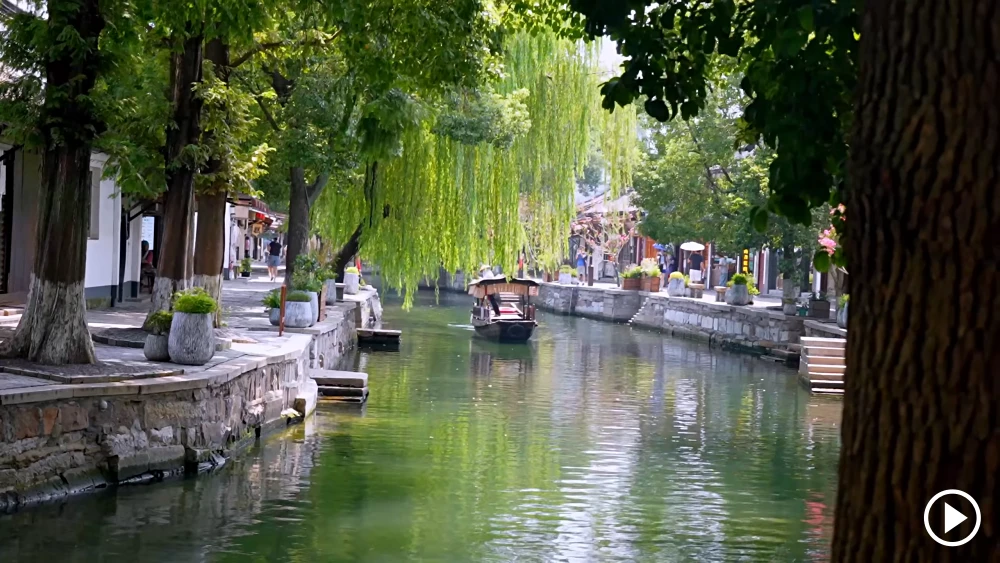
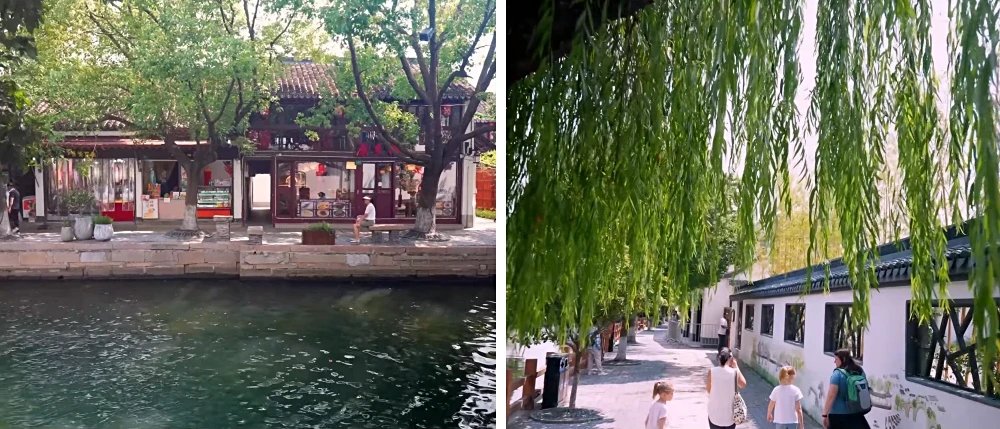
Zhujiajiao is an ancient water town in Qingpu District, about 50 km from central Shanghai. With a history of over 400 years, it’s Shanghai’s most famous water town. Its compact historic center covers around 1.5 km², with 36 old bridges and a network of canals.
Chinese name: 朱家角
Time needed: 2–3 hours
Things to do:
The historic center is small and easy to explore on foot. A stroll along the canals is the main attraction. Highlights include:
Fangsheng Bridge (放生桥) — Shanghai’s largest five-arch stone bridge.
North Street (北大街) — A traditional shopping street about 300 meters long. Search for “江南第一茶楼” in AMap to find it.
Kezhi Garden (课植园) — A traditional Jiangnan-style garden built in 1912. Admission: ¥20.
Take a traditional boat ride — ¥200 per boat for up to six people, with each ride lasting about 15 minutes.
Food and drink: There are plenty of restaurants, cafés, and fast-food places. Most are small, and there isn’t much difference in quality, so just pick somewhere that appeals to you.
Note: If you’re already visiting Suzhou and have limited time, I’d skip Zhujiajiao. Suzhou’s Pingjiang Road and Shantang Street offer a similar experience of old streets and canals.
Getting there:
By taxi or ride-hailing car: Around 1–1.5 hours from central Shanghai, costing ¥150–200 depending on traffic. Use “朱家角古镇游客中心” as your destination.
By metro: Take Line 17 to Zhujiajiao Station (朱家角) and use Exit 1. Allow around two hours from central Shanghai. From the station, you can:
Take a direct ferry to Fangsheng Bridge Pier — ¥40 per person.
Take a taxi — around ¥10, with a journey time of about 8 minutes.
Walk — around 20 minutes.

Watch: We Didn’t Know China Looked Like This
Optional Attractions in Shanghai
Shanghai Museum East
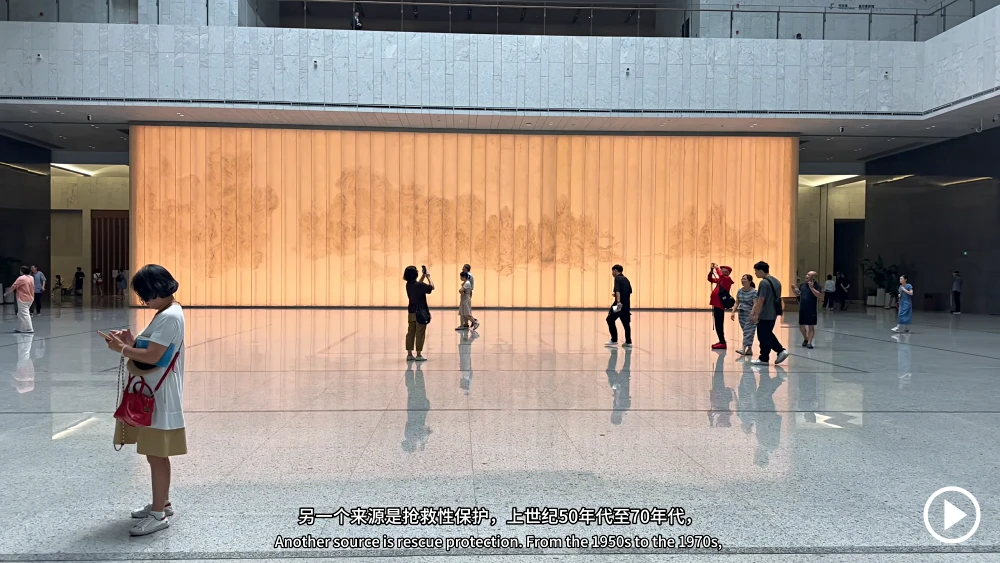
With around 113,000 square meters of floor space across six floors above ground and two below, Shanghai Museum East is a large museum focused on ancient Chinese art. It’s an excellent choice if you’re interested in ancient Chinese art. Unlike the National Museum of China in Beijing, where reservations can be very difficult to secure, the permanent galleries here don’t require a reservation.
- 1F: Bronze artifacts and stone Buddhist sculptures.
- 2F: Paintings, calligraphy, and jade.
- 3F: Ceramics and ancient coins.
- 4F: Archaeological finds from Shanghai, plus traditional crafts from the Jiangnan region of China.
- 5F: Rooftop garden.
Restaurants are on B1 and 3F, and free luggage storage is available on 1F.
Chinese name: 上海博物馆(东馆)
Hours: 10:00 a.m.–6:00 p.m.; last admission at 5:00 p.m. Closed on Tuesdays.
Admission: Free for the permanent galleries; some special exhibitions require a separate ticket. No reservation is needed, but you must show your passport.
Time needed: Around 3 hours
Note: Shanghai Museum has two locations. The East branch opened in 2024 and is newer and larger, with more exhibits.
Getting there:
- By taxi or ride-hailing car: Use “上海博物馆东馆(入口)” as your destination. The entrance is on B1.
- By metro: Take Line 2 to Shanghai Science and Technology Museum Station (上海科技馆), use Exit 7, and walk for about 7 minutes.
Watch: Immersive Exhibition Viewing: Shanghai Museum East
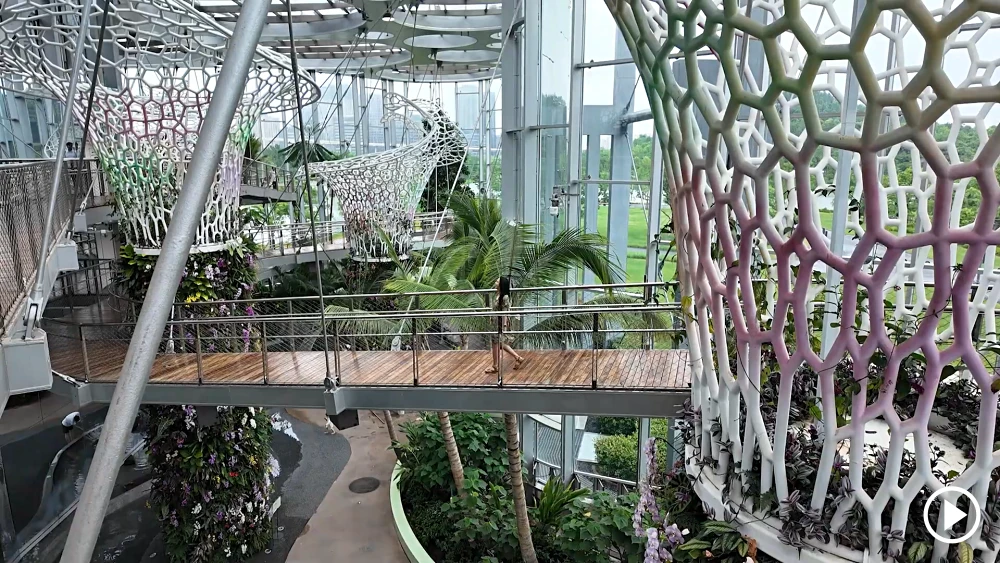
Greenhouse Garden (at Shanghai Expo Culture Park)
Opened to the public in 2024, this greenhouse garden displays plants from tropical dry regions and rainforests, along with flowering plants such as orchids. Other highlights include baobab and olive trees. It’s worth a visit if you enjoy plants.
Chinese name: 上海温室花园
Hours: Tuesday–Sunday, 9:00 a.m.–5:00 p.m.; last admission at 4:30 p.m. Closed on Mondays. The garden may stay open until 9:00 p.m. in summer and on public holidays.
Admission: Adults ¥98 on weekdays; ¥128 on weekends and public holidays. Half price for students and seniors aged 60 and over. You can book through Trip.com.
Time needed: Around 1.5 hours
Getting there:
- By taxi or ride-hailing car: Use “世博文化公园上海温室花园(入口)” as your destination.
- By metro: Take Line 7 to Houtan Station (后滩), use Exit 4, and walk for about 8–10 minutes. Alternatively, take Line 13 to Shibo Avenue Station (世博大道), use Exit 4, and walk for about 10–12 minutes.
Watch: Shanghai’s Greenhouse Garden, Is It Worth It?
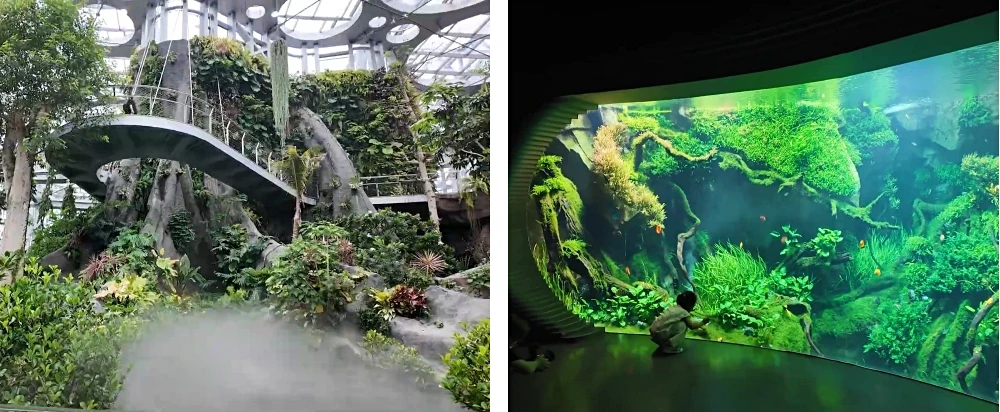
Note:
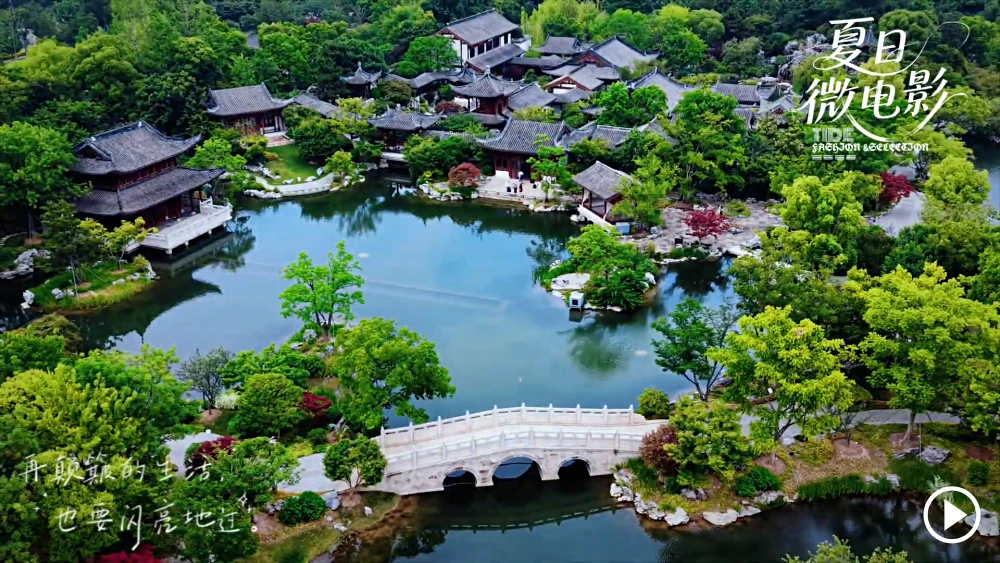
If you have time to spare, you can walk north for 10–15 minutes to Shenyuan Garden (申园) after your visit. Use “申园(南门)” to find its south entrance. This newly built Chinese-style garden costs ¥30 to enter and is far less crowded than Yu Garden. It’s a pleasant place for an hour-long stroll.
Watch: Shanghai Expo Culture Park: Shen Yuan Garden
Shanghai Zoo
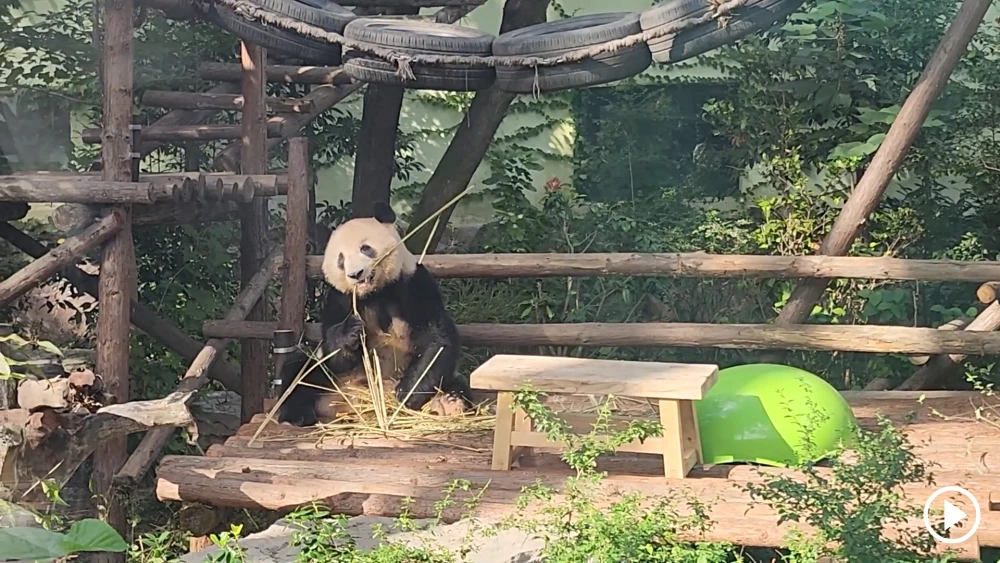
Opened in 1954, Shanghai Zoo covers around 740,000 square meters and is home to more than 5,000 animals from over 400 species. Highlights include giant pandas, red pandas, and golden snub-nosed monkeys. It’s a particularly good option for families with children.
Chinese name: 上海动物园
Hours: 8:00 a.m.–5:00 p.m. from March to October; 8:00 a.m.–4:30 p.m. from November to February.
Admission: ¥40 for adults; ¥20 for children and students. Free for children under 1.3 meters tall and seniors aged 65 or older.
Time needed: Around 4 hours
Note: Visit in the morning for fewer crowds and more active animals.
Getting there:
- By taxi or ride-hailing car: Use “上海动物园(正门)” (Shanghai Zoo, Main Entrance) as your destination.
- By metro: Take Line 10 to Shanghai Zoo Station (上海动物园), use Exit 4, and walk for about 3 minutes.
Watch: Giant Pandas in China! Exploring the Shanghai Zoo

Cities and Attractions Near Shanghai
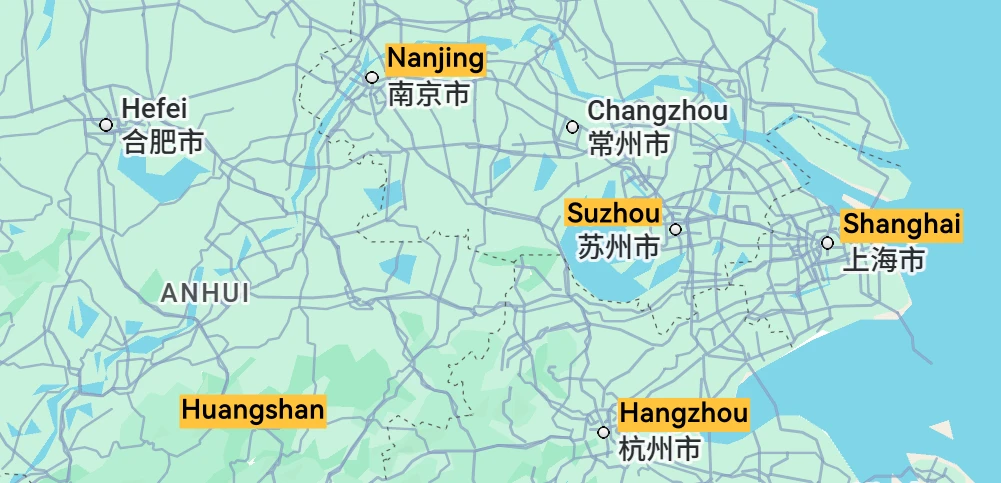
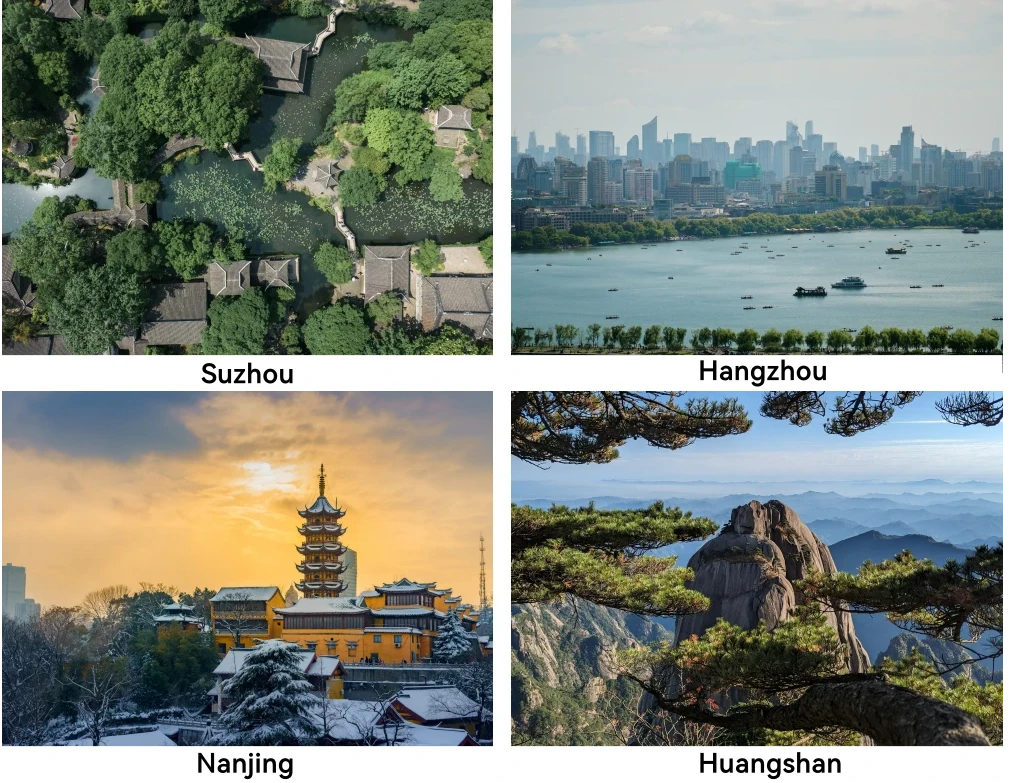
For some of China’s most beautiful traditional gardens, head to Suzhou.
It’s about 100 km from Shanghai, or 25–40 minutes by high-speed train. You can visit on a day trip or stay for two days and one night.
For lake views and green tea, try Hangzhou.
It’s about 180 km from Shanghai, or 45–70 minutes by high-speed train. Allow at least two days and one night.
For history and Buddhist sites, consider Nanjing.
It’s about 300 km from Shanghai, or 1–2 hours by high-speed train. Allow at least two days and one night.
If you enjoy mountain hiking, head to Huangshan (the Yellow Mountains).
One of China’s most iconic mountain destinations. It’s about 400 km from Shanghai, or 2.5–3 hours by high-speed train. Allow at least two days and one night.
 by Yilei (Jerry) Bao | 一只猫的橘 | Kenneth Yang | David Magalhães
Thanks for reading, and enjoy your time in Shanghai! ヽ(´▽`)/