Xi’an Itinerary: A Complete 3-Day Guide for First-Time Visitors
Xi’an is located in northwestern China. Its name means “Western Peace.” The city is best known for the Terracotta Army and its ancient city wall—the largest and best-preserved ancient city wall in China.
- Xi’an is one of China’s most famous historic cities. It has a history of more than 3,100 years, and for over 1,100 years it served as the capital of 13 Chinese dynasties.
- Xi’an has a population of about 13 million. Its economy is not as developed as that of China’s coastal cities, but it is by no means poor. Key industries include automobiles (home to China’s largest manufacturing base), solar energy, and aerospace. However, most visitors stay within the historic city area, where building heights are strictly limited to protect the view. Because of this, travelers often don’t see much of the city’s modern, industrial side.
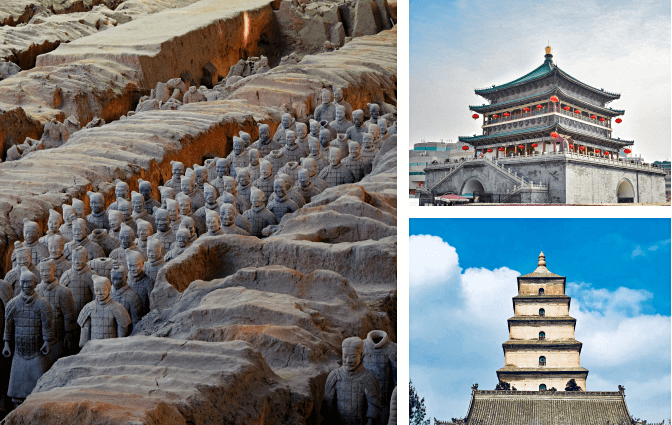 by Aaron Greenwood | geng zhang | Akira
Best Time to Visit Xi’an
Xi’an has four distinct seasons. Spring and autumn are generally the best times to visit, when the weather is mild and comfortable. Winters are relatively manageable and usually milder than in Beijing.
If you can pick your dates, it’s best to avoid summer (July and August). Temperatures often reach 38–40°C (100–104°F). In addition, many Chinese families travel during the school summer vacation, bringing their children to see the Terracotta Army, which makes the site extremely crowded.
It’s also wise to avoid major Chinese holidays if possible, when domestic tourism peaks and attractions become extremely crowded. These include:
- Labor Day holiday (May 1–5)
- National Day holiday (October 1–7)
- Chinese New Year (for example, February 5–13 in 2027)
During these periods, popular sights can be packed, and transportation and hotels may book up well in advance.
Where to Stay in Xi’an
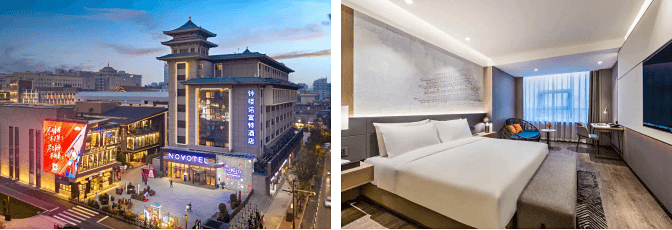
Near Bell Tower Metro Station
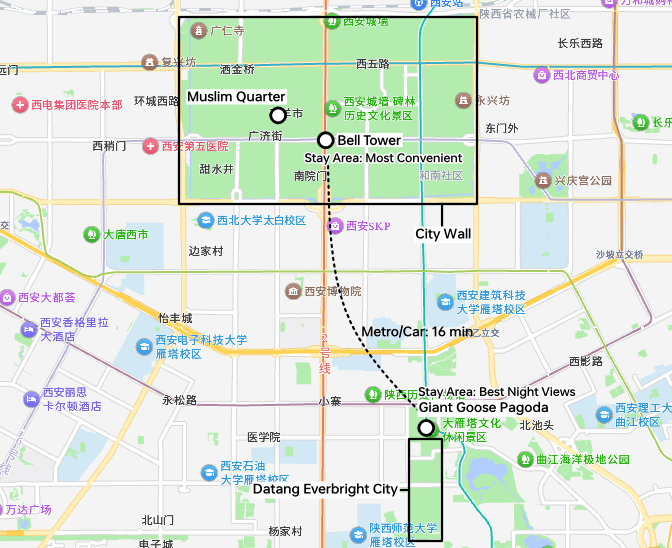
This area is one of the most convenient places to stay in Xi’an. Several major sights are within walking distance, including the Bell Tower of Xi’an, Muslim Quarter, and the Xi’an City Wall.
Novotel Xi an The Bell Tower Hotel
Rating: 9.6 (9,700+ reviews)
About 100 m from Bell Tower Station (Exit H) on Xi’an Metro Lines 2 and 6.
Atour Hotel Xi’an Bell and Drum Tower Square
Rating: 9.5 (700+ reviews)
From Bell Tower Station (Exit C) on Xi’an Metro Lines 2 and 6, take Underground Passage Exit 2 to street level, then walk about 100 m.
Near Dayanta (Giant Wild Goose Pagoda) Metro Station
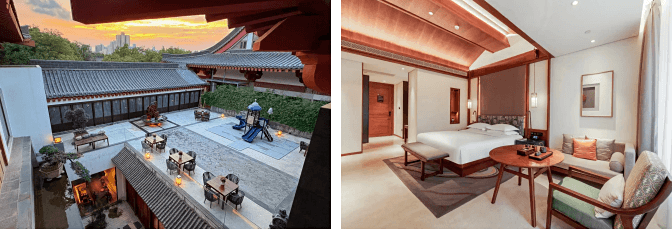
This area is close to the Giant Wild Goose Pagoda and the lively Datang Everbright City, making it a good choice if you want to explore the night scenery.
Yaman Oriental Courtyard Hotel
Rating: 9.6 (2,700+ reviews)
About a 10-minute walk from Dayanta Station (Exit B) on Xi’an Metro Lines 3 and 4.
JI Hotel (Xi’an Giant Wild Goose Pagoda Metro Station)
Rating: 9.6 (2,200+ reviews)
About 2 minutes on foot from Dayanta Station (Exit C) on Xi’an Metro Lines 3 and 4.
Getting to Xi’an
From Major Chinese Cities
Here is Xi’an’s location in relation to other major Chinese cities:
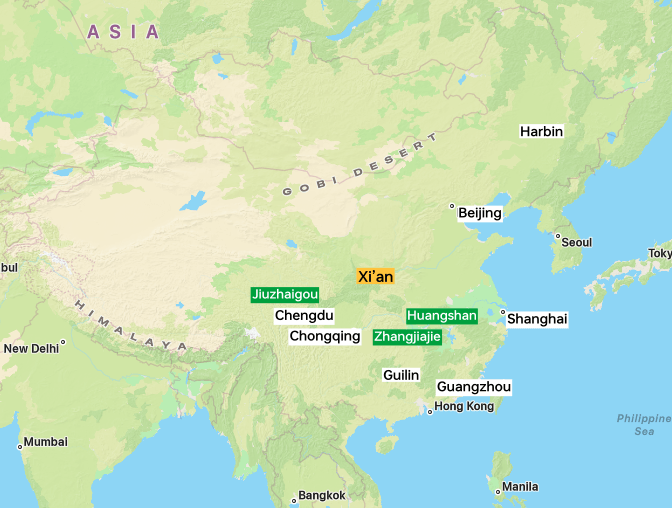
| From City | Distance | Flight Time | High-Speed Rail |
|---|---|---|---|
| Beijing → Xi’an | 1,069 km | 2.5 hours | 4 hr 10 min |
| Chengdu → Xi’an | 755 km | 1.5 Hours | 3.5 Hours |
| Chongqing → Xi’an | 708 km | 1.5 Hours | 5.5 Hours |
| Shanghai → Xi’an | 1,379 km | 2.5 hours | 7 hours |
| Guangzhou → Xi’an | 1,679 km | 3 hours | 9.5 hours |
Getting from Xi’an Xianyang International Airport to the City
Xi’an Xianyang International Airport is located about 25 km (15 miles) from central Xi’an. There are three main ways to reach the city: taxi, ride-hailing (Didi), or metro.
Taxi
A taxi from the airport to downtown typically costs ¥150–¥180 (fares are slightly higher at night) and takes about 50 minutes, depending on traffic.
Notes:
- Metered Fares: Taxi drivers always use the meter, so the fare is regulated.
- Route Choice: Drivers often take a ring expressway (highway) before entering downtown. This may look like a detour, but it’s actually normal. Driving straight into the city center can involve heavy traffic, many traffic lights, and slow speeds, so locals often take the same route.
Ride-Hailing
Ride-hailing usually costs around ¥90 and also takes about 50 minutes.
Notes:
- Pickup Chaos: Airport pickups can be a bit chaotic. There are many passengers, and some drivers may stop farther away and call you to confirm where to meet.
- Language Barrier: If you don’t speak Chinese, use the in-app translation to message the driver and look for the car by its license plate.
- Cancellations: If you can’t find the car, you can cancel the ride. The app may charge a small ¥3 fee. If the driver cancels, you won’t be charged.
Metro
The metro is the most economical option and avoids traffic, though all routes to the city center require at least one transfer.
| Destination | Metro Route | Time |
|---|---|---|
| Bell Tower Station | Take Line 14 to Xi’anbeizhan, then transfer to Line 2 | ~78 min, ¥8 |
| Dayanta Station | Take Line 14 to Xi’anbeizhan, then transfer to Line 4 | ~86 min, ¥9 |
- If you arrive on an international flight, you will land at Terminal 5. From there, take the free airport shuttle bus to Terminals 2 or 3, where the metro station is located. The airport has clear English signs, and the whole process takes about 20 minutes including walking and the shuttle ride.
- Xi’an also has airport shuttle buses (about ¥25, tickets purchased on site) that go to the Bell Tower area, but they are slower and the signage is less clear, so the metro is generally the easier option.
From Beijing
Beijing is about 1,069 from Xi’an.
The most convenient way to travel between the two cities is by train.
Depending on whether you take a regular train or a high-speed train, the journey takes about 4–6 hours. You can check train schedules and ticket prices on the Trip.com or the 12306 (China Railway’s official app).
When departing from Beijing, Beijingxi (Beijing West Railway Station) is usually the most convenient and well-connected option.
In Xi’an, most trains arrive at Xianbei(Xi’an North Railway Station), the city’s main high-speed rail hub.
| Destination | Distance & Car | Metro Route |
|---|---|---|
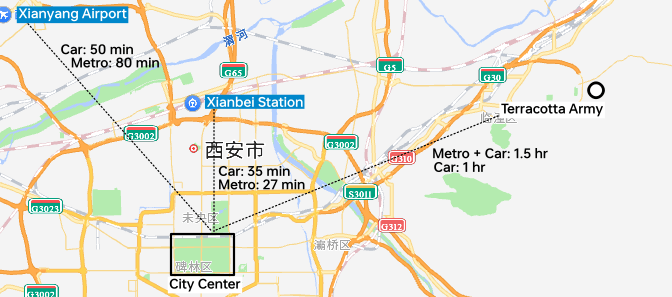
| Bell Tower Station | About 15 km (Car: 35 minutes) | Take Line 2 directly to Bell Tower Station. The journey takes about 27 minutes and costs ¥4. |
| Dayanta Station | About 25 km (Car: 45 minutes) | Take Line 4 directly to Dayanta Station. The trip takes roughly 43 minutes and costs ¥5. |
Xi’an Itinerary & Map
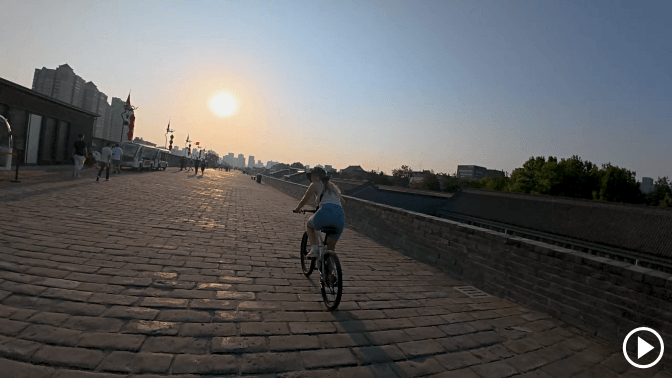
Day 1 – Arrive around noon. In the afternoon, explore the Muslim Quarter. At sunset, bike along the City Wall, and in the evening, enjoy the night view near the Bell Tower.
Day 2 – In the morning, visit the Terracotta Army. In the late afternoon, head to the Giant Wild Goose Pagoda. After dinner, watch the music fountain nearby and take a stroll in Datang Everbright City.
Day 3 – Take a day trip to Huashan (Mount Hua)
Getting Around Xi’an
Both DiDi and the metro are very convenient.
Metro
The Xi’an Metro system covers nearly all major attractions and is generally the most efficient way to get around.Main drawback: it can be crowded, especially during rush hour.Hours: Typically 6:30am – 11:30pm (varies slightly by station)Fares: ¥2–¥9 per ride, depending on distanceTickets: Scan Alipay to enter and exit, or Purchase tickets from self-service machines or countersMetro Passes:
- 1-Day Pass: ¥15 (valid 24 hours after activation)
- 3-Day Pass: ¥40 (valid 72 hours)
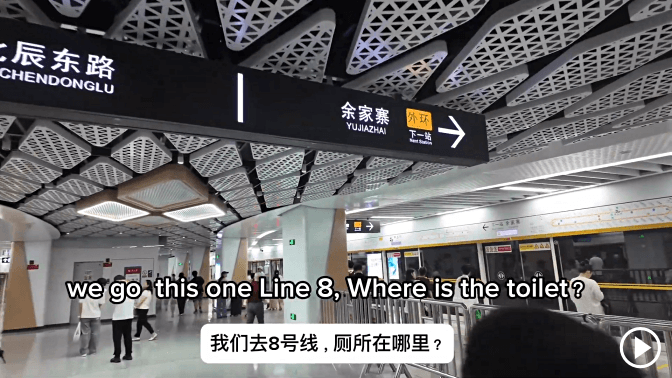
Watch: First time taking the Xi’an metro
Top Attractions in Xi’an
Muslim Quarter 回民街
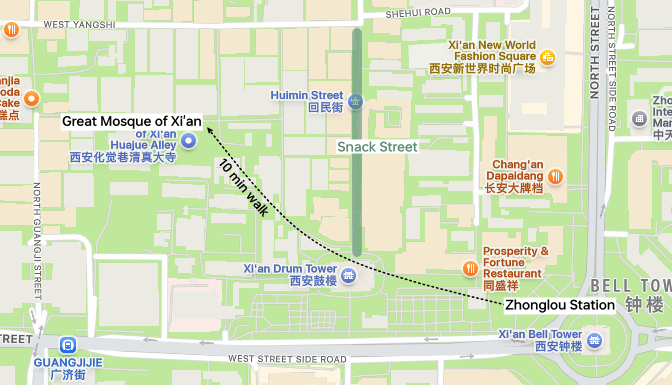
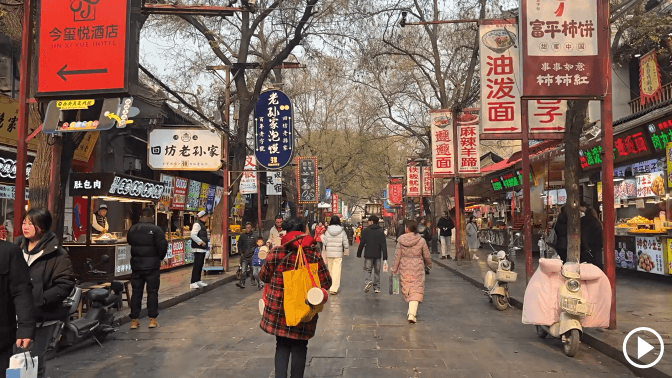
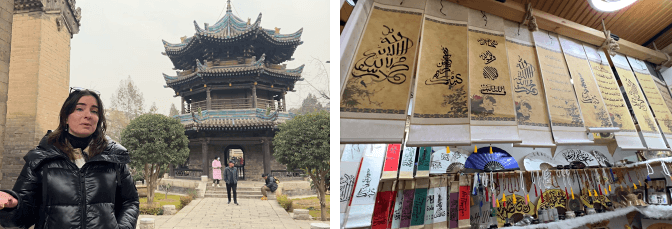
The Muslim Quarter dates back over 1,400 years to the Tang Dynasty. Arab and Persian traders along the Silk Road settled here, gradually forming a Hui Muslim community. The architecture blends traditional Chinese and Islamic styles, with the Great Mosque as its cultural centerpiece. For most visitors, however, the area is best known as Xi’an’s most famous snack street.
Hours: Most shops are open 11:00 AM – 10:00 PM
Recommended Visit Time: 30 minutes – 1 hour
Tips:
- The main street is quite commercial and mostly caters to tourists. Locals often prefer the smaller parallel streets for dining and strolling.
- The Great Mosque: A must-see cultural landmark. Open 8:00 AM – 5:30 PM. Tickets: ¥25 (peak) / ¥15 (off-peak).
Getting There:
- By ride-hailing: Set your destination to Muslim Quarter(回民街).
- By metro: Take Line 2 or 6 to Bell Tower Station (钟楼站 Exit C). Follow the underground passage to Exit 9. From there, it’s a 5-minute walk to the main street or 10 minutes to the mosque.
Watch: I Explored China’s Muslim Side
Xi’an City Wall 西安城墙
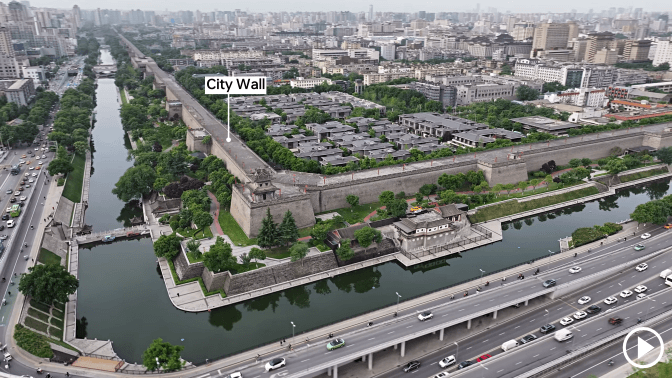
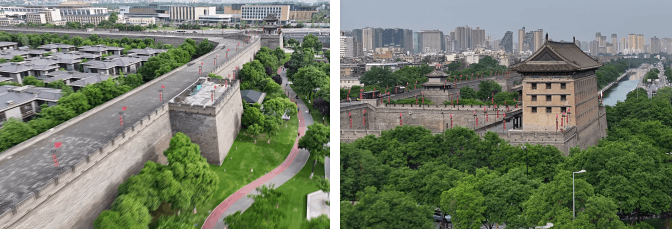
The Xi’an City Wall, first built between 1374 and 1378 for military defense, has been damaged and rebuilt multiple times and is now the most well-preserved and the only fully connected circular city wall in China; it stands 12 meters high, with a base width of 15–18 meters and a top width of 12–14 meters, stretches 13.74 km in total, and can be explored in about 3.5 hours on foot or 1.5 hours by bike.
Hours: 8:00 AM – 10:00 PM
Admission: ¥54 for adults, half price for students, free for children under 1.2 m. Tickets are purchased on site.
Recommended Visit Time: 1.5 hours
Tips:
- There are 17 gates with stairs leading to the top.
- The views are modest, so walking the whole way might get boring. Cycling is the best way to experience it! - Bike Rental: There are 9 rental spots on the wall. It costs ¥45 for 3 hours (plus a ¥100 deposit). You can return the bike at any rental point and get your deposit back via Alipay/WeChat. Note: After 8:00 PM, you can only return bikes at Yongning Gate (South Gate).
- Bike quality varies, so test the bike first and exchange it if it doesn’t feel right.
Sunset is the best time for cycling.
- From January to mid-March, the southern section of the wall (from Hanguang Gate to Jianguo Gate, including Yongning Gate, about 2 km) is converted into a Lantern Festival area. Tickets for this section cost ¥100. You can still access the wall from other gates for ¥54, but you won’t be able to complete the full circle. Personally, I think cycling half the wall is more enjoyable, as doing the full circle can become visually repetitive.
Getting There:
- By ride-hailing: Set your destination to Yongning Gate Tower (西安城墙永宁门城楼).
- By metro: Take Line 2 to Yongning Gate Station(永宁门站), Exit A1 or D1.
The map below shows the 9 gates near the bike rental points.

Watch: Xian Ancient City Wall and inner city
Watch: We Didn’t Expect This! 24hr In China’s Ancient Capital Xi’An
Bell Tower 钟楼
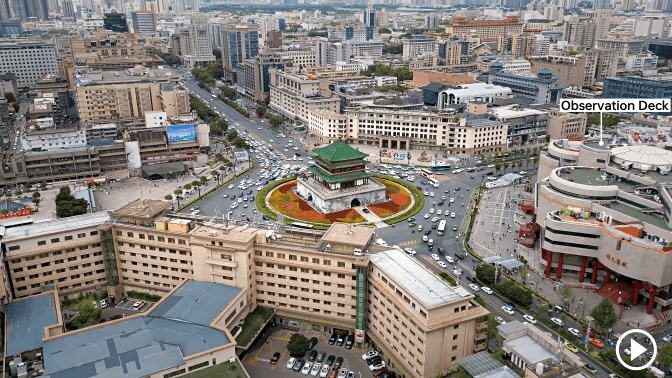
The Bell Tower, built in 1384 and standing 36 meters tall, is a landmark of Xi’an and the largest and best-preserved ancient bell tower in China. In ancient times, it was used to tell time, serving a similar purpose to church bells in Europe. While visitors can go inside, most prefer to admire it from a distance, especially at night.
Hours: April 1 – October 31: 8:00 AM – 10:00 PM
November 1 – March 31: 8:00 AM – 5:30 PM
Admission: ¥30
Recommended Visit Time: 30 minutes
Tips:
- Is it worth going inside? Most visitors skip the interior because it’s small and the view from the top isn’t very impressive.
- Best Night View: The tower is most beautiful when lit up (6:00 PM – 11:00 PM). For the best photo spot, head to Kaiyuan Mall (Bell Tower Branch). Take the elevator to the 5th-floor outdoor observation deck to overlook the tower. If you can’t find it, ask the staff for the “observation deck 钟楼观景台” using a translation app.
Getting There:
- By ride-hailing: Set your destination to Kaiyuan Mall (开元商城).
- By metro: Take Line 2 or 6 to Bell Tower Station(钟楼站. Follow the signs for Exit 9 (underground passage), then look for Exit 4 to enter Kaiyuan Mall (开元商城).
Watch: Bell Tower of Xi’an — The Iconic Heart of the Ancient City
Watch: The Bell and Drum Tower of Xi’an, China

Giant Wild Goose Pagoda 大雁塔
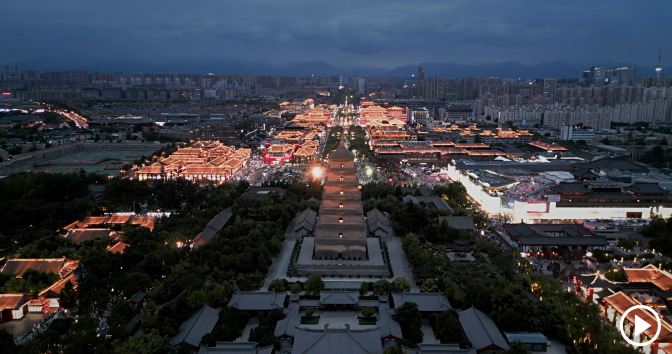
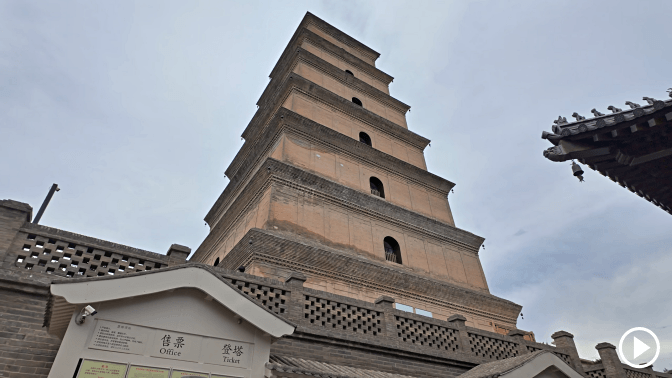
The Giant Wild Goose Pagoda is located within Da Ci’en Temple. Built in 652 AD, the pagoda stands about 64.5 meters tall with seven stories. It was originally used to store the Buddhist scriptures, statues, and relics brought back to China from India by the famous monk Xuanzang.
Hours:
Early March – mid-October: 8:00 AM – 6:00 PM
Mid-October – end of February: 8:30 AM – 5:30 PM
Admission: ¥10 to enter the temple, an additional ¥25 to climb the pagoda.
Recommended Visit Time: ~1 hour
Tips:
- Avoid Crowds: Visiting after 4:00 PM is usually quieter.
- Photo Spot: For a great view, head to the 4th floor of Xi’an Joy City (shopping mall 大悦城) nearby. There is a free outdoor deck perfect for photos of the pagoda.
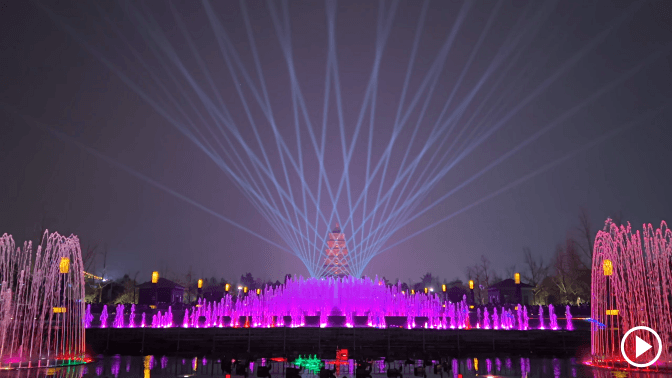
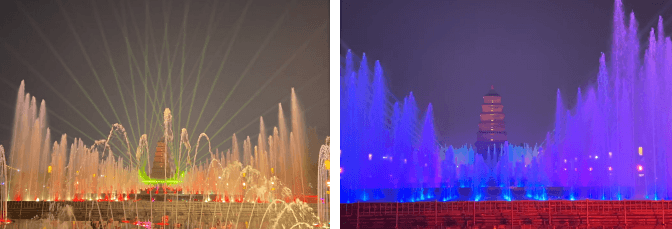
- Musical Fountain: Located at the North Square. Arrive 10 minutes early as it gets very crowded. Showtimes: 12:00, 16:00, 19:00, 21:00 (10 mins each).
- Next Stop: After the fountain, walk south to Datang Everbright City to enjoy the night views.
Getting There:
- By ride-hailing: Set your destination to Da Ci’en Temple (大慈恩寺(南1门)).
- By metro: Take Line 3 or 4 to Giant Wild Goose Pagoda Station (大雁塔站 Exit B or C), then walk about 10 minutes to the south gate.
Watch: Xi’An From Above 2025
Watch: Exploring Xi’an’s Ancient Treasure: The Majestic Giant Wild Goose Pagoda
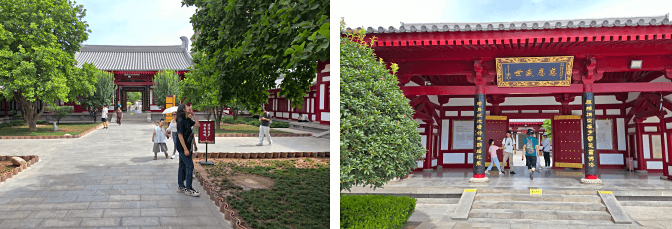
Watch: Giant Wild Goose Pagoda Fountain & Light Show
Historical Relics: Over its 1,300-year history, the Giant Wild Goose Pagoda has survived multiple wars. While many of the original scriptures brought from India were lost or destroyed, the items currently on display are replicas. However, scientific studies have detected hollow spaces beneath the pagoda. This suggests that original scriptures and relics might still be hidden underground, though no archaeological excavation has been performed yet.
Buddhism Today: Although Buddhism originated in India, it has largely declined there. Today, Thailand has the highest proportion of Buddhists in its population, while China has the largest total number of Buddhist followers.
Dress Code: Unlike temples in Thailand, most Chinese temples don’t have strict dress codes. Just make sure to avoid overly revealing clothing out of respect.
Datang Everbright City 大唐不夜城
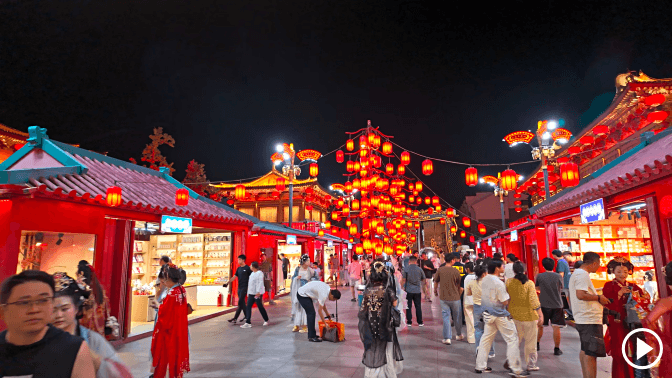
Datang Everbright City, built in 2002, is a pedestrian street themed around Tang Dynasty culture. It stretches 2,100 meters north to south and 500 meters east to west, lined with concert halls, art galleries, theaters, shopping malls, restaurants, and souvenir shops. It’s especially enjoyable for an evening stroll.
Hours: Open all day
Admission: Free
Recommended Visit Time: 1–2 hours
Tips:
- Visit at Night: During the day, it looks like a regular shopping area. At night, it becomes bright and festive with free street performances. It’s best to visit after dinner.
- Crowds: Even in the off-season, it’s quite busy. Try to visit on a weekday evening to avoid the worst of the crowds.
Getting There:
There are three nearby metro stations:
- North End: Giant Wild Goose Pagoda Station (大雁塔站 Lines 3 & 4)
- Middle Section: Datang Furongyuan Station (大唐芙蓉园站 Line 4)
- South End: Datang Everbright City Station (大唐不夜城站 Line 8) — Note: This station is the farthest from the main scenic area.
Watch: The beautiful Tang Dynasty Ever-bright City in Xi’an

Watch: You Won’t Believe This! China’s Busiest Night Street

Emperor Qinshihuang’s Terracotta Army Museum 秦始皇兵马俑博物馆
The Terracotta Army Museum is Xi’an’s most famous attraction and was listed as a UNESCO World Heritage Site in 1987. Qin Shi Huang, China’s first emperor, believed in an afterlife, so he ordered artisans to create thousands of clay soldiers, horses, and chariots to continue his rule in the next world. In 1974, local villagers accidentally uncovered the warriors while digging a well, stunning the world. The site is often called the “Eighth Wonder of the World.”
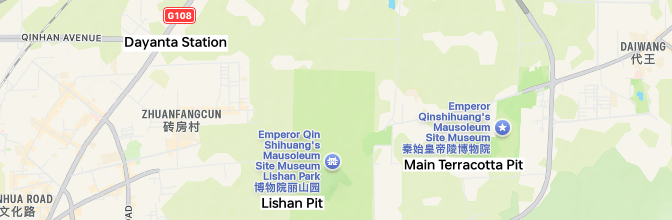
The museum has two main areas, about 2.2 km apart, connected by a free shuttle bus, with a single ticket valid for both areas.
Area 1: The Terracotta Army 兵马俑园:
Most visitors spend 1.5–2 hours here.
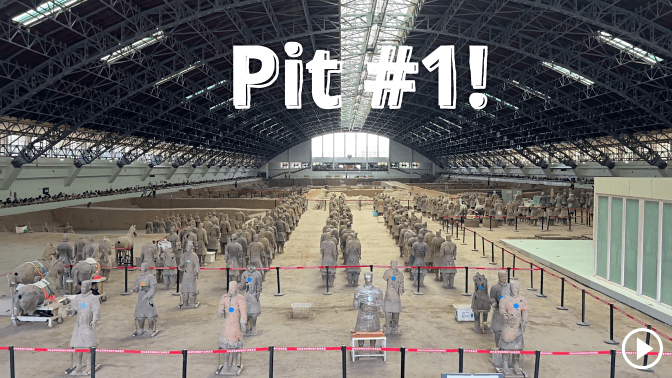
- Pit 1: The largest pit, with about 6,000 life-size soldiers and horses.
- Pit 2: Features a mix of crossbowmen, cavalry, and infantry.
- Pit 3: The smallest pit, likely representing the command center.
- Exhibition Hall: This is where you can see the warriors and artifacts up close.
Area 2: Lishan Garden 丽山园:
This area is much larger. I recommend paying ¥15 for the internal shuttle bus (scan the QR code on-site) to save a lot of walking.
- Bronze Chariots: Displays two incredibly detailed bronze chariots.
- Performers & Officials: Halls K9901 and K0006 show clay figures of court entertainers and civil officials.
- The Emperor’s Tomb: You can see the burial mound from the outside, but the interior has never been excavated to protect the relics.
Hours:
Peak season (mid-March – mid-November): 8:30 AM – 5:00 PM
Off-season (mid-November – mid-March): 8:30 AM – 4:30 PM
Admission: Peak ¥150, Off-peak ¥120. Must book in advance (available on Trip.com).
Recommended Visit Time: 2–4 hours
Tips:
- Short on time? Focus on Area 1 (the Pits).
- The Free Shuttle: To get to Area 2, find the shuttle bus stop near the large Qin Shi Huang statue.
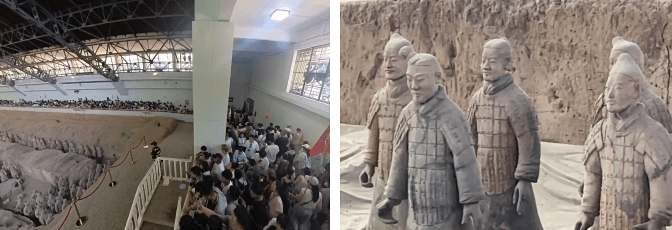
- Avoid Crowds: Stay away during summer and Chinese holidays. Queues can be over an hour long.
Getting There:
The museum is about 41 km from central Xi’an (near Bell Tower Station).
- By Ride-hailing: ~¥100, 1 hour (longer if there’s traffic).
- By Metro (Recommended): Take Line 6 to Fangzhicheng(纺织城), then Line 9 to Qinling West(秦陵西). From there, a short ¥15 taxi/Didi will take you to the entrance.
- Warning: Ignore people at the metro station offering “cheap rides.” They often try to take you to souvenir or jade shops instead.
Watch: Exploring China’s Terracotta Army & Lishan Garden
Extra tips for a better experience:
- Avoid Hotel Shuttles: Many hotels sell “direct shuttle” tickets. They seem cheap, but are often not worth it. Finding the bus can be confusing, and drivers often stop at overpriced jade shops or push products the whole way.
- Skip Street Guides: People outside the entrance will try to sell you guide services. Decline these—they are often unqualified. For a better experience, rent an English audio guide inside the museum for ¥50 (no deposit needed) or use a translation app.
- Why most pits are unexcavated: There are over 180 burial pits, but only a few are open. When Pit 1 was first opened in 1974, the warriors were fully painted. However, the colors began to flake in seconds and disappeared within 5 minutes due to sudden exposure to air. To protect the relics, large-scale excavation is currently paused until better preservation technology is available.
Mount Huashan 华山
Mount Huashan is one of China’s famous mountains, known for its thrilling cliffside trails (though you can easily avoid the most dangerous sections). Its highest peak reaches 2,154 meters (7,070 ft). Visitors can hike to the summit or take the cable car up and down.
Hours:
- Cable car up: 7:00 AM – 4:00 PM
- Cable car down: 7:00 AM – 7:00 PM
- Hiking trails open 24 hours
Admission:
| Item | Peak (Mar – Nov) | Off-peak (Dec – Feb) |
|---|---|---|
| Entrance Ticket | ¥160 | ¥100 |
| West Peak (Bus + Cable Car) | ¥180 | ¥160 |
| North Peak (Bus + Cable Car) | ¥100 | ¥65 |
Example (West Up, North Down Route):
Total: ¥440 (Peak) / ¥325 (Off-peak) per person.
How to Buy Tickets:
- In Person: There is a foreigner-friendly window at the entrance with English signs. Just show your passport.
- Online: You can book entrance tickets on Trip.com, but cable car tickets must be bought on the day of your visit.
- Weather Warning: If it’s rainy or windy, ask your hotel to check if the mountain is open. Heavy wind or snow can close the cable cars or trails without much notice.
Recommended Visit Time: 1 day
Getting There:
The mountain is about 123 km from Xi’an. The high-speed train is the best option.
Train: Take the high-speed train from Xianbei (Xi’an North 西安北站) to Huashanbei (Huashan North 华山北站) — ~30 minutes, around ¥55. There are multiple departures daily; booking via Trip.com is recommended. Aim for 9:00 AM departure and 6:00 PM return. You can easily change your return time in the app for a small fee if you finish early or late.
From Train Station to Park: Huashanbei (Huashan North 华山北站) is about 4.8 km (10 min) from the Huashan Visitor Center (华山游客中心). A ride-hailing car costs around ¥15–25. Starting in 2026, the park will offer a free shuttle from the train station (exit right for ~50 meters and show your ticket on your phone). Shuttle service runs 8:00 AM – 6:00 PM; if your return is later, you’ll need a taxi. If ride-hailing apps fail, you can take a taxi on-site, usually charged ¥10 per person for the outbound trip; the return may be more expensive.
Recommended Routes:
There are three main ways to get onto the mountain:
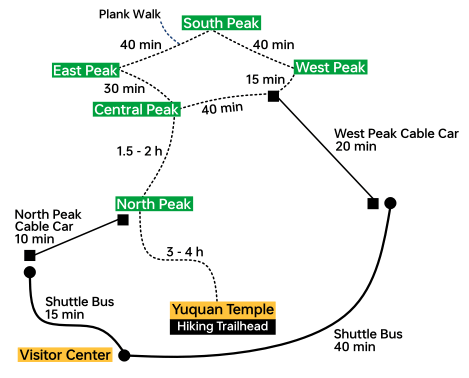
North Peak Route
Xianbei (Xi’an North) Train Station → 10-minute taxi → Huashan Visitor Center → 15-minute North Peak shuttle → North Peak cable car lower station → 10-minute cable car ride → North PeakWest Peak Route
Xianbei (Xi’an North) Train Station → 10-minute taxi → Huashan Visitor Center → 40-minute West Peak shuttle → 10-minute walk uphill → West Peak cable car lower station → 20-minute cable car ride → West PeakHiking Route
Xianbei (Xi’an North) Train Station → 15-minute taxi → Yuquan Courtyard (starting point for hiking) → begin 3–4 hour hike → North Peak
Choosing Your Route:
West Up, North Down (Most Popular)
Pros: Fastest way to reach the summit, conserving energy for enjoying the scenery.
Cons: The long walk down to the North Peak can be tiring and repetitive.North Up, West Peak Down
Pros: A greater sense of accomplishment; the downhill sections are easier.
Cons: More physically demanding overall.West Up, West Down (Fastest)
Pros: Saves the most time and energy. Great if you only want to see the highest peak (South Peak) and head back (~1 hour total).
Cons: Most expensive and lacks the challenge of hiking.Hike Up, West Down (Cheapest)
Pros: Very rewarding and saves money.
Cons: You will climb 1,800m, adding 3–4 hours of intense exercise.
Note: Start at Yuquan Courtyard. Take a taxi there directly from the train station.
Summit Area Overview:
The summit has five peaks. South Peak is the highest. If you skip the “Plank Walk,” the summit trails are tiring but safe. You can explore the entire summit area in about 4 hours.
- West Peak → South Peak: ~40 minutes
- South Peak → East Peak: ~40 minutes(Passes the Plank Walk entrance)
- East Peak → Central Peak: ~30 minutes
- Central Peak → North Peak: longer route, ~1.5–2 hours
Watch: HUASHAN MOUNTAIN (CHINA) | DRONE 4K 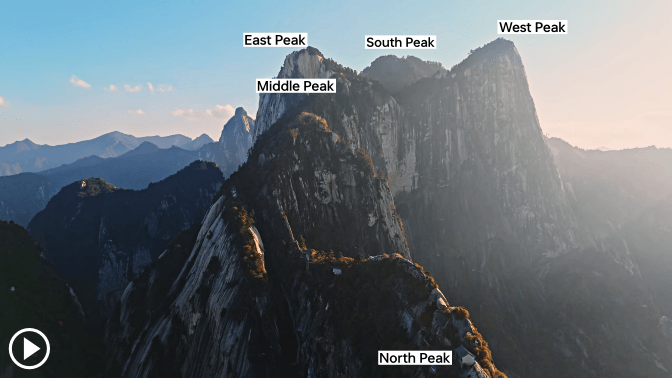
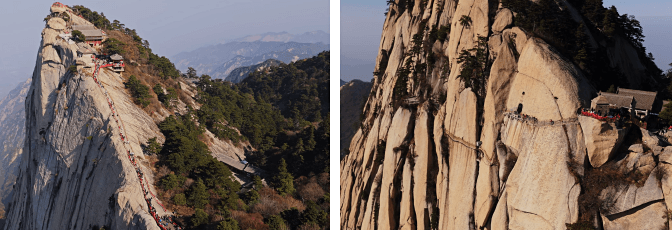
About the Plank Walk (长空栈道):
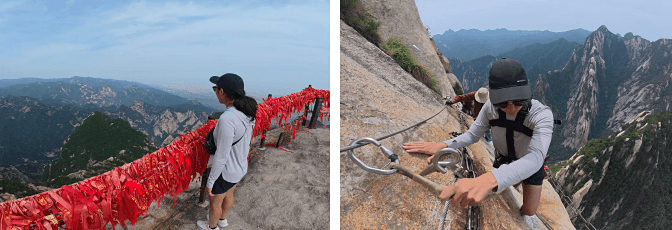
The Plank Walk is a side attraction and not part of the main trail. If you are not a thrill-seeker, you can easily skip it.
Requirements: Must be at least 150 cm tall and at least 15 years old. No specific fitness level is required.
Waiting Time: No online reservations for foreigners. Expect a 1–2 hour wait on-site.
Cost: ¥30 per person (Cash Only). While there is phone signal at the summit, this spot strictly requires cash to help control the flow of visitors. You can withdraw cash from the ATM at the Huashan Visitor Center before heading up. Staff can provide change.
The “Two-Person” Rule: For safety reasons, solo visitors are not allowed to enter alone. If you are traveling solo, don’t worry—you can easily pair up with other travelers in the queue. Staff are usually very helpful in helping foreigners find a temporary partner.
Photos: Staff can take photos for you (¥30 each), or you can use your own phone.
Experience: Visitors enter in groups of about 50. The round-trip takes 40–50 minutes. Since it is a single narrow path, the pace depends on the person in front of you—if someone is slow due to fear of heights, everyone behind must wait.
Watch: Huashan Mountain. Surviving China’s Infamous Hike and Visiting the Terracotta Army
Tips for a Better Experience:
Avoid Peak Times: Stay away during Chinese public holidays (queues for cable cars can exceed 2 hours). If possible, also avoid weekends and summer vacation (July–August).
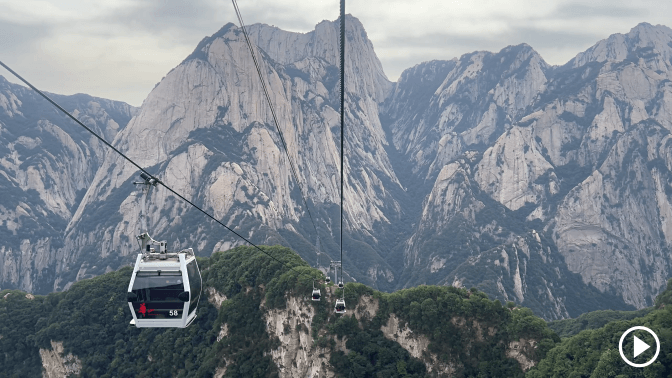
Cable Car & Wind: The West Peak cable car may close temporarily during strong winds. If you see people waiting or being redirected to the North Peak, use a translation app to check with staff.
Food & Water: You don’t need to pack too much. There are several shops and restaurants at the summit to buy water and snacks, though prices are higher than at the base.
Restrooms: Be prepared—summit restrooms are generally in poor condition, especially near the West Peak and Plank Walk. The facilities at the North Peak are slightly better.
Luggage Storage: You can store your bags for a small fee at the Visitor Center or in shops near the mountain base (Yuquan Courtyard).
Local Food in Xi’an
Xi’an is famous for its wheat-based dishes. The most representative foods are:
Biangbiang Noodles (biangbiang面)
A signature Xi’an noodle—very wide and chewy. It’s not very spicy, but many restaurants add vinegar by default. The sour taste might not be for everyone. Your first bite might feel a bit strange, but once you get used to it, you might find yourself craving it later.
Watch: I Investigated Joshua Weissman’s “World’s Best Noodles” Claim in Xi‘an

Roujiamo (Chinese Hamburger 肉夹馍)
Think of it as a Chinese-style hamburger. It’s sold everywhere, but there are some differences: the Muslim Quarter uses beef, while other places use pork. You can choose lean meat or a mix. The bread can be plain and crispy, or flaky so it crumbles when you bite it.
Watch: How can you not eat Chinese hamburgers in Xi’an?

- You’ll see plenty of vendors selling pomegranates and fresh juice, but it’s best to skip the ones near major tourist attractions—they’re often overpriced and subpar. Xi’an is famous for its high-quality pomegranates, particularly from September to November, but for the real deal, head to a local market instead.
- While public smoking is officially banned in Xi’an, the rule isn’t always strictly followed—you’ll likely encounter people smoking in smaller, local restaurants. If you’re sensitive to smoke, take a quick peek inside to check the atmosphere before sitting down.
Thank you for reading. Hope you have a wonderful journey! ヽ(´▽`)/